

 English
 中文简体
中文简体 Español

How to Measure Large Wooden Cases Correctly?
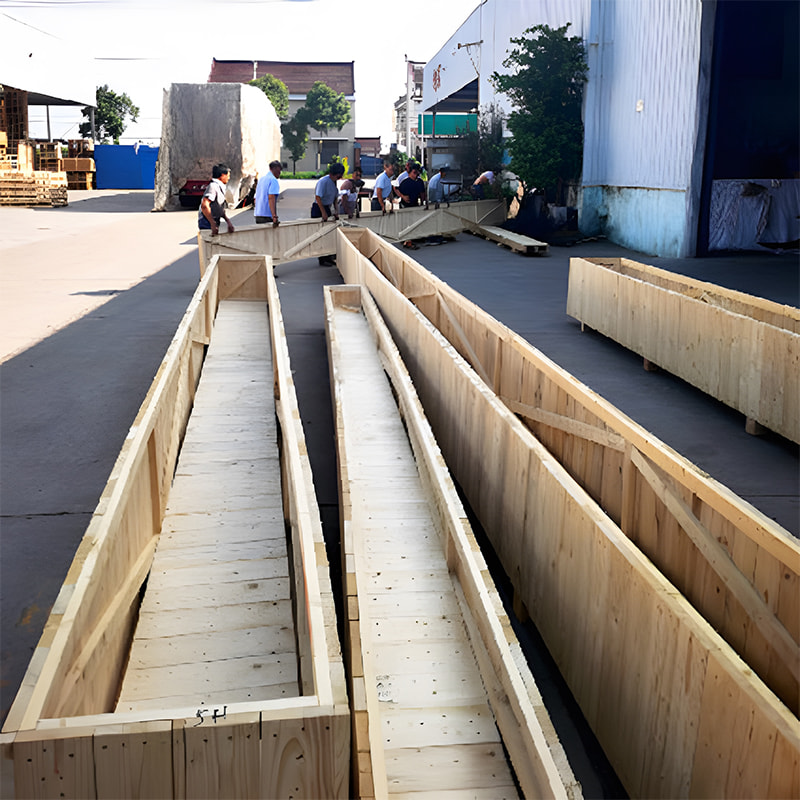
Large wooden crates are commonly used for transporting heavy equipment. But how do you determine the dimensions for customizing such crates? First, measure the length, width, and height of your machinery. Then provide these measurements to the crate manufacturer, who will add appropriate clearance to create a well-fitted wooden case.
Export wooden crates are designed to be both aesthetically pleasing and structurally durable, making them ideal for domestic and international shipping. Their dimensions can be customized according to client requirements. After use, a portion of these wooden cases can be recycled, supporting resource conservation and environmental protection. Large export wooden crates are suitable for packaging and transporting heavy machinery, electromechanical products, industrial equipment, and R&D production lines.
When customizing large wooden cases, two key dimensions must be considered. The inner diameter refers to the internal space available after packaging, while the outer diameter represents the overall external dimensions, calculated as the manufacturing size plus the thickness of the packaging boards used. The manufacturing size is the dimension used during production, which can be determined by adding the inner diameter to the board thickness. Large wooden crates are assembled using bonding and nailing techniques. Joint dimensions typically vary based on the number of corrugated layers and the manufacturer's production capabilities. To avoid damaging the printed surface on the main box face (LH surface), joints should generally be placed on the LH side.
Material requirements also play a crucial role. The moisture content of primary load-bearing components should not exceed 25%, while wood used for box panels and frames should remain below 20%. Within any 1000mm span, the number of knots (dead or live) on main structural parts and panels should not exceed five. Defects such as decay, through-cracks, bark inclusion, wormholes, deformation, or blunt edges are not permitted. Craftsmanship standards require tight panel joints, flat surface alignment without misalignment, and reasonable nail placement. Each crate should include at least two reinforcing tapes, with clear and legible printing.
Related Products


Got Questions? Contact Us Now
-
Copyright @ King Good Packaging Materials (NanTong)Co.,Ltd. All Rights Reserved. Custom Wooden Packaging Solutions Manufacturer OEM Industrial Packaging Solutions Factory

-
Contact info.
+86-0513-88669885 +86-13813749256 13813749256@163.com Qianzhuang Village, Yazhou Town, Hai'an City, Nantong City, Jiangsu Province, China - About KINGGOOD Packaging Series Industry Solutions OEM Service News Contact