

 English
 中文简体
中文简体 Español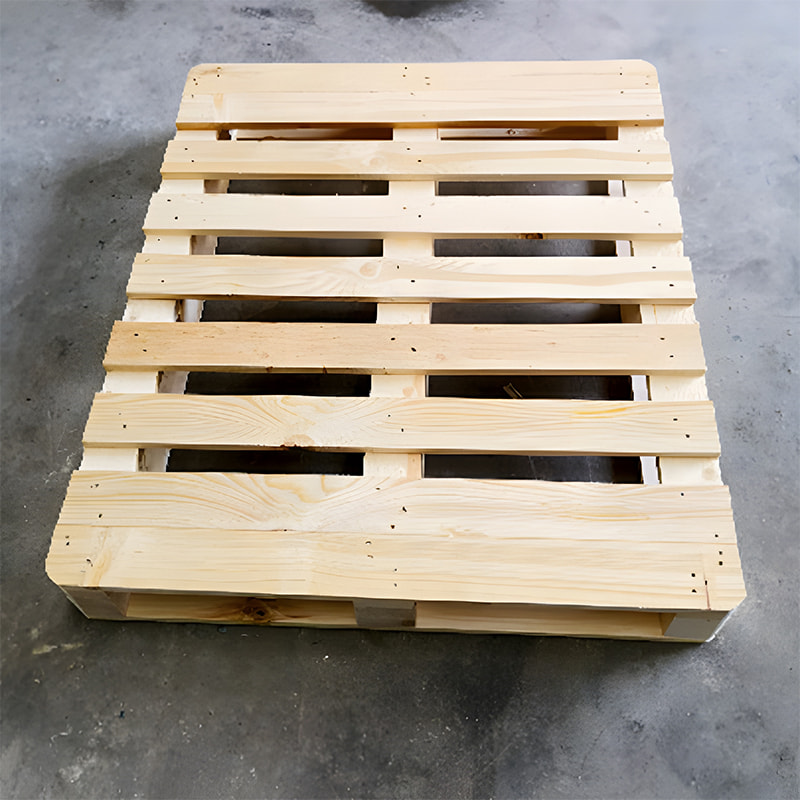
King Good Packaging Materials (NanTong)Co.,Ltd. is a Custom High Quality International Standard Plywood Pallet Manufacturer and High Quality International Standard Plywood Pallet Factory, committed to becoming a national OEM manufacturer of wood products packaging, specializing in the design, development and production of wood products. It has processing factories of different scales in Taizhou, Jiangsu Province, Fengxian, Shanghai, Wuhan, Hubei Province, Dongguan, Guangdong Province, Kunshan, Jiangsu Province and Beilun, Ningbo. The company's headquarters is located in Yazhou Town, Haian City, Nantong City. Since the establishment of the factory, it has newly introduced wood processing machinery and supporting equipment, and has technicians with many years of rich experience. It strictly controls each production procedure and ensures quality and quantity with proficient skills. We have formed a complete chain covering production, after-sales service and on-site packaging. Our perfect service has won high praise from many enterprises.
Based on raw materials such as fir, pine, miscellaneous wood, plywood and particleboard, KingGood can customize different products according to development to avoid unnecessary losses during long-distance transportation. Main products: Packaging boards, multi-layer boards, (for export and domestic use) wooden pallets. Wooden crates, pallet boards, front boards, and side board wooden crates (plywood, pallets, and packaging boxes can be exported directly without inspection, saving you a lot of cumbersome procedures) can provide packaging for extra-large mechanical equipment. Our company adheres to the principle of keeping promises, achieving mutual benefit and win-win results, getting along harmoniously, doing things with dedication, and providing excellent service. Ensure the company's continuous and stable development.


Plywood Pallet
Home / Packaging Series / Pallet / Plywood Pallet / High Quality International Standard Plywood Pallet
All Products
High Quality International Standard Plywood Pallet
High-quality international standard plywood pallets are constructed from multiple layers of high-quality hardwood plywood using a cross-laminated process. They are glued with environmentally friendly water-based adhesive to ensure structural stability and safety compliance. Formaldehyde emissions meet national and EU environmental standards. They fully comply with ISPM 15 international phytosanitary standards and undergo professional heat treatment, allowing for direct global export without fumigation. They comply with multiple regional certification requirements. They offer both standardized sizes and customizable options. A four-way fork design facilitates mechanical operation. They are available in single-sided, double-sided, and wing-type designs based on load requirements. Key reinforcements and rounded corners ensure both safety and practicality.
This pallet offers reliable load capacity and environmental adaptability, maintaining stable performance under varying temperature and humidity conditions. Rigorously inspected before shipment to ensure reliable quality, it is widely applicable in warehousing, logistics, manufacturing, cross-border trade, and other sectors, capable of carrying a variety of goods and supporting stacking and turnover. Compared with traditional solid wood pallets, it not only saves quarantine processing costs and achieves rapid customs clearance, but also avoids usage problems caused by solid wood defects. The material is recyclable, which meets the needs of the green supply chain. It improves logistics efficiency while reducing the overall use cost, providing high-quality solutions for cargo transportation and storage.
About KINGGOOD
King Good Packaging Materials (NanTong)Co.,Ltd.
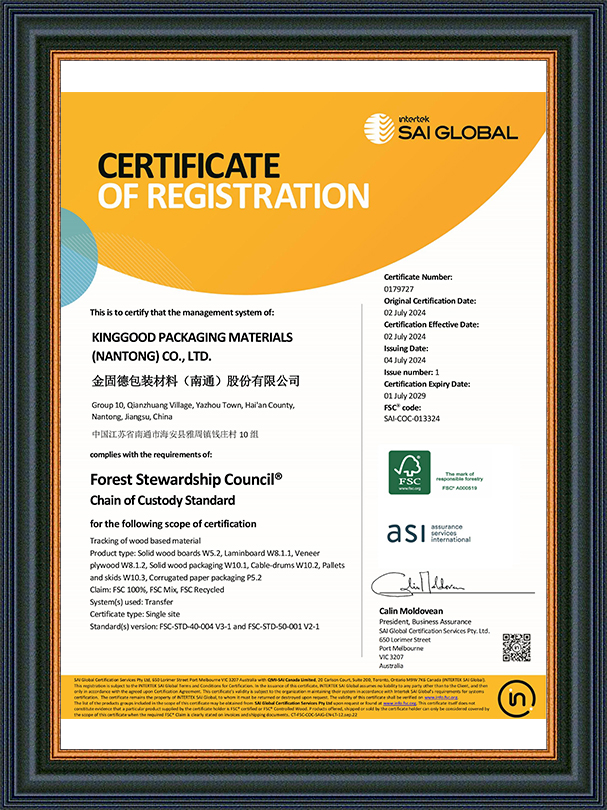
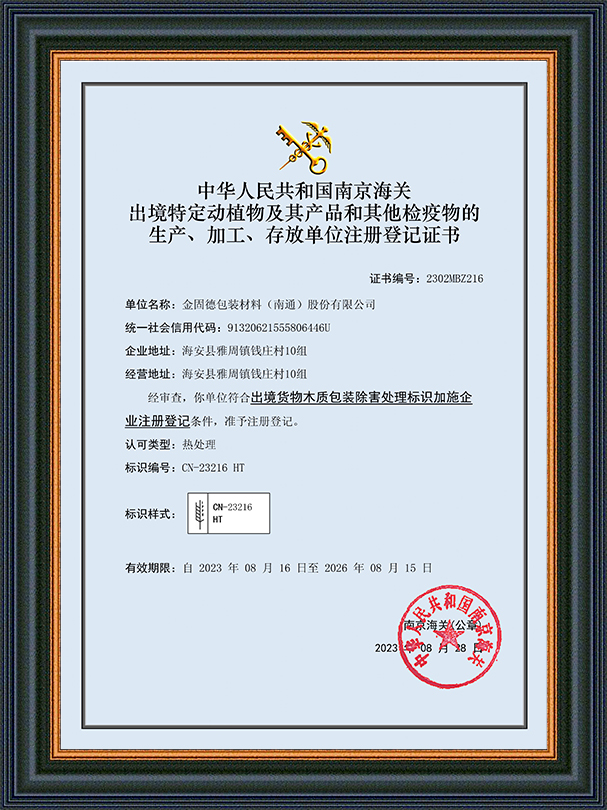
Certificate Of Honor
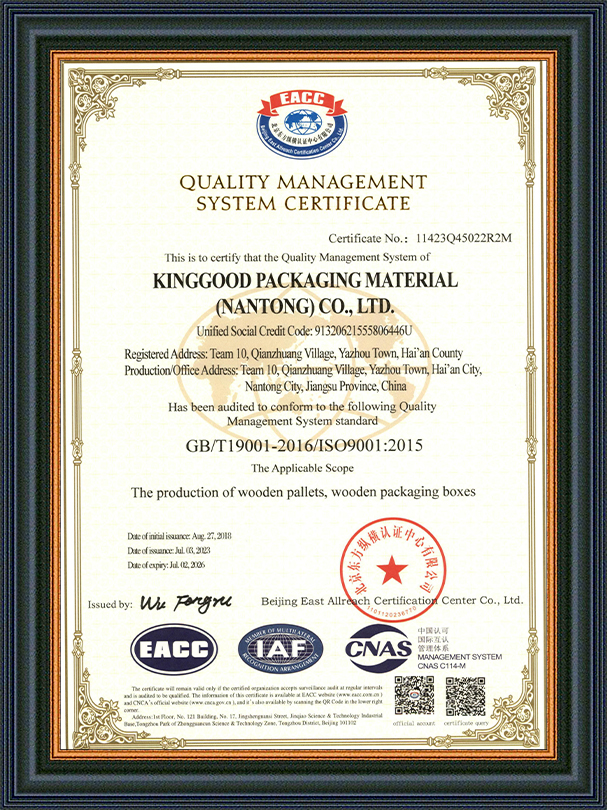
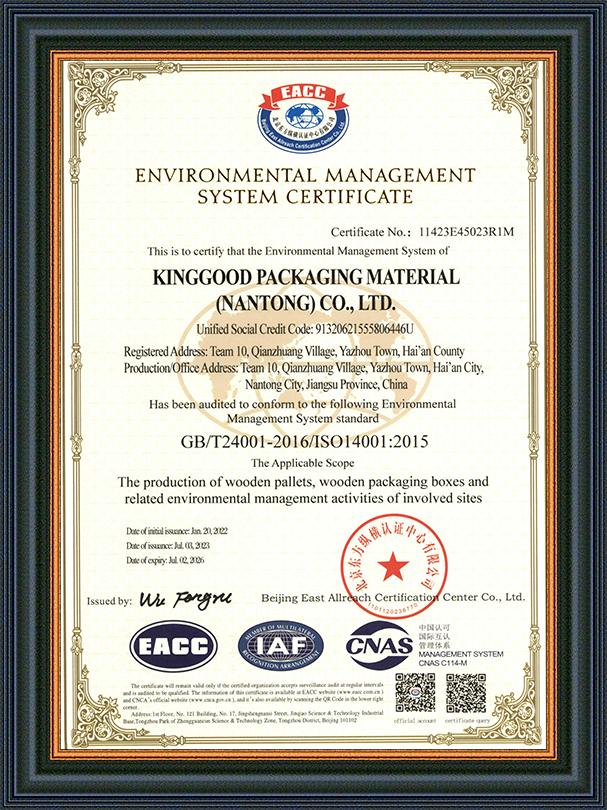
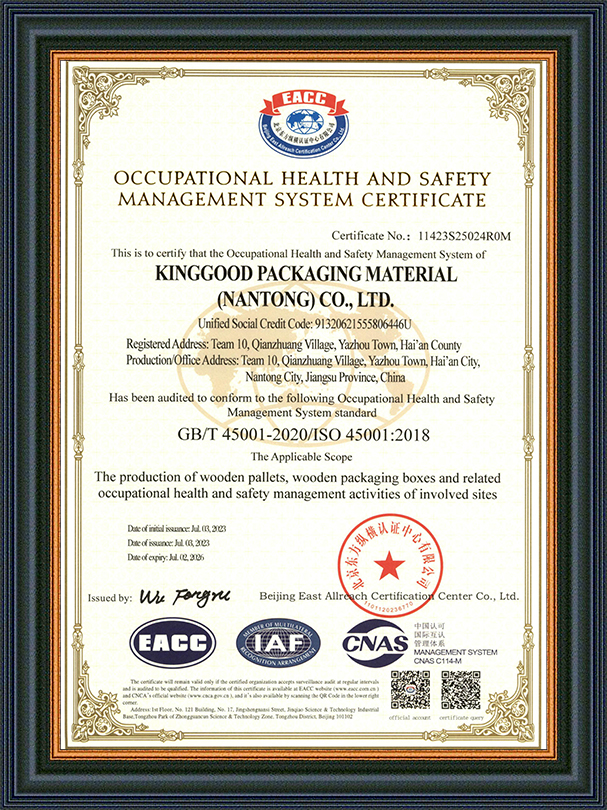

Message Feedback
Latest Articles

Plywood Pallet Industry knowledge
Why a High Quality International Standard Plywood Pallet Reduces Export Risk
Exporters shipping across multiple borders need pallets that hold up to inconsistent handling conditions while still meeting the documentation and quality expectations of overseas buyers. A High Quality International Standard Plywood Pallet is built specifically for this challenge, combining the lighter weight and dimensional stability of layered plywood with manufacturing consistency tight enough to satisfy quality-conscious international clients.
The core advantages of choosing a high quality, internationally specified plywood pallet include:
- Reduced freight weight compared with solid timber pallets, lowering shipping cost on high-volume export orders.
- Better dimensional consistency across large production runs, since plywood panels are manufactured to tighter tolerances than sawn timber.
- Improved resistance to humidity-driven warping during long ocean transit compared with single-plank solid boards.
- Smoother surface finish that reduces the risk of packaging damage to cartons or wrapped goods stacked on top.
How International Standard Plywood Pallets Maintain Quality at Scale
Layered Veneer Construction
Plywood decking is built from multiple thin wood veneers bonded together with alternating grain direction. This cross-grain layering spreads stress across two directions simultaneously, giving plywood pallets more consistent load resistance across a full production batch than pallets built from sawn timber boards, which naturally vary more in density and grain quality piece to piece.
Dimensional Tolerance Control
Because plywood panels are manufactured under controlled pressing conditions, thickness and flatness can be held to tighter tolerances than individually sawn boards. This consistency matters for international buyers who need every pallet in a shipment to behave the same way on automated conveyor and racking systems.
Batch-Level Quality Verification
High quality plywood pallet production typically includes sample load testing and dimensional checks across each production batch, rather than relying solely on a final visual inspection. Catching variance early in a batch reduces the risk of inconsistent pallets reaching an international customer.
Quality Benchmarks to Confirm Before Placing an Export Order
Before committing to a large plywood pallet order, exporters generally benefit from confirming a few key quality benchmarks with their supplier.
| Quality Benchmark | What to Confirm |
|---|---|
| Panel thickness consistency | Tolerance range across the production batch |
| Load capacity rating | Static and dynamic weight limits |
| Moisture content | Suitability for humid transit conditions |
| Export treatment status | Compliance with destination country requirements |
Plywood pallets used in international shipments are generally subject to the ISPM 15 phytosanitary standard, which requires heat treatment or fumigation of the wood before export. Pallets already treated to this standard can clear customs without additional inspection, helping keep export timelines on track.
Frequently Asked Questions About International Standard Plywood Pallets
Q1: Why do international buyers often prefer plywood pallets over solid timber ones?
Plywood's tighter manufacturing tolerances and cross-grain construction give it more consistent performance across large batches, which matters for buyers relying on automated handling and predictable stacking behavior.
Q2: How is quality consistency maintained across a large export order?
Sample load testing and dimensional checks applied throughout a production batch, rather than a single final inspection, help catch variance early and keep every pallet performing the same way.
Q3: What load capacity can a high quality plywood pallet handle?
Load capacity depends on panel thickness and internal support design, so confirming the static and dynamic weight rating with the supplier before ordering is essential for matching the pallet to actual cargo needs.
Q4: Do plywood pallets need the same export treatment as solid wood pallets?
Yes, plywood pallets used internationally generally require ISPM 15 heat treatment or fumigation, the same requirement that applies to most other wood-based export packaging.
Consistent Plywood Pallet Quality for International Buyers
Headquartered in Yazhou Town, Hai'an, Nantong, King Good Packaging Materials (Nantong) Co., Ltd. operates processing facilities across multiple regions, including Taizhou, Fengxian in Shanghai, Wuhan, Dongguan, Kunshan, and Beilun in Ningbo, manufacturing plywood pallets to consistent international quality standards alongside solid wood pallets, wooden crates, and packaging boards. With strict, stage-by-stage production control and technicians with years of hands-on experience, the company helps international buyers reduce potential losses during long-distance transportation while maintaining reliable quality across large export orders.


Got Questions? Contact Us Now
-
-
Contact info.
+86-0513-88669885 +86-13813749256 13813749256@163.com Qianzhuang Village, Yazhou Town, Hai'an City, Nantong City, Jiangsu Province, China - About KINGGOOD Packaging Series Industry Solutions OEM Service News Contact
