

 English
 中文简体
中文简体 Español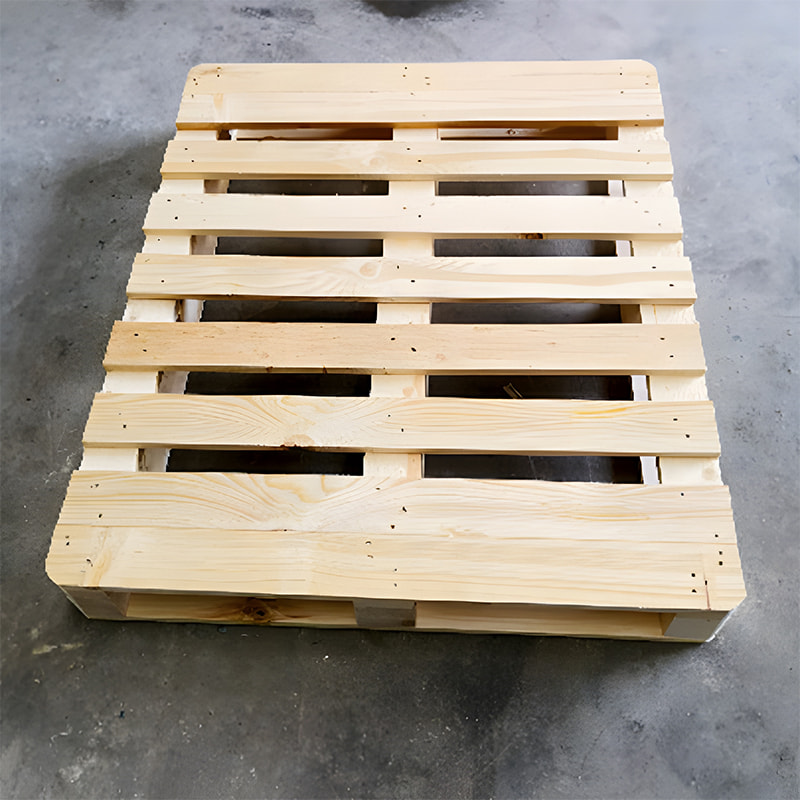
King Good Packaging Materials (NanTong)Co.,Ltd. is a Wholesale Solid Wood Pallet Manufacturer and Wooden Pallet Company, committed to becoming a national OEM manufacturer of wood products packaging, specializing in the design, development and production of wood products. It has processing factories of different scales in Taizhou, Jiangsu Province, Fengxian, Shanghai, Wuhan, Hubei Province, Dongguan, Guangdong Province, Kunshan, Jiangsu Province and Beilun, Ningbo. The company's headquarters is located in Yazhou Town, Haian City, Nantong City. Since the establishment of the factory, it has newly introduced wood processing machinery and supporting equipment, and has technicians with many years of rich experience. It strictly controls each production procedure and ensures quality and quantity with proficient skills. We have formed a complete chain covering production, after-sales service and on-site packaging. Our perfect service has won high praise from many enterprises.
Based on raw materials such as fir, pine, miscellaneous wood, plywood and particleboard, KingGood can customize different products according to development to avoid unnecessary losses during long-distance transportation. Main products: Packaging boards, multi-layer boards, (for export and domestic use) wooden pallets. Wooden crates, pallet boards, front boards, and side board wooden crates (plywood, pallets, and packaging boxes can be exported directly without inspection, saving you a lot of cumbersome procedures) can provide packaging for extra-large mechanical equipment. Our company adheres to the principle of keeping promises, achieving mutual benefit and win-win results, getting along harmoniously, doing things with dedication, and providing excellent service. Ensure the company's continuous and stable development.


Solid Wood Pallet
All Products
Solid Wood Pallet Manufacturer
Solid Wood Pallets are essential load-bearing tools for industrial goods storage, transportation, and loading and unloading. Leveraging the natural structural strength of solid wood, they offer excellent load-bearing performance. Standard specifications can meet the static load requirements of most cargo. The reinforced heavy-duty solid wood pallet is particularly suitable for heavy cargo and resists deformation and breakage during frequent forklift access and multi-layer stacking, ensuring the safety of cargo during storage and turnover. Its wide adaptability allows for direct integration with loading and unloading equipment such as forklifts and stackers, as well as a variety of transport vehicles such as shipping containers and truck carriages. Whether for internal factory turnover, bulk warehouse storage, or cross-border transport, it effectively connects logistics processes and improves loading, unloading, and transshipment efficiency.
Solid wood pallets also offer advantages in terms of durability and customization. High-quality solid wood undergoes a professional drying process, effectively resisting mold and insect damage in humid environments, extending their service life. In some cases, they can be painted or waxed to further enhance moisture and corrosion resistance. Their size and structure can be customized, allowing us to produce both international standard specifications and non-standard sizes based on cargo size and loading equipment. We can also design special features such as reinforced panels, anti-slip mats, and dedicated slots to accommodate unusually shaped cargo or prevent slipping or displacement. Furthermore, solid wood pallets that meet international quarantine standards can meet the import requirements of most countries. While basic quarantine procedures are required, overall compliance costs are manageable, making them the preferred pallet type for heavy-duty, high-stability applications.
About KINGGOOD
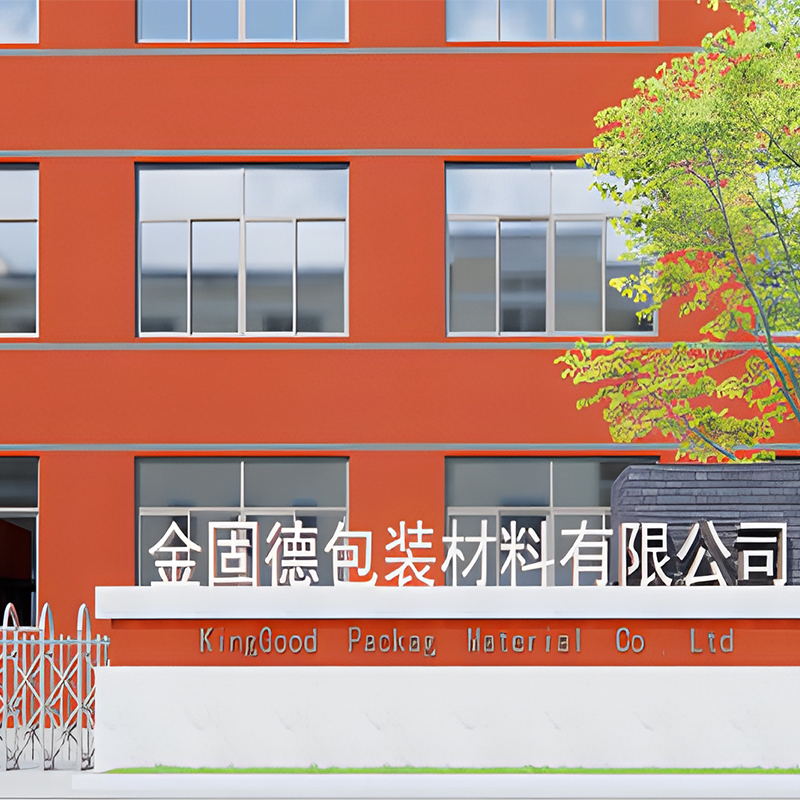
King Good Packaging Materials (NanTong)Co.,Ltd.
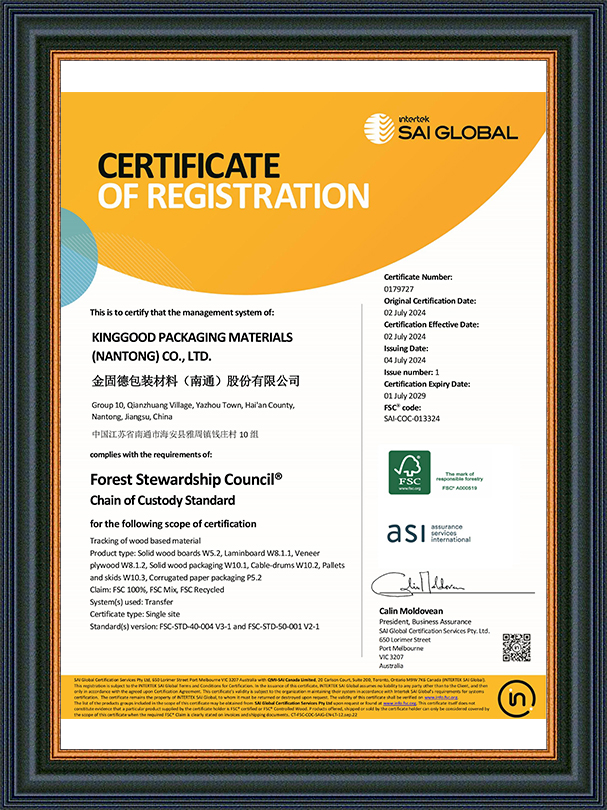
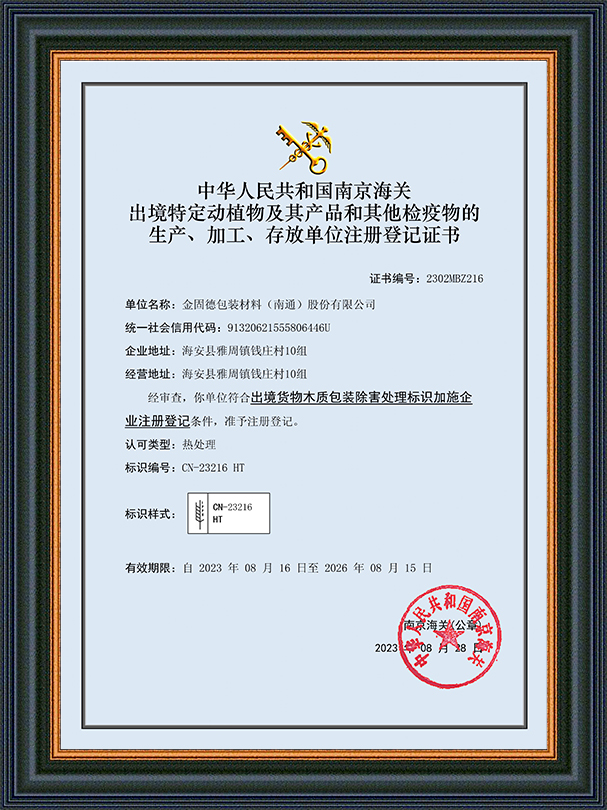
Certificate Of Honor
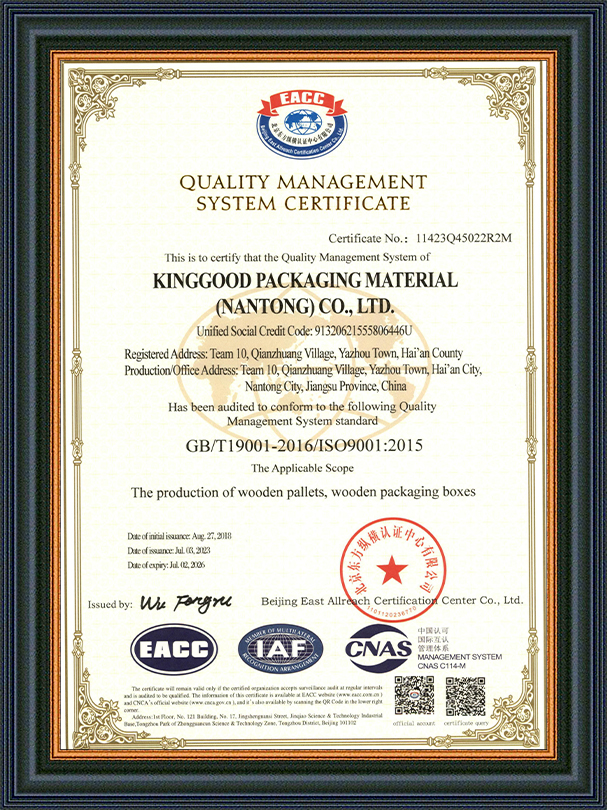
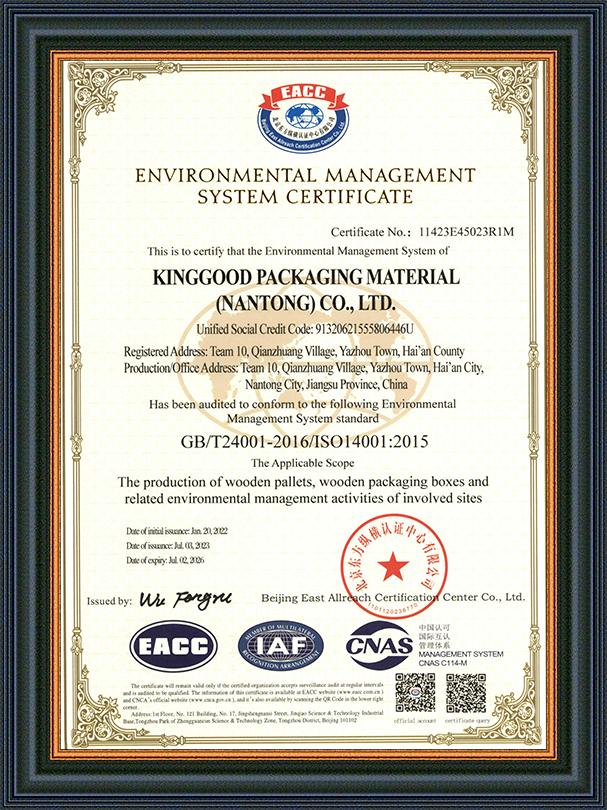
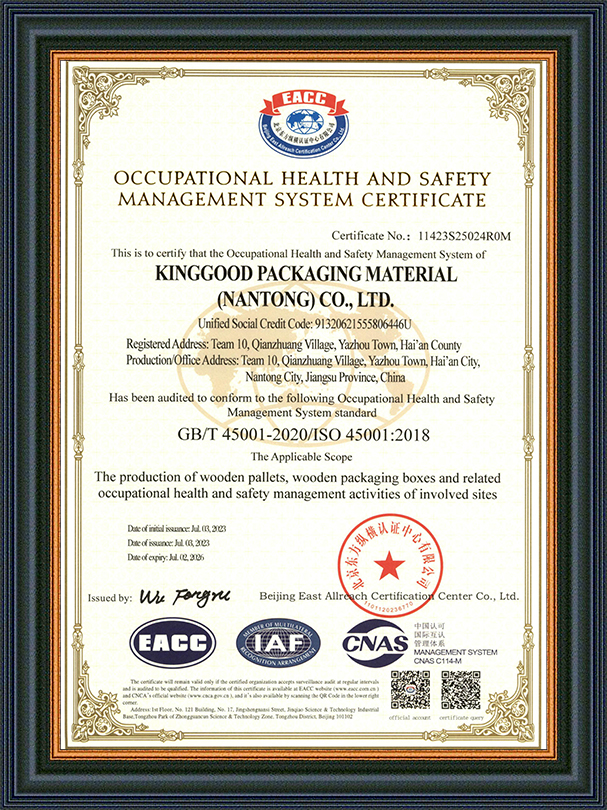

Latest Articles

Solid Wood Pallet Industry knowledge
Why Solid Wood Pallets Remain the Standard for Industrial Shipping
A wooden pallet is the flat structural base used to stack, store, and move goods through forklifts, pallet jacks, and warehouse racking systems. Among the various pallet materials available, the solid wood pallet remains the most widely used option worldwide due to its combination of load-bearing strength, repairability, and relatively low production cost.
Unlike plastic or metal pallets, a solid wood pallet can be reinforced or repaired on-site by replacing a single damaged board rather than discarding the entire unit, which extends its usable life across many shipping cycles and reduces overall packaging waste.
How a Wooden Pallet Is Built to Handle Load
Deck Boards and Stringers
A standard wooden pallet consists of top deck boards, bottom deck boards, and stringers or blocks that raise the structure off the ground to allow forklift forks to slide underneath. The spacing and thickness of these deck boards determine how much weight can be evenly distributed across the pallet surface without sagging or cracking.
Nailing Pattern and Joint Strength
The strength of a solid wood pallet depends heavily on its nailing pattern. Properly spaced and angled nails resist shear forces during lifting and transport, and a well-constructed pallet can typically support a static load of over 1,000 kg when the weight is evenly distributed across the deck.
Key Advantages of Choosing a Solid Wood Pallet
- High load capacity suitable for heavy industrial goods and stacked storage
- Easily repairable by replacing individual boards instead of the entire pallet
- Compatible with standard forklifts, pallet jacks, and warehouse racking systems
- Lower unit cost compared with plastic or metal pallet alternatives
- Naturally biodegradable and recyclable at the end of its service life
For companies shipping heavy machinery or bulk goods internationally, pairing solid wood pallets with wooden crates or cushion boards provides a stable base that reduces the risk of shifting during transit.
Common Wooden Pallet Sizes and Their Applications
Pallet dimensions vary by region and industry, and selecting the correct size improves container fill rates and reduces wasted shipping space.
| Pallet Standard | Dimensions | Common Region |
|---|---|---|
| EUR Pallet | 1200 x 800 mm | Europe |
| GMA Pallet | 1219 x 1016 mm | North America |
| Asia-Pacific Pallet | 1100 x 1100 mm | Asia-Pacific |
| Custom Pallet | Made to order | Oversized or irregular cargo |
Export Compliance for Solid Wood Pallets
Solid wood pallets used in international trade are generally required to comply with the ISPM 15 phytosanitary standard, which mandates heat treatment or fumigation of raw wood packaging materials to prevent the spread of pests across borders. Pallets that already carry the appropriate treatment mark can typically clear customs without additional on-site inspection, which helps avoid delays for time-sensitive shipments.
Buyers exporting to regions with strict biosecurity requirements should confirm that their supplier's wooden pallets are properly certified before shipment to avoid rejection or costly rework at the port of entry.
Custom Wooden Pallets for Industrial Packaging
Headquartered in Yazhou Town, Hai'an, Nantong, King Good Packaging Materials (Nantong) Co., Ltd. operates processing facilities across Taizhou, Fengxian, Wuhan, Dongguan, Kunshan, and Beilun, using fir, pine, miscellaneous wood, plywood, and particleboard to manufacture solid wood pallets, wooden crates, cushion boards, front boards, and edge boards. Every production procedure is strictly controlled to ensure consistent quality, and export-grade wooden pallets and crates can be shipped directly without additional inspection, simplifying export procedures for businesses handling oversized machinery and equipment.
Frequently Asked Questions
Q1: How much weight can a standard wooden pallet hold?
A well-constructed solid wood pallet can typically support a static load of over 1,000 kg when the weight is evenly distributed, though capacity varies by board thickness and stringer design.
Q2: Can a damaged wooden pallet be repaired instead of replaced?
Yes. One of the main advantages of a solid wood pallet is that individual deck boards or stringers can be replaced on-site, extending the pallet's usable life without full replacement.
Q3: Do all wooden pallets need ISPM 15 treatment for export?
Pallets made from raw solid wood generally require ISPM 15 heat treatment or fumigation for international shipment, while pallets built entirely from manufactured panels may fall outside this requirement.
Q4: What pallet size should I choose for international shipping?
The right size depends on the destination region and container type; matching pallet dimensions to standard container footprints, such as EUR or GMA sizes, helps maximize load efficiency.


Got Questions? Contact Us Now
-
Copyright @ King Good Packaging Materials (NanTong)Co.,Ltd. All Rights Reserved. Wholesale Solid Wood Pallet Manufacturer Wooden Pallet Company

-
Contact info.
+86-0513-88669885 +86-13813749256 13813749256@163.com Qianzhuang Village, Yazhou Town, Hai'an City, Nantong City, Jiangsu Province, China - About KINGGOOD Packaging Series Industry Solutions OEM Service News Contact