

 English
 中文简体
中文简体 Español
King Good Packaging Materials (NanTong)Co.,Ltd. is a Wholesale Foldable Plywood Box Manufacturer and Foldable Plywood Box Company, committed to becoming a national OEM manufacturer of wood products packaging, specializing in the design, development and production of wood products. It has processing factories of different scales in Taizhou, Jiangsu Province, Fengxian, Shanghai, Wuhan, Hubei Province, Dongguan, Guangdong Province, Kunshan, Jiangsu Province and Beilun, Ningbo. The company's headquarters is located in Yazhou Town, Haian City, Nantong City. Since the establishment of the factory, it has newly introduced wood processing machinery and supporting equipment, and has technicians with many years of rich experience. It strictly controls each production procedure and ensures quality and quantity with proficient skills. We have formed a complete chain covering production, after-sales service and on-site packaging. Our perfect service has won high praise from many enterprises.
Based on raw materials such as fir, pine, miscellaneous wood, plywood and particleboard, KingGood can customize different products according to development to avoid unnecessary losses during long-distance transportation. Main products: Packaging boards, multi-layer boards, (for export and domestic use) wooden pallets. Wooden crates, pallet boards, front boards, and side board wooden crates (plywood, pallets, and packaging boxes can be exported directly without inspection, saving you a lot of cumbersome procedures) can provide packaging for extra-large mechanical equipment. Our company adheres to the principle of keeping promises, achieving mutual benefit and win-win results, getting along harmoniously, doing things with dedication, and providing excellent service. Ensure the company's continuous and stable development.


Foldable Plywood Box
All Products
Foldable Plywood Box Manufacturer
information to be updated
About KINGGOOD
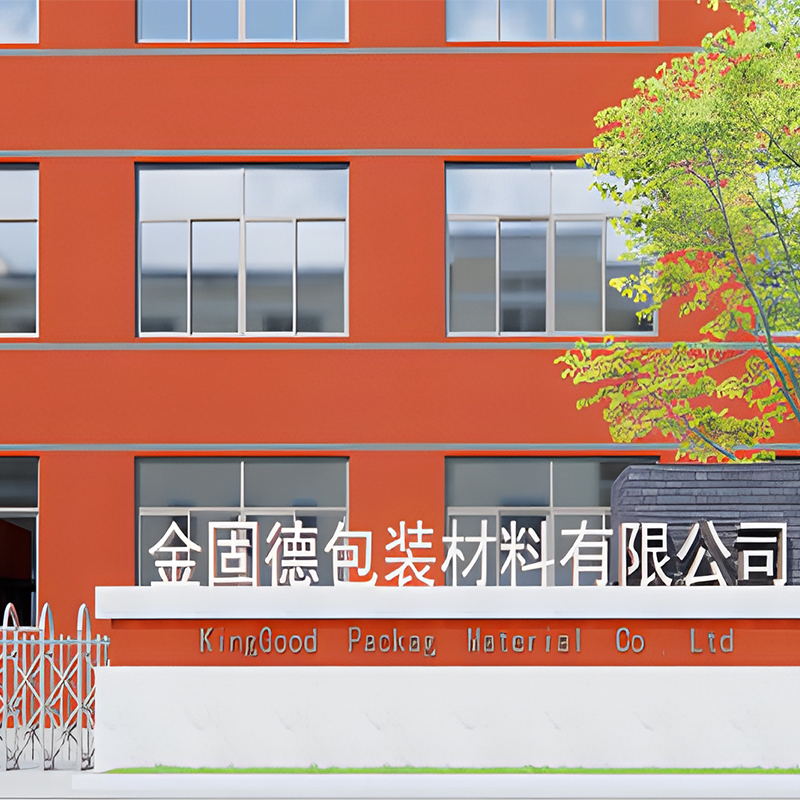
King Good Packaging Materials (NanTong)Co.,Ltd.
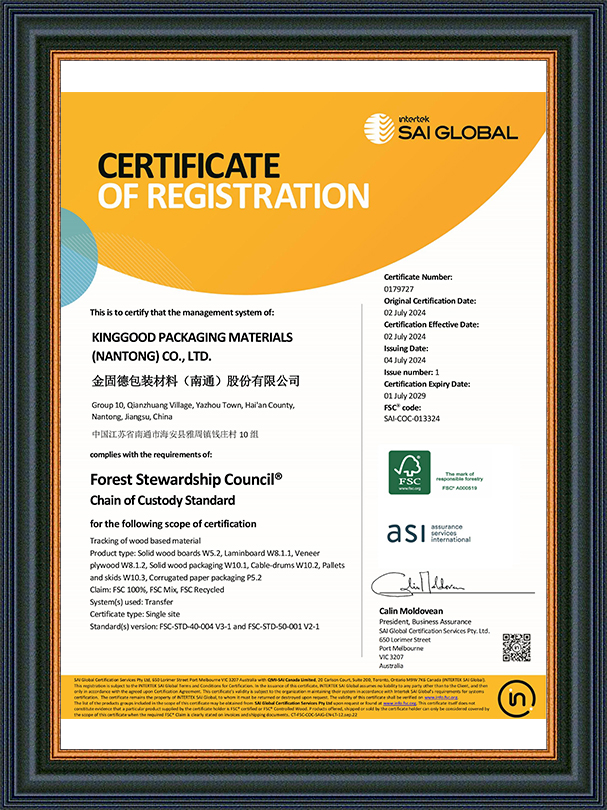
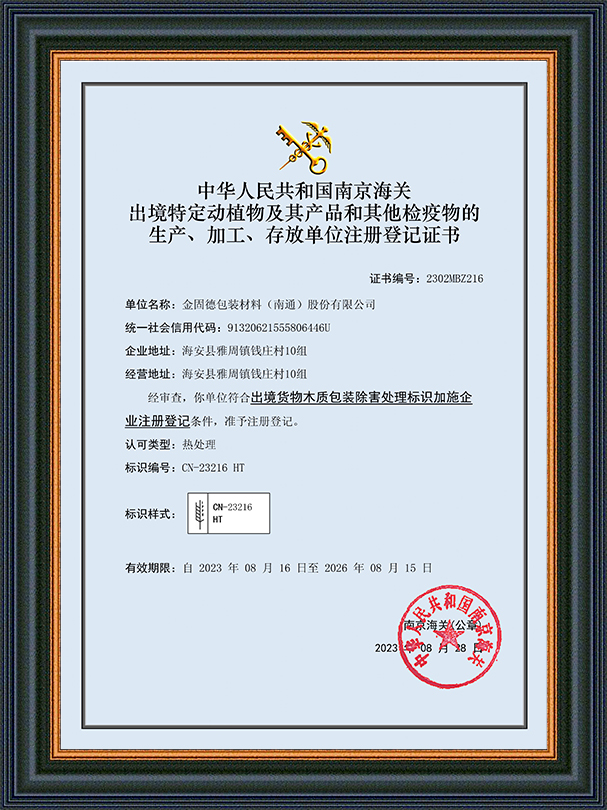
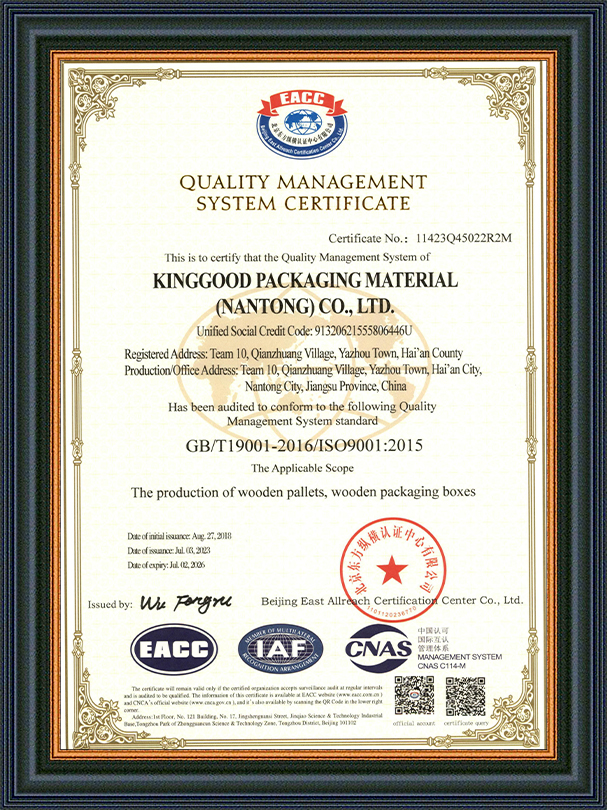
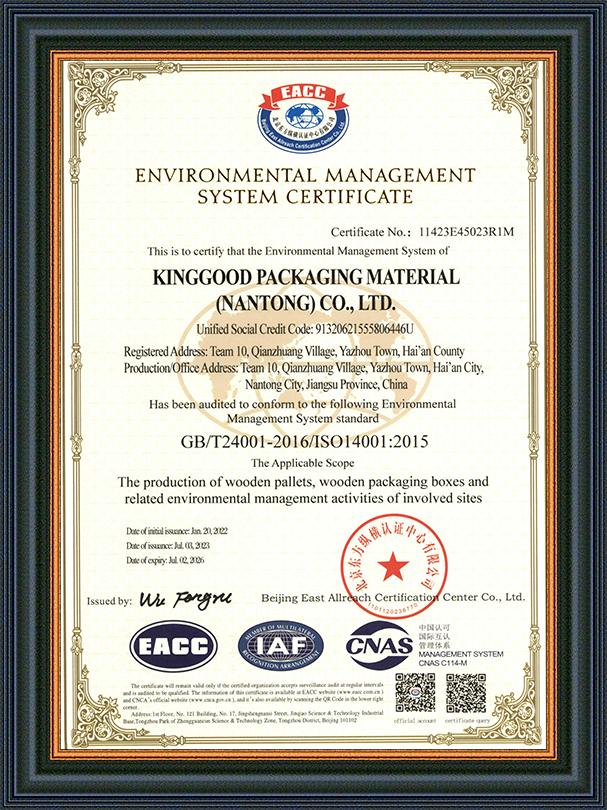
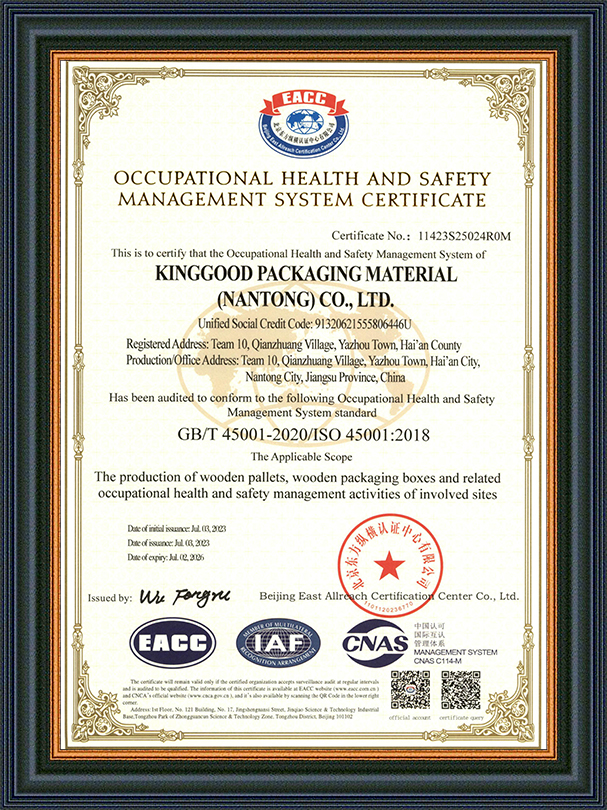
Certificate Of Honor

Latest Articles

Foldable Plywood Box Industry knowledge
Why Foldable Plywood Boxes Cut Storage and Return Costs
For companies running repeated shipping cycles between the same origin and destination, a foldable plywood box solves a problem that fixed crates cannot: what happens to the empty packaging after the cargo is unloaded. Unlike a rigid crate, which takes up its full assembled volume whether full or empty, a foldable plywood box collapses flat for the return trip, dramatically reducing the warehouse space and freight cost needed to bring packaging back into the supply chain for reuse.
The main advantages of choosing a foldable plywood box over a fixed crate include:
- Major volume reduction when collapsed, often cutting empty-return storage space by a large margin compared with assembled crates.
- Lower return freight cost, since flat-packed boxes can be stacked and shipped back far more efficiently than rigid ones.
- Fast assembly and disassembly at each end of the shipping cycle, reducing labor time compared with nailed or bolted crates.
- Extended reuse life, since hinge and latch systems reduce the wear that repeated nailing and unnailing causes on fixed crates.
How Foldable Plywood Boxes Fold Flat Without Losing Strength
Hinged Panel Construction
Foldable plywood boxes use plywood side panels connected to a fixed base through steel or reinforced hinges, allowing each wall to fold inward or outward on a controlled axis. Properly positioned hinges are what allow the panels to fold flat against the base while still locking into a rigid, load-bearing shape when raised.
Locking and Latch Systems
Once the panels are raised into position, locking latches or corner clamps secure the walls to the base and to each other, forming a stable enclosed structure. These fastening points are engineered to withstand repeated opening and closing cycles without loosening, which is essential for boxes expected to survive dozens of round trips.
Base Reinforcement for Load Support
Since the base remains fixed while the walls fold, it carries the majority of the structural load and is typically built thicker and more heavily reinforced than the side panels. A properly reinforced base allows the box to be forklifted and stacked safely even while the surrounding walls use lighter plywood to keep overall weight manageable.
When a Foldable Box Makes More Sense Than a Fixed Crate
Foldable plywood boxes are most cost-effective in specific shipping patterns rather than as a universal replacement for fixed crating.
| Shipping Pattern | Foldable Box Fit | Reason |
|---|---|---|
| Repeated round-trip routes | Strong fit | Return freight and storage costs drop significantly |
| Limited warehouse floor space | Strong fit | Collapsed boxes free up storage footprint |
| One-way export shipments | Limited fit | Reuse benefit is not realized on a single trip |
| Extremely heavy machinery | Limited fit | Better suited to solid, heavy duty crating |
Frequently Asked Questions About Foldable Plywood Boxes
Q1: How much space does a foldable plywood box save when collapsed?
The exact reduction depends on the box design, but collapsing the side panels flat against the base typically reduces the box's volume dramatically compared with its assembled footprint, freeing up significant storage and return-freight space.
Q2: Are foldable boxes as strong as fixed wooden crates?
With a properly reinforced base and secure locking latches, foldable plywood boxes can support comparable loads to fixed crates for most general cargo, though extremely heavy or dense machinery is often better suited to solid, heavy duty crating.
Q3: How many times can a foldable plywood box be reused?
With properly maintained hinges and latches, a well-built foldable box can typically be folded and reassembled across many shipping cycles before requiring repair or replacement.
Q4: Is a foldable box worth it for a single one-way shipment?
Generally not, since the main cost advantage comes from repeated reuse; a single one-way export shipment is often better served by a standard fixed crate.
Reusable Foldable Plywood Boxes Built for Repeat Cycles
Headquartered in Yazhou Town, Hai'an, Nantong, King Good Packaging Materials (Nantong) Co., Ltd. operates processing facilities across multiple regions, including Taizhou, Fengxian in Shanghai, Wuhan, Dongguan, Kunshan, and Beilun in Ningbo, designing foldable plywood boxes alongside fixed wooden crates, wooden pallets, and packaging boards. With strict, stage-by-stage production control and a complete chain covering production, after-sales service, and on-site packaging, the company helps customers running repeated shipping routes reduce both packaging costs and potential losses during long-distance transportation.


Got Questions? Contact Us Now
-
Copyright @ King Good Packaging Materials (NanTong)Co.,Ltd. All Rights Reserved. Wholesale Foldable Plywood Box Manufacturer Foldable Plywood Box Company

-
Contact info.
+86-0513-88669885 +86-13813749256 13813749256@163.com Qianzhuang Village, Yazhou Town, Hai'an City, Nantong City, Jiangsu Province, China - About KINGGOOD Packaging Series Industry Solutions OEM Service News Contact