

 English
 中文简体
中文简体 Español

King Good Packaging Materials (NanTong)Co.,Ltd. is a Wholesale Paper Pallet Manufacturer and Paper Pallet Company, committed to becoming a national OEM manufacturer of wood products packaging, specializing in the design, development and production of wood products. It has processing factories of different scales in Taizhou, Jiangsu Province, Fengxian, Shanghai, Wuhan, Hubei Province, Dongguan, Guangdong Province, Kunshan, Jiangsu Province and Beilun, Ningbo. The company's headquarters is located in Yazhou Town, Haian City, Nantong City. Since the establishment of the factory, it has newly introduced wood processing machinery and supporting equipment, and has technicians with many years of rich experience. It strictly controls each production procedure and ensures quality and quantity with proficient skills. We have formed a complete chain covering production, after-sales service and on-site packaging. Our perfect service has won high praise from many enterprises.
Based on raw materials such as fir, pine, miscellaneous wood, plywood and particleboard, KingGood can customize different products according to development to avoid unnecessary losses during long-distance transportation. Main products: Packaging boards, multi-layer boards, (for export and domestic use) wooden pallets. Wooden crates, pallet boards, front boards, and side board wooden crates (plywood, pallets, and packaging boxes can be exported directly without inspection, saving you a lot of cumbersome procedures) can provide packaging for extra-large mechanical equipment. Our company adheres to the principle of keeping promises, achieving mutual benefit and win-win results, getting along harmoniously, doing things with dedication, and providing excellent service. Ensure the company's continuous and stable development.


Paper Pallet
All Products
Paper Pallet Manufacturer
Paper Pallets are a highly compliant storage and transportation tool for export. Their core advantage lies in eliminating the fumigation or heat treatment processes of traditional wooden pallets. Made from waste paper and kraft paper, they contain no natural wood components, fundamentally eliminating the risk of pests and diseases. They can directly meet the entry quarantine requirements of most countries, including Europe, the United States, Japan, South Korea, and Southeast Asia, eliminating the need for additional disinfection or labeling procedures. This effectively avoids the detention, destruction, or customs clearance delays caused by quarantine issues, significantly improving cross-border logistics efficiency. Furthermore, they offer greater assurance of material compliance. Unlike some countries that impose additional restrictions on plastic pallets (such as the content of specific chemicals) or recycling labels, paper pallets are simple and easy to test, eliminating material compliance disputes and making them suitable for the packaging and transportation needs of a wide range of export goods.
Paper pallets offer significant advantages in terms of cost control. Their raw materials, primarily waste and recycled paper, are widely available and offer stable market prices, eliminating the need for scarce or expensive raw materials. The production process, primarily lamination and die-cutting, is relatively simple, requiring no complex processing equipment. Large-scale production keeps costs manageable. When purchased in bulk, the unit price is typically only 50%-70% of that of wooden pallets and 30%-50% of that of plastic pallets, directly reducing initial procurement costs. Furthermore, their lightweight nature indirectly reduces the overall shipping weight of goods, helping to lower logistics costs such as sea and air freight, further improving overall cost-effectiveness. They are particularly suitable for companies that are sensitive to packaging costs and frequently export.
About KINGGOOD
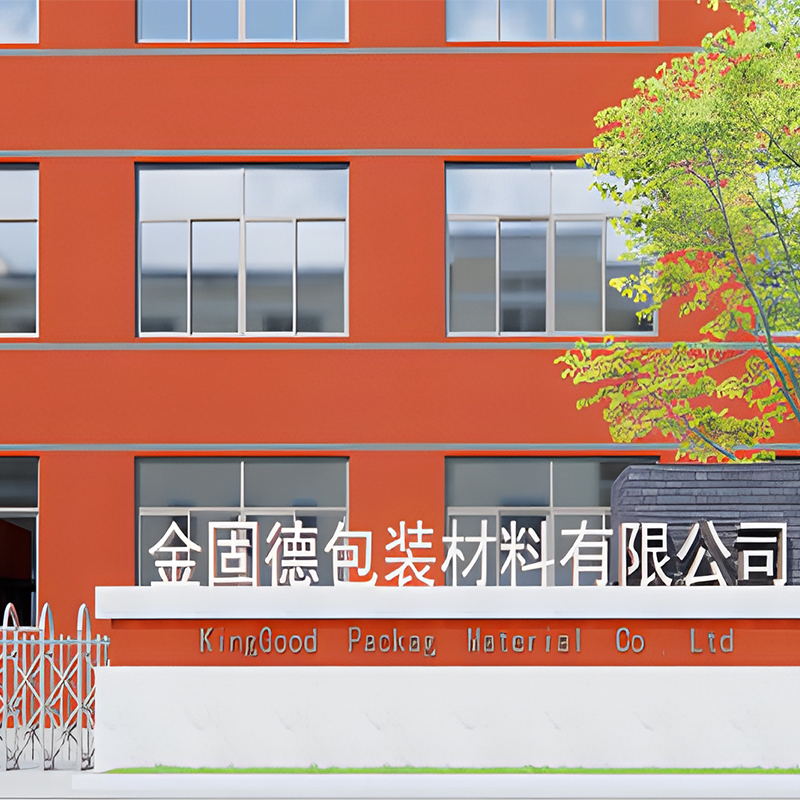
King Good Packaging Materials (NanTong)Co.,Ltd.
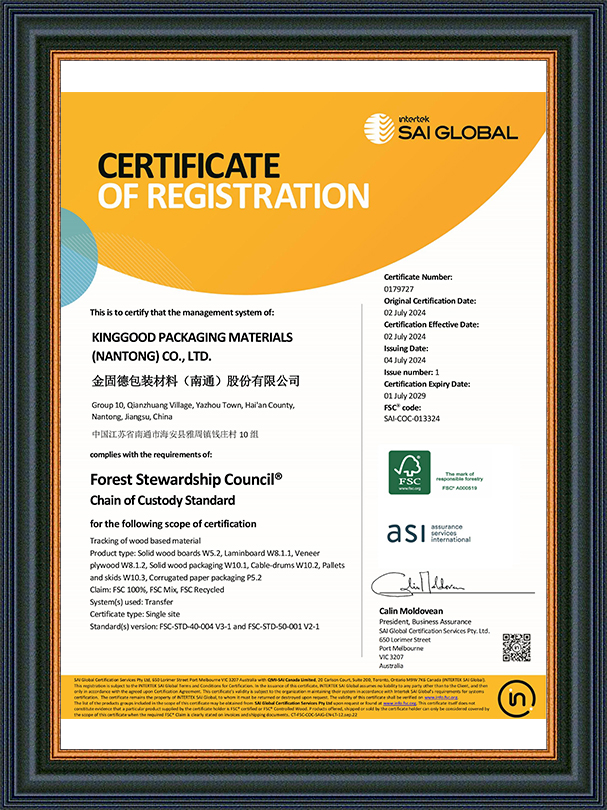
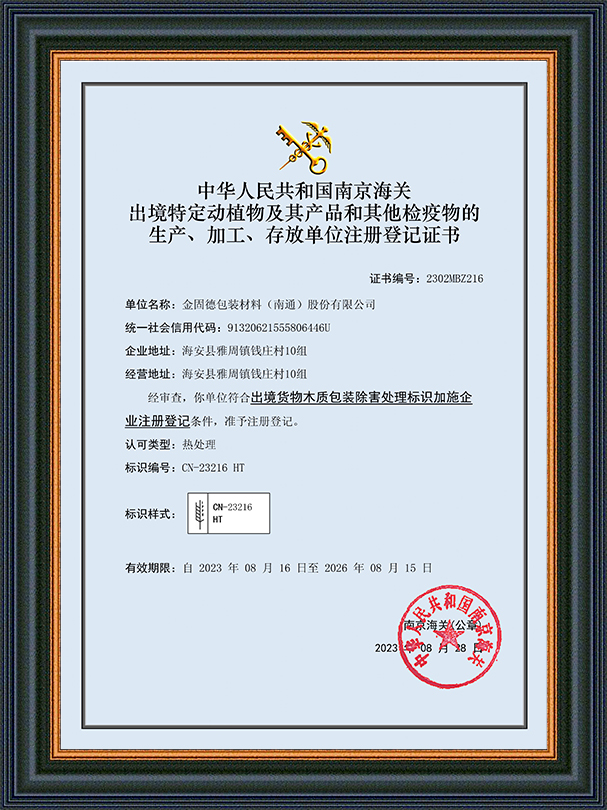
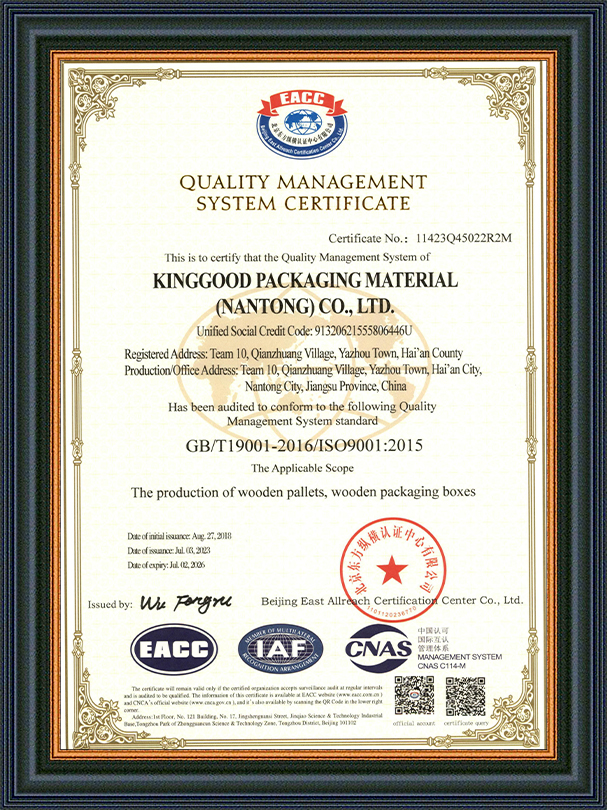
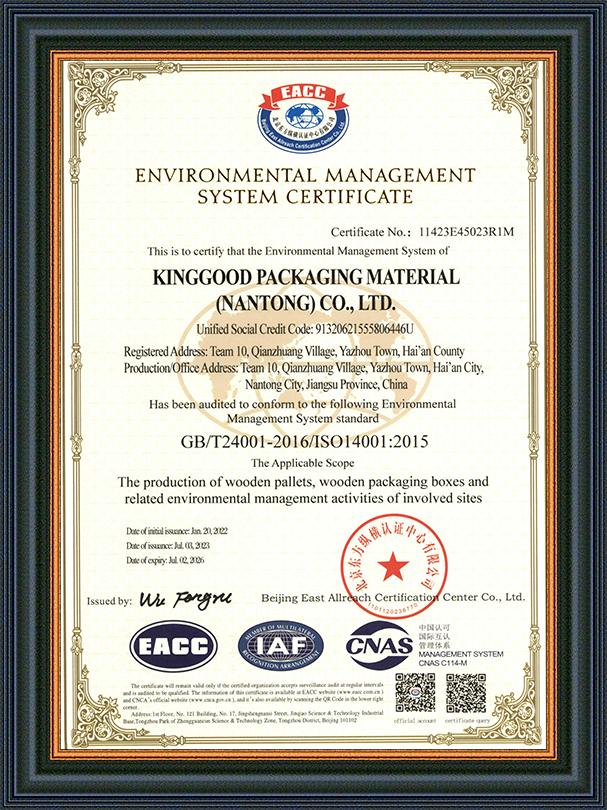
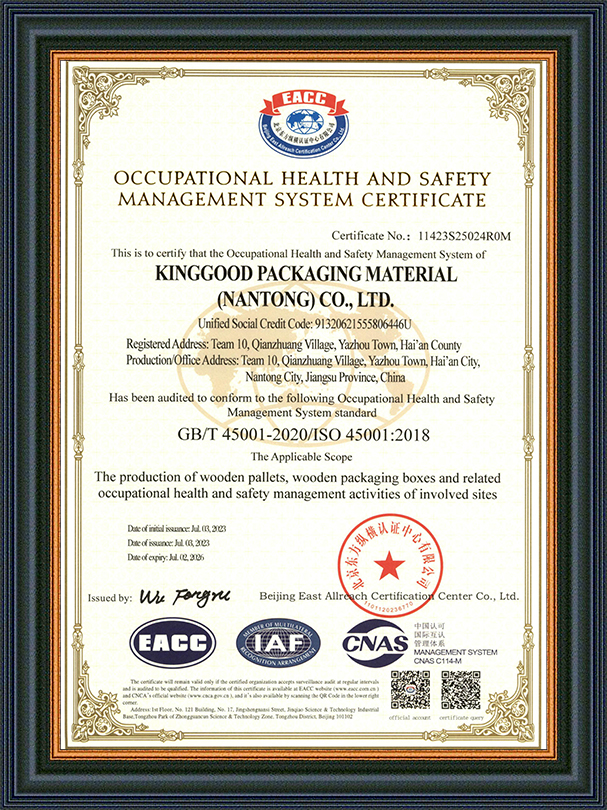
Certificate Of Honor

Latest Articles

Paper Pallet Industry knowledge
Why Paper Pallets Are Gaining Ground in Lightweight Logistics
As exporters look for ways to cut freight weight and simplify customs procedures, the paper pallet has become a practical alternative to solid wood for cargo that does not require maximum load capacity. Built from high-density paperboard or honeycomb paper cores, these pallets are significantly lighter than timber equivalents while still meeting the structural needs of many light-to-medium industrial and retail shipments.
The practical advantages of choosing a paper pallet over a traditional wooden one include:
- Significant weight reduction compared with solid wood, which lowers air and sea freight costs on a per-shipment basis.
- Exemption from ISPM 15 wood packaging treatment rules, since paper pallets are not classified as solid wood packaging material.
- No risk of splinters, nail protrusions, or metal fasteners, which is valuable for hand-loaded or sensitive cargo.
- Recyclable construction that supports lower-waste packaging programs for environmentally conscious supply chains.
How Paper Pallets Are Engineered to Carry Real Loads
Honeycomb Core Construction
Most paper pallets rely on a honeycomb paperboard core sandwiched between flat paper liner sheets, a structure that mimics the load distribution principle of corrugated cardboard but at much greater density. This honeycomb geometry allows a lightweight paper deck to resist compression forces that would otherwise require a far heavier solid material.
Moisture-Resistant Treatments
Because paper is naturally more sensitive to humidity than wood, quality paper pallets are treated with water-resistant coatings or laminated films to slow moisture absorption during storage and transit. This treatment helps maintain structural integrity in typical warehouse and short-to-medium transit conditions.
Load Rating and Deck Design
Paper pallet decks are typically designed with reinforced edges and a full-contact base to spread weight evenly, rather than relying on the point-loading stringers used in wooden pallets. This flat, continuous support surface is well suited to cartons and uniformly packed goods, though it generally performs best under static or racked storage rather than repeated dynamic handling.
Paper Pallets vs. Wooden Pallets: Choosing the Right Fit
Paper pallets are not meant to replace wooden pallets in every scenario. The right choice depends on cargo weight, expected handling conditions, and export requirements.
| Factor | Paper Pallet | Wooden Pallet |
|---|---|---|
| Weight | Lightweight | Heavier |
| Export treatment required | Not subject to ISPM 15 | Requires ISPM 15 treatment |
| Best suited load type | Light-to-medium, uniform cartons | Heavy, irregular, or bulk cargo |
| Reuse across multiple trips | Limited, best for single-use cycles | Reusable over many shipping cycles |
Frequently Asked Questions About Paper Pallets
Q1: How much lighter is a paper pallet compared with a wooden one?
Exact figures vary by design, but honeycomb paper pallets are generally substantially lighter than solid wood pallets of similar footprint, which directly reduces chargeable freight weight on air and ocean shipments.
Q2: Do paper pallets require ISPM 15 fumigation for export?
No. Since paper pallets are not classified as solid wood packaging material, they are exempt from the ISPM 15 heat treatment and fumigation requirements that apply to wooden pallets.
Q3: Can paper pallets handle humid shipping conditions?
With water-resistant coatings or laminated films, paper pallets can tolerate typical warehouse and transit humidity, though they are generally better suited to shorter transit times than prolonged exposure to wet marine environments.
Q4: Are paper pallets reusable?
Paper pallets are primarily designed for single-use or limited-cycle applications, whereas wooden pallets are typically better suited to repeated, long-term reuse across multiple shipments.
A Full Range of Pallet Solutions for Every Shipping Need
Headquartered in Yazhou Town, Hai'an, Nantong, King Good Packaging Materials (Nantong) Co., Ltd. operates processing facilities across multiple regions, including Taizhou, Fengxian in Shanghai, Wuhan, Dongguan, Kunshan, and Beilun in Ningbo, offering paper pallets alongside wooden pallets, wooden crates, packaging boards, and cushion boards to match different cargo weights and budgets. With a complete chain covering production, after-sales service, and on-site packaging support, the company helps customers select the pallet type that best balances cost, weight, and protection for each shipment.


Got Questions? Contact Us Now
-
Copyright @ King Good Packaging Materials (NanTong)Co.,Ltd. All Rights Reserved. Wholesale Paper Pallet Manufacturer Paper Pallet Company

-
Contact info.
+86-0513-88669885 +86-13813749256 13813749256@163.com Qianzhuang Village, Yazhou Town, Hai'an City, Nantong City, Jiangsu Province, China - About KINGGOOD Packaging Series Industry Solutions OEM Service News Contact