

 English
 中文简体
中文简体 Español
King Good Packaging Materials (NanTong)Co.,Ltd. is a Custom Honeycomb Paper Pallet Manufacturer and Honeycomb Paper Pallet Factory, committed to becoming a national OEM manufacturer of wood products packaging, specializing in the design, development and production of wood products. It has processing factories of different scales in Taizhou, Jiangsu Province, Fengxian, Shanghai, Wuhan, Hubei Province, Dongguan, Guangdong Province, Kunshan, Jiangsu Province and Beilun, Ningbo. The company's headquarters is located in Yazhou Town, Haian City, Nantong City. Since the establishment of the factory, it has newly introduced wood processing machinery and supporting equipment, and has technicians with many years of rich experience. It strictly controls each production procedure and ensures quality and quantity with proficient skills. We have formed a complete chain covering production, after-sales service and on-site packaging. Our perfect service has won high praise from many enterprises.
Based on raw materials such as fir, pine, miscellaneous wood, plywood and particleboard, KingGood can customize different products according to development to avoid unnecessary losses during long-distance transportation. Main products: Packaging boards, multi-layer boards, (for export and domestic use) wooden pallets. Wooden crates, pallet boards, front boards, and side board wooden crates (plywood, pallets, and packaging boxes can be exported directly without inspection, saving you a lot of cumbersome procedures) can provide packaging for extra-large mechanical equipment. Our company adheres to the principle of keeping promises, achieving mutual benefit and win-win results, getting along harmoniously, doing things with dedication, and providing excellent service. Ensure the company's continuous and stable development.


Paper Pallet
All Products
Honeycomb Paper Pallet
Honeycomb paper pallets feature a honeycomb-shaped paper core, covered with high-strength paper top and bottom, bonded and pressed with environmentally friendly water-based or starch-based adhesive. The honeycomb core, designed to mimic a honeycomb structure, evenly distributes external forces, significantly increasing load-bearing capacity while achieving lightweighting. Some models feature paper corner protectors and reinforcement strips at the edges or in load-bearing areas to further enhance structural stability. Made entirely of environmentally friendly materials, these pallets are odorless and release no harmful chemicals, complying with green packaging standards. Upon disposal, they are fully recyclable or naturally degrade into the environment, reducing ecological impact. The flexible design allows for adjustable size and thickness based on cargo specifications and usage scenarios. Some models are detachable or foldable, significantly reducing storage space when not in use, facilitating bulk transport and management.
This pallet is suitable for a variety of light and medium-weight cargo needs, such as appliance parts, clothing and luggage, medical devices, and food packaging. It is widely used in e-commerce warehousing, production lines, and cross-border transportation. Compared to corrugated pallets, their honeycomb structure offers greater impact resistance and load-bearing stability, making them more adaptable to complex logistics environments. Compared to wooden or plastic pallets, they are lighter and easier to handle, reducing logistics costs. They also eliminate the need for fumigation and simplify cross-border customs clearance. Furthermore, the pallet surface can be customized with brand logos, protective instructions, and other information, balancing practical functionality with brand communication needs, providing a high-quality load-bearing solution for those pursuing efficient and environmentally friendly logistics systems.
About KINGGOOD
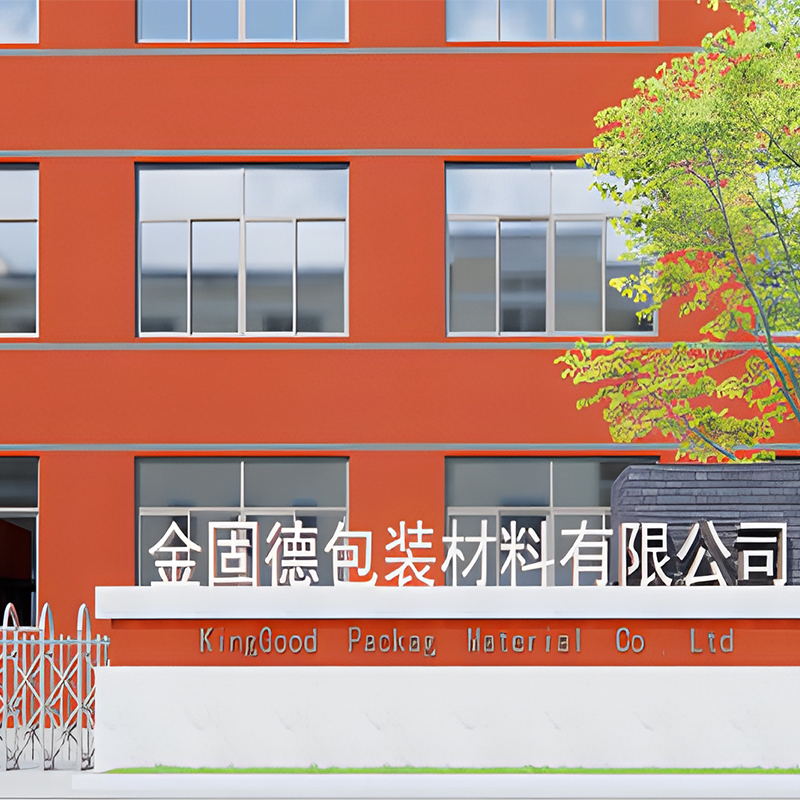
King Good Packaging Materials (NanTong)Co.,Ltd.
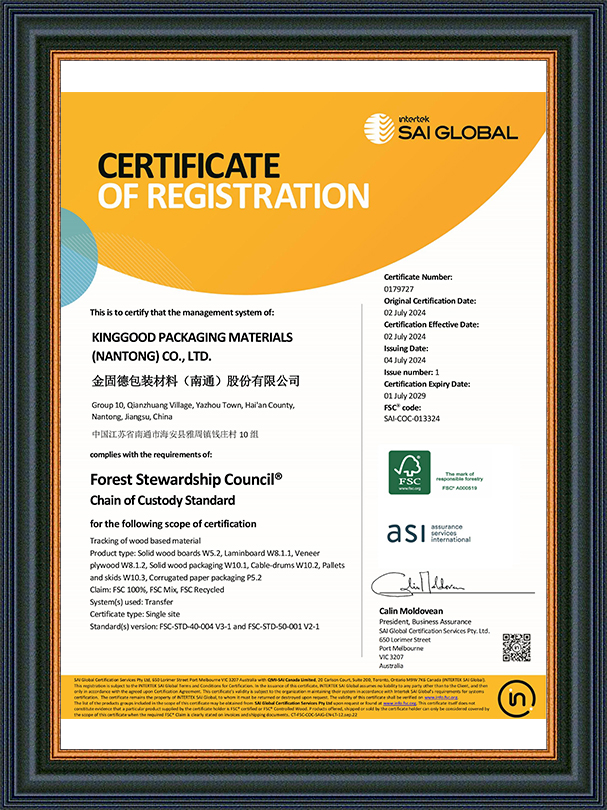
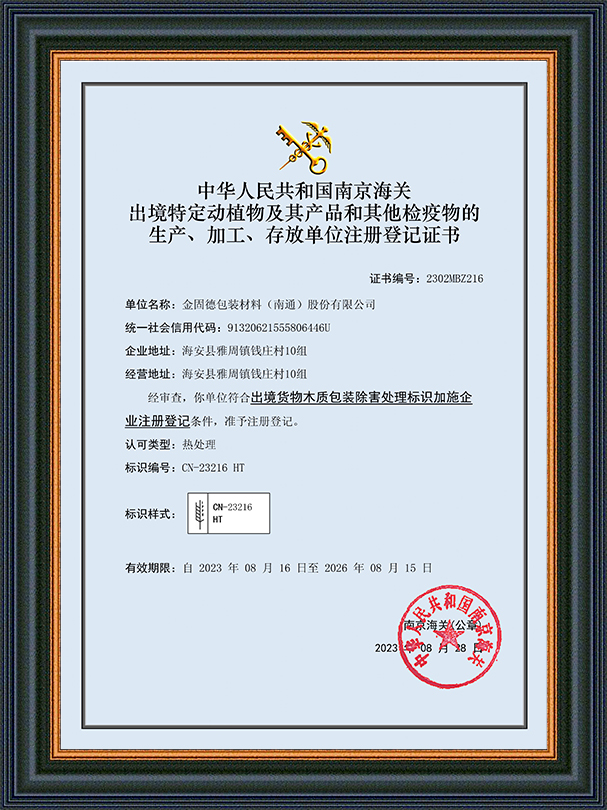
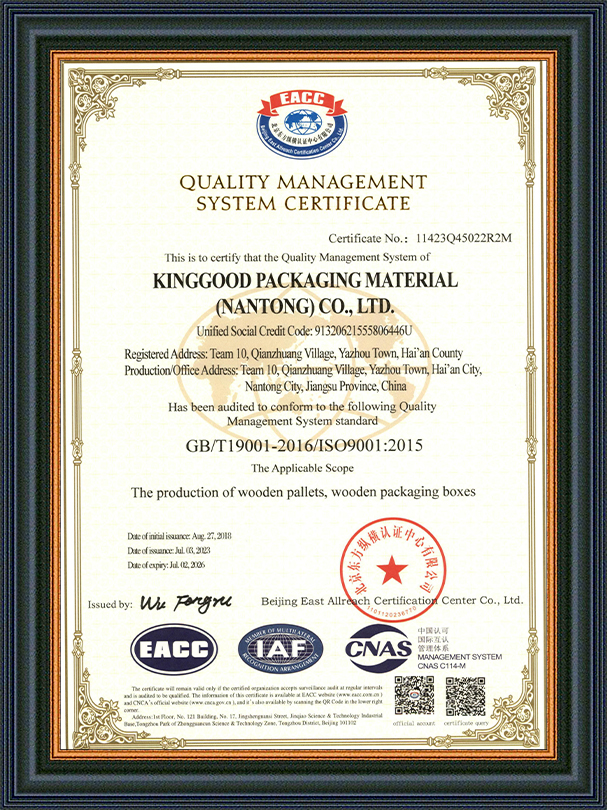
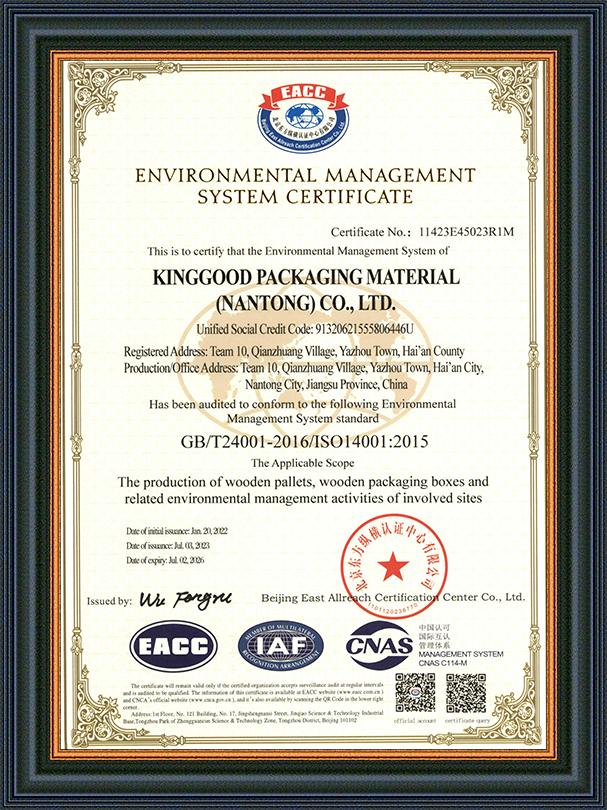
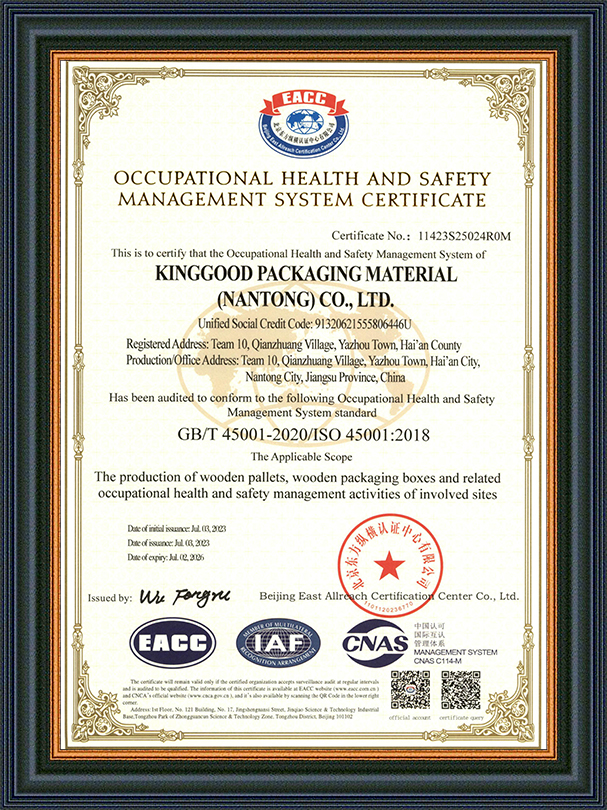
Certificate Of Honor

Message Feedback
Latest Articles

Paper Pallet Industry knowledge
Why Honeycomb Paper Pallets Deliver Strength at a Fraction of the Weight
A honeycomb paper pallet takes its strength from geometry rather than material mass, using a core of small hexagonal paper cells to achieve compression resistance that would normally require a much heavier material. This structural principle, borrowed from the same hexagonal efficiency seen in natural honeycomb, allows the pallet to stay extremely lightweight while still supporting palletized cartons through storage, handling, and transit.
The core advantages of choosing a honeycomb paper pallet include:
- One of the highest strength-to-weight ratios among paper-based pallet designs, thanks to the hexagonal cell structure.
- Exemption from ISPM 15 wood packaging treatment rules, since honeycomb paper is not classified as solid wood material.
- No metal fasteners or exposed nails, making it well suited to cargo that is sensitive to static discharge or metal contact.
- Fully recyclable paper construction that supports lower-waste, single-use packaging programs.
How the Honeycomb Core Achieves Its Load-Bearing Strength
Hexagonal Cell Geometry
The core is built from strips of paper glued into a repeating hexagonal cell pattern, then expanded and sandwiched between flat paper liner sheets. The hexagon is the most material-efficient shape for resisting compression from directly above, since each cell wall shares its load with the six cells surrounding it, spreading pressure evenly rather than concentrating it at a single point.
Liner Sheet Bonding
Flat kraft liner sheets bonded to the top and bottom of the honeycomb core act like the flanges of a structural beam, converting the individually weak paper cells into a rigid composite panel. This layered bonding is what allows a core made of thin paper to behave like a much thicker, stiffer material under load.
Deck and Runner Assembly
The finished honeycomb panels are cut and assembled into a deck-and-runner layout similar in function to a wooden pallet, with runners lifting the deck off the ground to allow forklift or pallet jack entry. Reinforced corner and edge sections help protect the more delicate cell structure from impact during loading.
Comparing Honeycomb Paper Pallets With Other Paper-Based Options
Not all paper pallet designs perform the same way, and understanding the differences helps match the right structure to the shipment.
| Feature | Honeycomb Paper Pallet | Corrugated Paper Pallet |
|---|---|---|
| Strength-to-weight ratio | Very high | Good |
| Core structure | Expanded hexagonal cells | Stacked fluted layers |
| Best suited use | Precision or static-sensitive cargo | General light-to-medium cartons |
Because the honeycomb core contains no metal fasteners or exposed nails, this pallet type is often selected for electronics, semiconductor components, and other cargo where metal contact or static discharge risk needs to be minimized during handling.
Frequently Asked Questions About Honeycomb Paper Pallets
Q1: Why is a hexagonal cell pattern used instead of a simple grid?
The hexagon shares its walls efficiently with surrounding cells, distributing compression forces evenly across the core, which gives more strength per unit of paper material than a simple square grid pattern.
Q2: Do honeycomb paper pallets need ISPM 15 export treatment?
No. Since honeycomb paper is not classified as solid wood packaging material, it is exempt from the ISPM 15 heat treatment and fumigation requirements applied to wooden pallets.
Q3: Why are honeycomb paper pallets often used for electronics shipments?
Without metal fasteners or exposed nails, they reduce the risk of static discharge or metal contact damage, which matters for sensitive electronic and semiconductor components.
Q4: Can honeycomb paper pallets be reused multiple times?
They are primarily designed for single-use or short-cycle applications; once the cell structure is compressed or damaged, its strength cannot be fully restored the way a repaired wooden pallet can.
Lightweight Paper Pallet Options Alongside Traditional Wood Packaging
Headquartered in Yazhou Town, Hai'an, Nantong, King Good Packaging Materials (Nantong) Co., Ltd. operates processing facilities across multiple regions, including Taizhou, Fengxian in Shanghai, Wuhan, Dongguan, Kunshan, and Beilun in Ningbo, offering honeycomb paper pallets alongside solid wood pallets, plywood pallets, and wooden crates. With a complete chain covering production, after-sales service, and on-site packaging, the company helps customers weigh weight, cost, and cargo sensitivity when selecting the right pallet type for each shipment.


Got Questions? Contact Us Now
-
Copyright @ King Good Packaging Materials (NanTong)Co.,Ltd. All Rights Reserved. Custom Honeycomb Paper Pallet Manufacturer Honeycomb Paper Pallet Factory

-
Contact info.
+86-0513-88669885 +86-13813749256 13813749256@163.com Qianzhuang Village, Yazhou Town, Hai'an City, Nantong City, Jiangsu Province, China - About KINGGOOD Packaging Series Industry Solutions OEM Service News Contact