

 English
 中文简体
中文简体 Español
King Good Packaging Materials (NanTong)Co.,Ltd. is a Custom American Standard Durable Solid Wood Pallet Supplier and American Standard Durable Solid Wood Pallet Factory, committed to becoming a national OEM manufacturer of wood products packaging, specializing in the design, development and production of wood products. It has processing factories of different scales in Taizhou, Jiangsu Province, Fengxian, Shanghai, Wuhan, Hubei Province, Dongguan, Guangdong Province, Kunshan, Jiangsu Province and Beilun, Ningbo. The company's headquarters is located in Yazhou Town, Haian City, Nantong City. Since the establishment of the factory, it has newly introduced wood processing machinery and supporting equipment, and has technicians with many years of rich experience. It strictly controls each production procedure and ensures quality and quantity with proficient skills. We have formed a complete chain covering production, after-sales service and on-site packaging. Our perfect service has won high praise from many enterprises.
Based on raw materials such as fir, pine, miscellaneous wood, plywood and particleboard, KingGood can customize different products according to development to avoid unnecessary losses during long-distance transportation. Main products: Packaging boards, multi-layer boards, (for export and domestic use) wooden pallets. Wooden crates, pallet boards, front boards, and side board wooden crates (plywood, pallets, and packaging boxes can be exported directly without inspection, saving you a lot of cumbersome procedures) can provide packaging for extra-large mechanical equipment. Our company adheres to the principle of keeping promises, achieving mutual benefit and win-win results, getting along harmoniously, doing things with dedication, and providing excellent service. Ensure the company's continuous and stable development.


American Standard Durable Solid Wood Pallet
All Products
American Standard Durable Solid Wood Pallet Supplier
information to be updated
About KINGGOOD

King Good Packaging Materials (NanTong)Co.,Ltd.
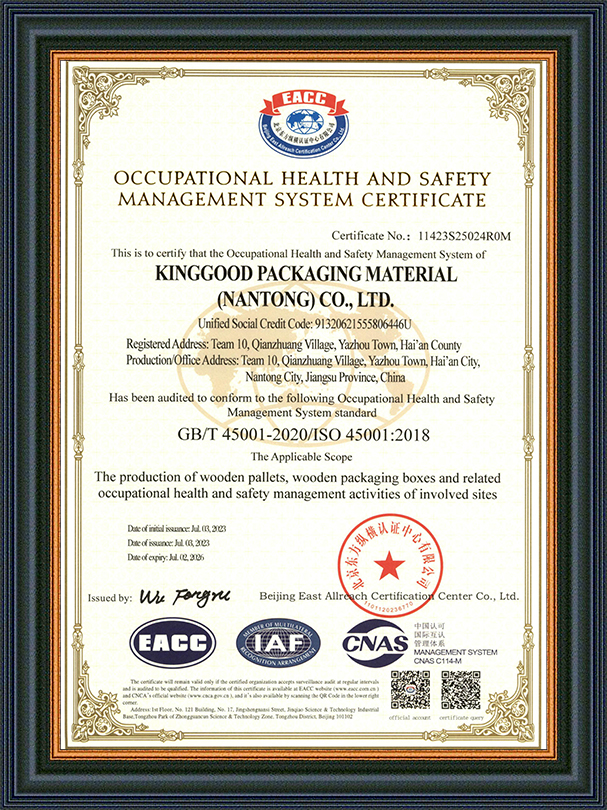
Certificate Of Honor
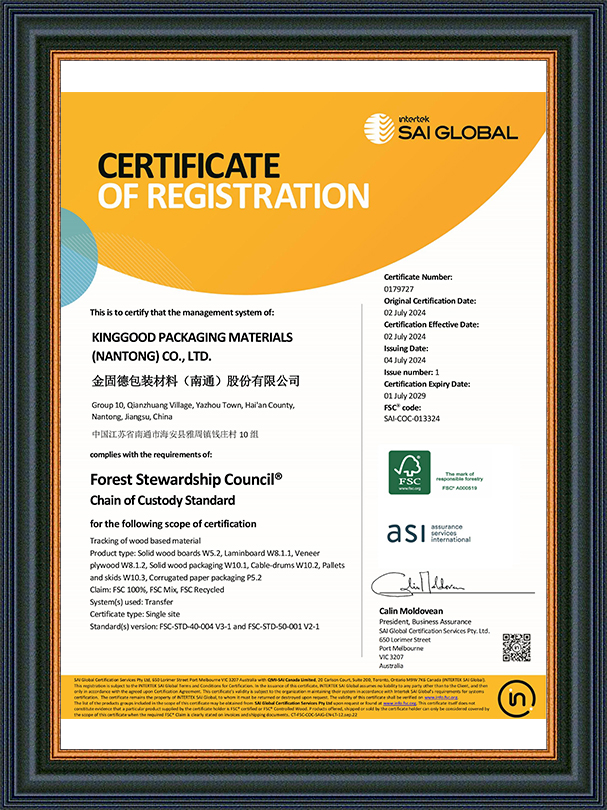
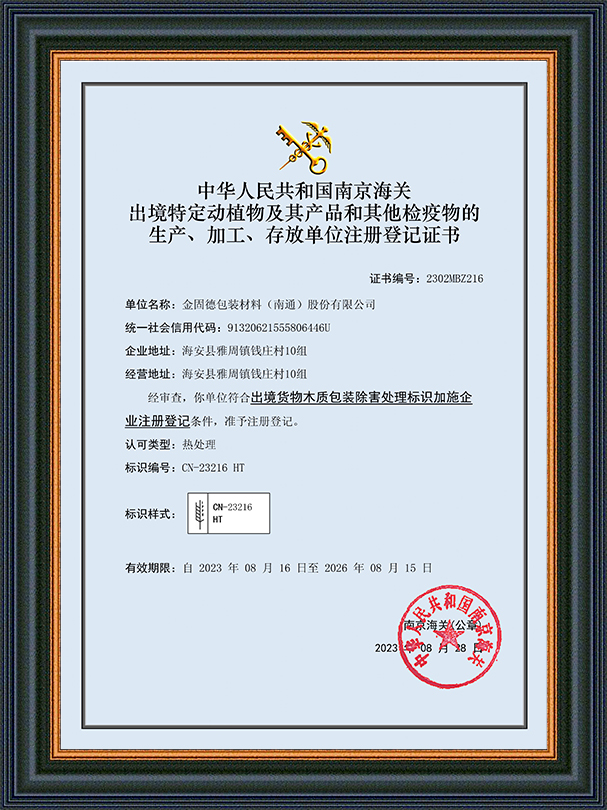
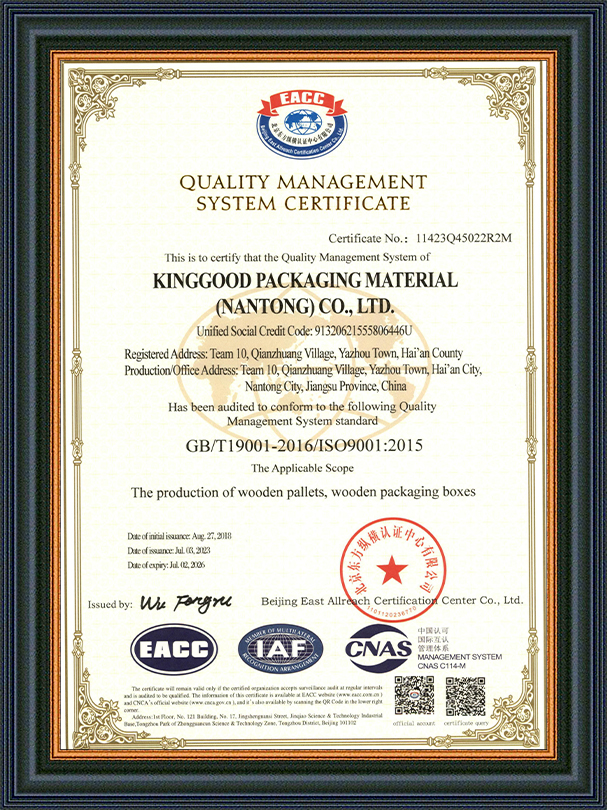
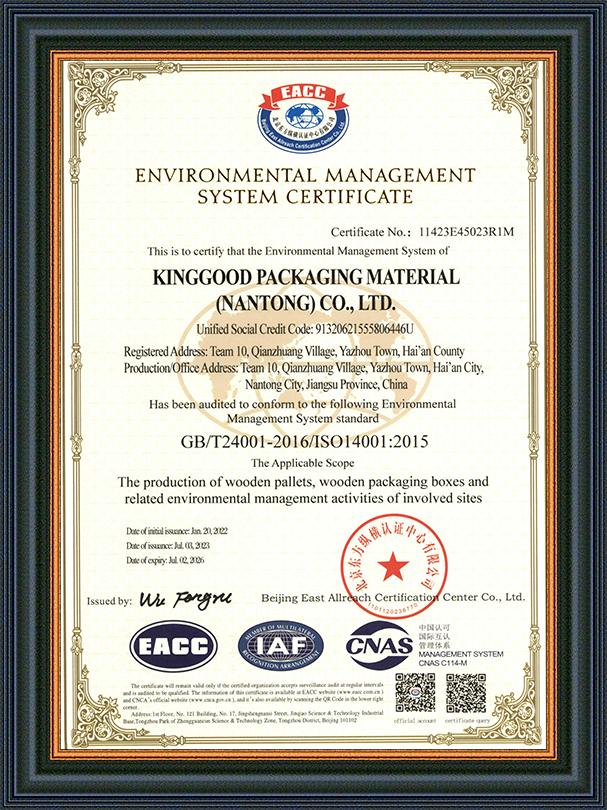

Latest Articles

American Standard Durable Solid Wood Pallet Industry knowledge
Why an American Standard Durable Solid Wood Pallet Simplifies U.S.-Bound Shipping
Exporters shipping into the United States often standardize on the American Standard Durable Solid Wood Pallet because it matches the footprint most warehouses, racking systems, and freight handling equipment across the country are already built around. Built from solid wood rather than reconstituted board, this pallet type is designed to survive repeated forklift handling, cross-country trucking, and long-term racked storage without losing structural integrity.
Choosing a durable, standard-sized solid wood pallet delivers several practical benefits:
- Direct compatibility with standard U.S. warehouse racking and pallet jack equipment, avoiding the need for custom handling procedures.
- Higher load-bearing durability than lightweight or reconstituted pallets, suited to repeated reuse across a distribution network.
- Predictable stacking and space planning, since a consistent footprint simplifies container and truck loading calculations.
- Easier pallet pooling and exchange programs, as standardized dimensions are widely accepted across U.S. supply chains.
How This Pallet Type Is Built for Long-Term Durability
Standardized Footprint and Deck Layout
The most widely used American pallet footprint measures 48 inches by 40 inches, a size commonly referred to as the GMA standard, developed by the Grocery Manufacturers Association and now used far beyond the grocery sector. Building pallets to this footprint means they fit standard rack beams, conveyor systems, and trailer loading patterns without modification.
Solid Wood Stringers for Load-Bearing Strength
Durable American standard pallets typically use solid wood stringers running the length of the pallet, connected to top and bottom deck boards to create a structure capable of withstanding repeated point-loading from forklift forks. Selecting dense, properly seasoned wood for the stringers reduces the risk of splitting under sustained rack storage weight.
Fastening and Board Spacing
Deck boards are spaced and fastened to balance ventilation with surface support, preventing smaller cartons from tipping into gaps while still allowing airflow that reduces moisture buildup during storage. Consistent nail patterns and board thickness across a production run are what keep pallet quality uniform at scale.
Matching Pallet Configuration to Warehouse and Freight Needs
Even within the American standard footprint, pallets can be configured differently depending on how they will be handled and how many cycles they need to survive.
| Configuration | Handling Style | Best Suited For |
|---|---|---|
| Two-way stringer pallet | Forklift entry from two sides | Standard warehouse-to-truck cycles |
| Four-way block pallet | Forklift entry from all four sides | High-volume distribution centers |
| Heavy-duty reinforced deck | Thicker boards, denser stringers | Repeated long-term rack storage |
Solid wood pallets used in international shipments are generally required to comply with the ISPM 15 phytosanitary standard, which requires heat treatment or fumigation before export. Pallets pre-treated to this standard can move through customs without additional inspection, helping keep goods moving on schedule.
Frequently Asked Questions About the American Standard Solid Wood Pallet
Q1: What size is a standard American wood pallet?
The most common footprint is 48 inches by 40 inches, known as the GMA standard, which is designed to fit standard U.S. racking, trailers, and material handling equipment.
Q2: How is durability built into these pallets?
Durability comes from using solid, properly seasoned wood for the stringers and deck boards, along with consistent fastening patterns that prevent splitting under repeated forklift handling and long-term rack storage.
Q3: Do these pallets need special treatment before export to the U.S.?
Solid wood pallets used in international trade generally require ISPM 15 heat treatment or fumigation, a requirement that applies regardless of the destination country's specific pallet size standard.
Q4: Can these pallets be reused across multiple shipping cycles?
Yes. Solid wood construction allows American standard pallets to be inspected, repaired, and reused across many storage and shipping cycles, unlike lighter single-use alternatives.
Solid Wood Pallets Built to U.S. Standard Specifications
Headquartered in Yazhou Town, Hai'an, Nantong, King Good Packaging Materials (Nantong) Co., Ltd. operates processing facilities across multiple regions, including Taizhou, Fengxian in Shanghai, Wuhan, Dongguan, Kunshan, and Beilun in Ningbo, producing solid wood pallets built to standard specifications alongside wooden crates, packaging boards, and cushion boards. With strict process control across production, after-sales service, and on-site packaging, the company helps exporters shipping to the U.S. market reduce potential losses during long-distance transportation while keeping customs procedures straightforward.


Got Questions? Contact Us Now
-
-
Contact info.
+86-0513-88669885 +86-13813749256 13813749256@163.com Qianzhuang Village, Yazhou Town, Hai'an City, Nantong City, Jiangsu Province, China - About KINGGOOD Packaging Series Industry Solutions OEM Service News Contact
