

 English
 中文简体
中文简体 Español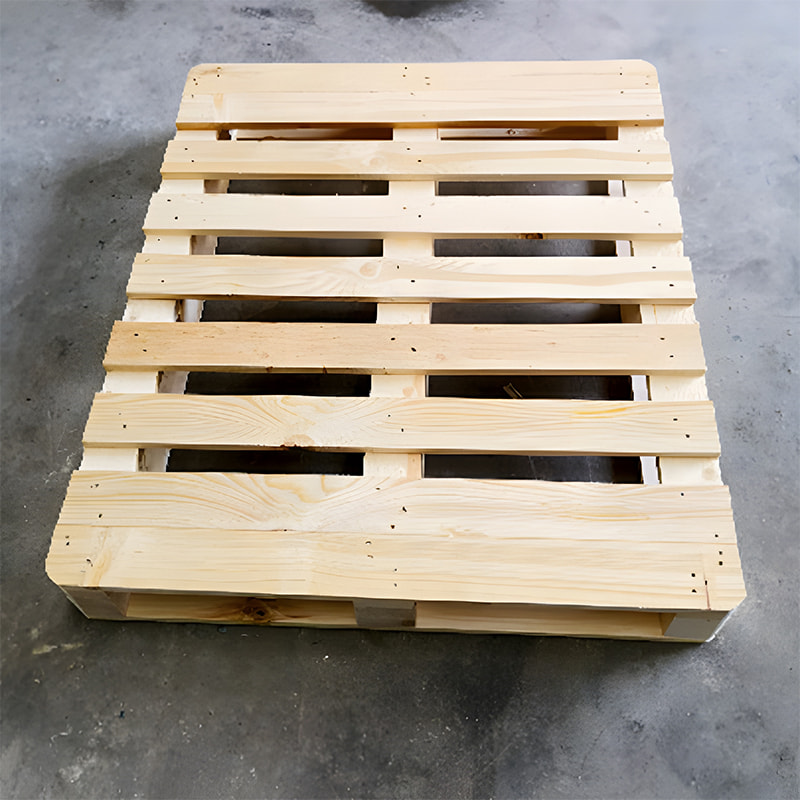
King Good Packaging Materials (NanTong)Co.,Ltd. is a Custom American Standard Durable Solid Wood Pallet Manufacturer and American Standard Durable Solid Wood Pallet Factory, committed to becoming a national OEM manufacturer of wood products packaging, specializing in the design, development and production of wood products. It has processing factories of different scales in Taizhou, Jiangsu Province, Fengxian, Shanghai, Wuhan, Hubei Province, Dongguan, Guangdong Province, Kunshan, Jiangsu Province and Beilun, Ningbo. The company's headquarters is located in Yazhou Town, Haian City, Nantong City. Since the establishment of the factory, it has newly introduced wood processing machinery and supporting equipment, and has technicians with many years of rich experience. It strictly controls each production procedure and ensures quality and quantity with proficient skills. We have formed a complete chain covering production, after-sales service and on-site packaging. Our perfect service has won high praise from many enterprises.
Based on raw materials such as fir, pine, miscellaneous wood, plywood and particleboard, KingGood can customize different products according to development to avoid unnecessary losses during long-distance transportation. Main products: Packaging boards, multi-layer boards, (for export and domestic use) wooden pallets. Wooden crates, pallet boards, front boards, and side board wooden crates (plywood, pallets, and packaging boxes can be exported directly without inspection, saving you a lot of cumbersome procedures) can provide packaging for extra-large mechanical equipment. Our company adheres to the principle of keeping promises, achieving mutual benefit and win-win results, getting along harmoniously, doing things with dedication, and providing excellent service. Ensure the company's continuous and stable development.


Solid Wood Pallet
All Products
American Standard Durable Solid Wood Pallet
The American Standard Durable Solid Wood Pallet is a logistics carrier product that complies with relevant US standards and is suitable for the storage and transportation of various goods. In terms of cost, this pallet leverages abundant raw materials such as wood and plywood, offering significant cost advantages in raw material procurement and processing, allowing for control of overall production costs while ensuring basic quality.
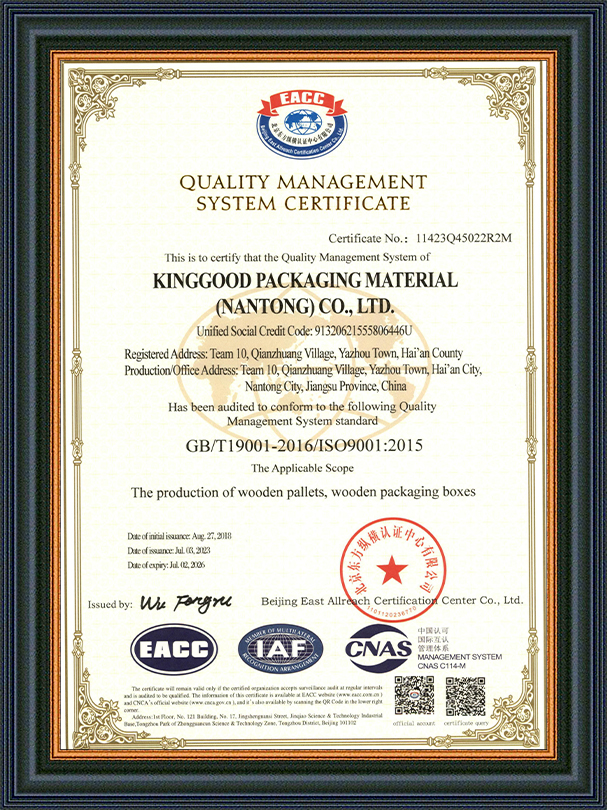
In terms of production processes and technologies, after years of development and accumulation, relevant manufacturers have developed mature production experience and continuously improved and innovated their processes. For example, in wood processing, advanced drying, anti-corrosion, and insect-proofing technologies are employed to effectively enhance the pallet's structural stability and service life. Furthermore, a high degree of automation in the production process ensures high levels of processing precision and dimensional consistency, meeting the stringent quality standards of American standards for pallets. In terms of logistics and export, domestically produced pallets, leveraging a well-developed logistics network and convenient port facilities, facilitate transportation and export, enabling more efficient transfer of products to various ports, reducing transportation time and associated costs. In terms of quality control, we have passed ISO and other relevant quality management system certifications and established a strict monitoring mechanism for the entire process from raw material inspection and warehousing, inspection of each production process to final inspection of finished products, to ensure that every exported American standard durable solid wood pallet meets quality requirements.
About KINGGOOD

King Good Packaging Materials (NanTong)Co.,Ltd.
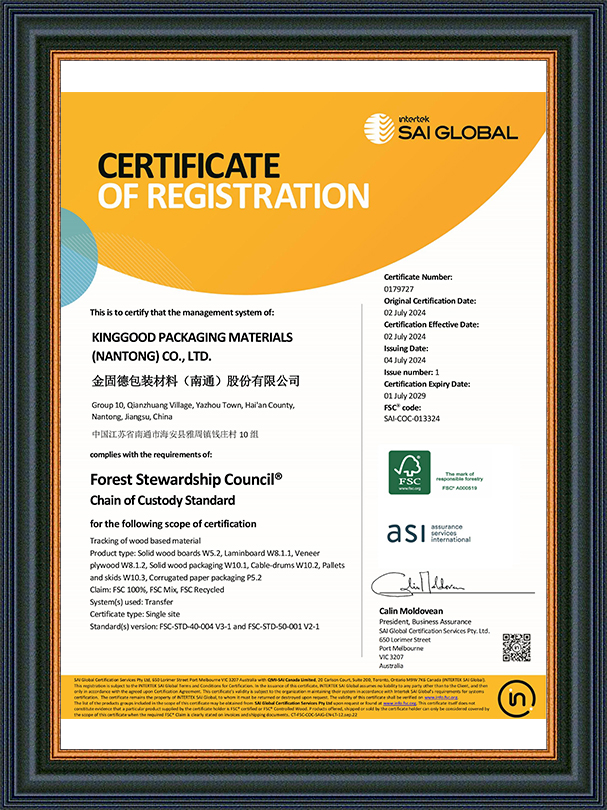
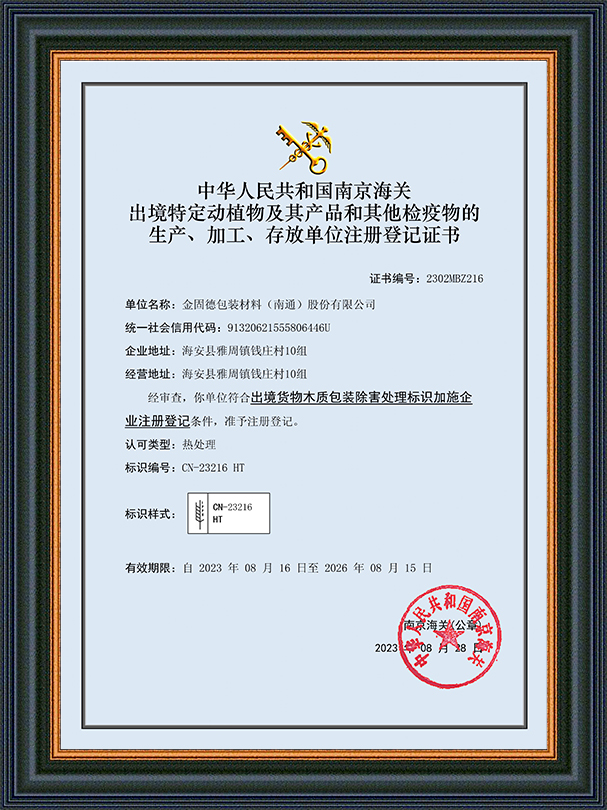
Certificate Of Honor
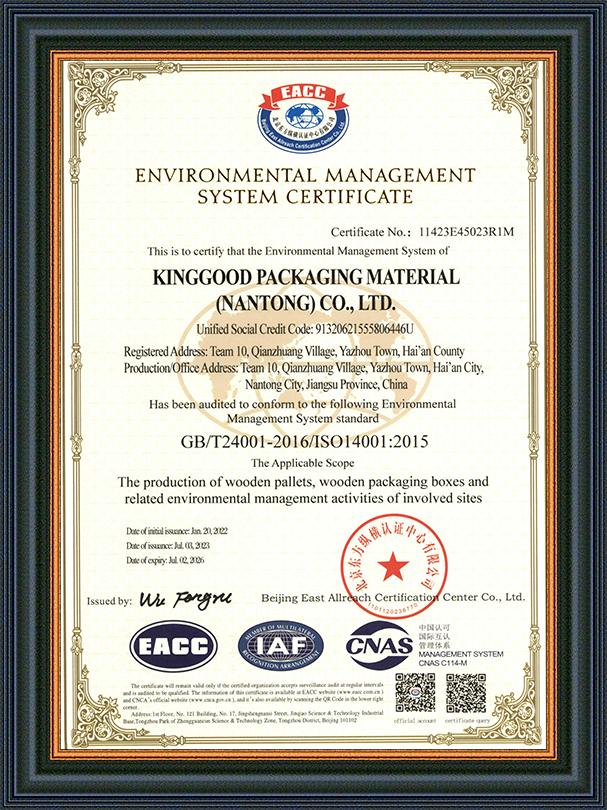
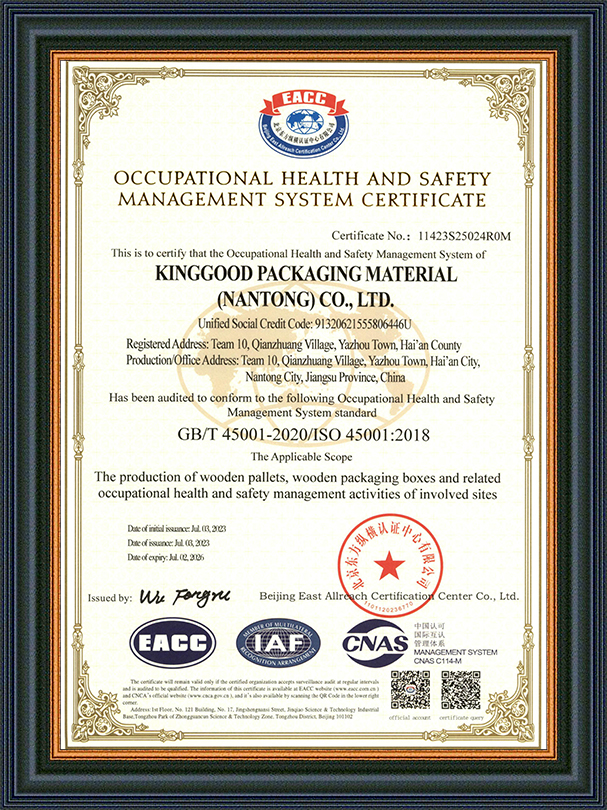

Message Feedback
Latest Articles

Solid Wood Pallet Industry knowledge
Getting the Most Service Life From an American Standard Durable Solid Wood Pallet
Buying an American Standard Durable Solid Wood Pallet is only half of the cost equation; how long that pallet stays in productive service determines its real value per shipment. Because these pallets are built from solid timber rather than single-use materials, they are designed to be inspected, repaired, and cycled back into a distribution network many times, which changes how businesses should think about pallet purchasing, tracking, and maintenance.
Treating pallets as a managed asset rather than a disposable item delivers clear operational benefits:
- Lower cost per shipping cycle, since the purchase price is spread across many reuse trips instead of a single trip.
- Fewer in-transit failures when damaged pallets are identified and repaired before re-entering the supply chain.
- Better warehouse safety, since worn or cracked pallets are a common cause of load instability on racking systems.
- More predictable procurement planning, since tracking pallet condition helps forecast replacement volume in advance.
How Inspection and Repair Extend Pallet Lifespan
Routine Visual Inspection
Before a solid wood pallet is reused, a quick visual check of the deck boards, stringers, and corner blocks can catch splitting, protruding nails, or excessive board sag before the pallet goes back into service. Catching these issues early is what prevents a minor defect from becoming a load-bearing failure during transit.
Board and Stringer Repair
Because these pallets use solid timber components, individual deck boards or damaged stringer sections can often be replaced without discarding the entire pallet. This modular repair approach is one of the key economic advantages of solid wood construction over pallets built from bonded or composite materials that are harder to repair piece by piece.
Retirement Criteria
Even durable solid wood pallets eventually reach a point where repair is no longer cost-effective, typically when structural stringers are cracked through, multiple deck boards are missing, or the overall frame has become racked out of square. Setting clear retirement criteria keeps damaged pallets from lingering in circulation and creating safety risks.
A Practical Inspection Checklist for Solid Wood Pallets
A short, consistent inspection routine helps warehouse staff make fast, reliable decisions about whether a pallet is safe to reuse.
| Inspection Point | Warning Sign | Recommended Action |
|---|---|---|
| Deck boards | Splitting or missing sections | Replace affected boards |
| Stringers | Cracks running through the section | Repair or retire the pallet |
| Fasteners | Protruding or loose nails | Re-nail or replace fasteners |
| Overall frame | Visible racking or twist | Retire from service |
Frequently Asked Questions About Pallet Lifespan and Maintenance
Q1: How often should solid wood pallets be inspected?
A quick visual check before each reuse cycle is generally sufficient to catch developing issues before a pallet returns to active handling and storage.
Q2: Can a damaged pallet always be repaired instead of replaced?
Not always. Individual board or stringer damage can often be repaired, but a pallet with a cracked structural stringer or a racked, out-of-square frame is generally safer to retire than repair.
Q3: Why is solid wood easier to repair than composite pallet materials?
Solid timber components can be individually removed and replaced with matching boards, whereas bonded or composite pallets are often harder to repair piece by piece without compromising the overall structure.
Q4: What is the biggest risk of continuing to use a worn pallet?
Worn or cracked pallets are a common cause of load instability, particularly on rack storage, where an undetected structural failure can lead to a dropped or shifted load.
Durable Pallets Designed for a Long Service Life
Headquartered in Yazhou Town, Hai'an, Nantong, King Good Packaging Materials (Nantong) Co., Ltd. operates processing facilities across multiple regions, including Taizhou, Fengxian in Shanghai, Wuhan, Dongguan, Kunshan, and Beilun in Ningbo, manufacturing solid wood pallets built to standard specifications with the timber quality and joint strength needed for repeated repair and reuse. Backed by technicians with years of hands-on experience and a complete chain covering production, after-sales service, and on-site packaging, the company helps customers reduce potential losses during long-distance transportation while keeping pallet assets in service longer.


Got Questions? Contact Us Now
-
-
Contact info.
+86-0513-88669885 +86-13813749256 13813749256@163.com Qianzhuang Village, Yazhou Town, Hai'an City, Nantong City, Jiangsu Province, China - About KINGGOOD Packaging Series Industry Solutions OEM Service News Contact
