

 English
 中文简体
中文简体 Español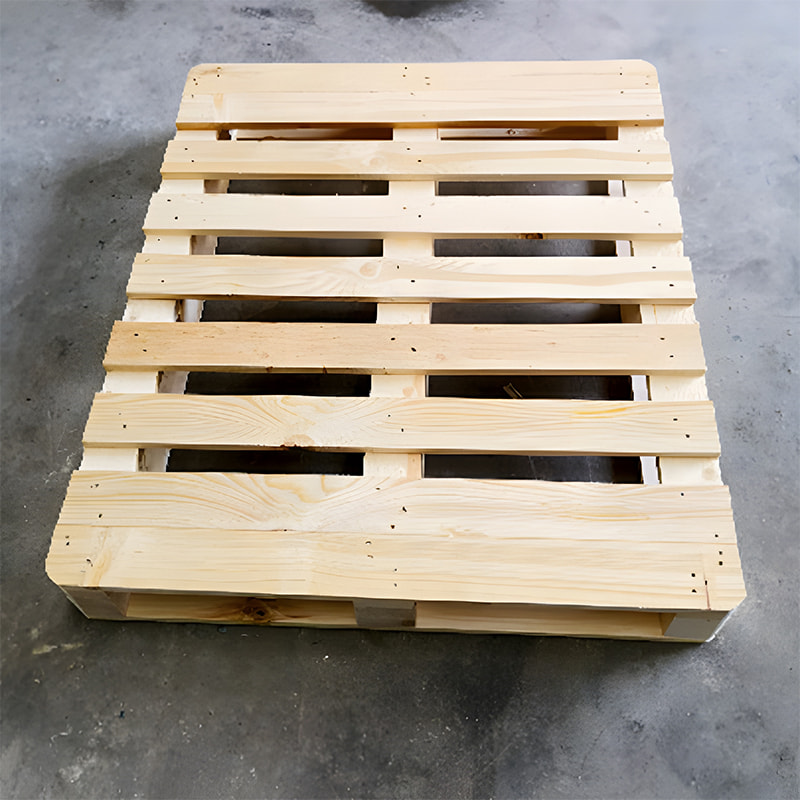
King Good Packaging Materials (NanTong)Co.,Ltd. is a Custom New European Standard Solid Wood Pallet Manufacturer and New European Standard Solid Wood Pallet Factory, committed to becoming a national OEM manufacturer of wood products packaging, specializing in the design, development and production of wood products. It has processing factories of different scales in Taizhou, Jiangsu Province, Fengxian, Shanghai, Wuhan, Hubei Province, Dongguan, Guangdong Province, Kunshan, Jiangsu Province and Beilun, Ningbo. The company's headquarters is located in Yazhou Town, Haian City, Nantong City. Since the establishment of the factory, it has newly introduced wood processing machinery and supporting equipment, and has technicians with many years of rich experience. It strictly controls each production procedure and ensures quality and quantity with proficient skills. We have formed a complete chain covering production, after-sales service and on-site packaging. Our perfect service has won high praise from many enterprises.
Based on raw materials such as fir, pine, miscellaneous wood, plywood and particleboard, KingGood can customize different products according to development to avoid unnecessary losses during long-distance transportation. Main products: Packaging boards, multi-layer boards, (for export and domestic use) wooden pallets. Wooden crates, pallet boards, front boards, and side board wooden crates (plywood, pallets, and packaging boxes can be exported directly without inspection, saving you a lot of cumbersome procedures) can provide packaging for extra-large mechanical equipment. Our company adheres to the principle of keeping promises, achieving mutual benefit and win-win results, getting along harmoniously, doing things with dedication, and providing excellent service. Ensure the company's continuous and stable development.


Solid Wood Pallet
All Products
New European Standard Solid Wood Pallet
The new European Standard Solid Wood Pallet is a logistics carrier product that complies with relevant European standards. It is suitable for the storage and transportation of various goods, especially for the logistics needs of the EU market, which has strict pallet requirements. This pallet offers significant cost-effectiveness: European Standard pallets are primarily made of solid wood and plastic. China boasts abundant timber resources and a mature plastic pellet production system, along with a highly concentrated timber processing industry. This allows for localized production of the entire process—logs → drying → cutting → assembly—reducing intermediate markups. Furthermore, large-scale production mitigates equipment depreciation and labor costs, making the product more competitively priced.
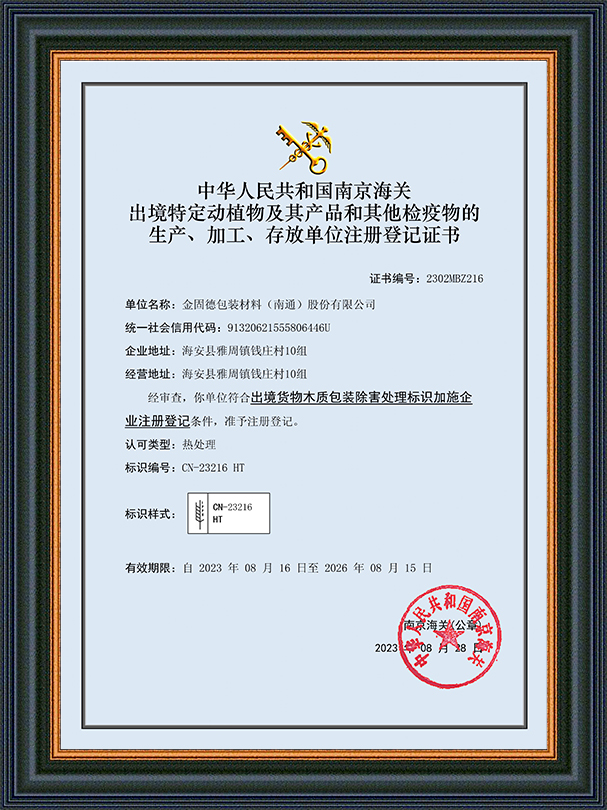
This pallet strictly adheres to IPPC-ISPM 15 quarantine standards. Manufacturers are equipped with specialized fumigation chambers or heat treatment equipment, offering "HT (heat treatment)" services to ensure smooth customs inspection and avoid detention due to lack of compliance certificates. Its short production cycle allows for rapid response to peak season replenishment and urgent orders. At the supply chain level, relying on a comprehensive upstream and downstream supply chain can reduce the risk of delivery delays caused by "raw material shortages" and "parts supply interruptions." In terms of logistics services, domestic companies often cooperate closely with international logistics providers to provide door-to-door services from "factory→port→EU warehouse" and support "pallet and cargo transport in the same cabinet" to save transportation costs. They are also familiar with EU customs clearance procedures and can assist with "tariff declaration" and "quarantine inspection", shortening the overall delivery cycle.
About KINGGOOD
King Good Packaging Materials (NanTong)Co.,Ltd.
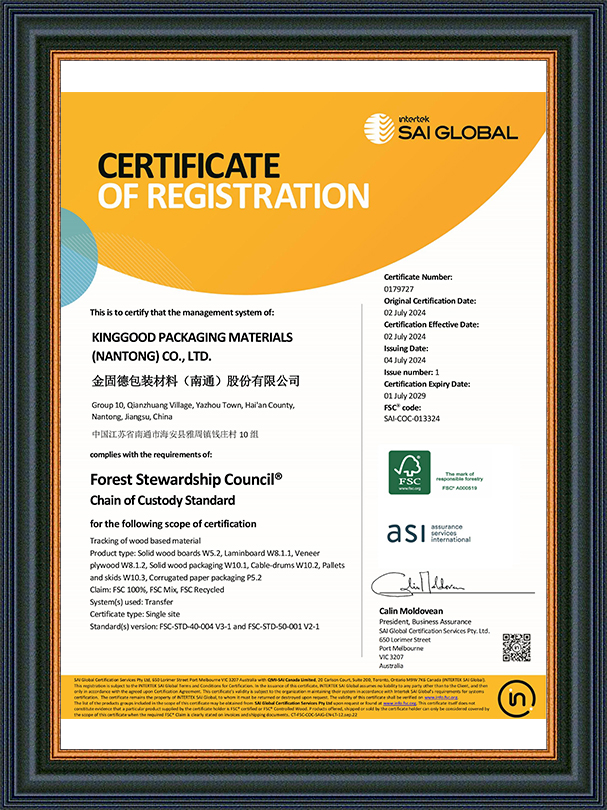
Certificate Of Honor
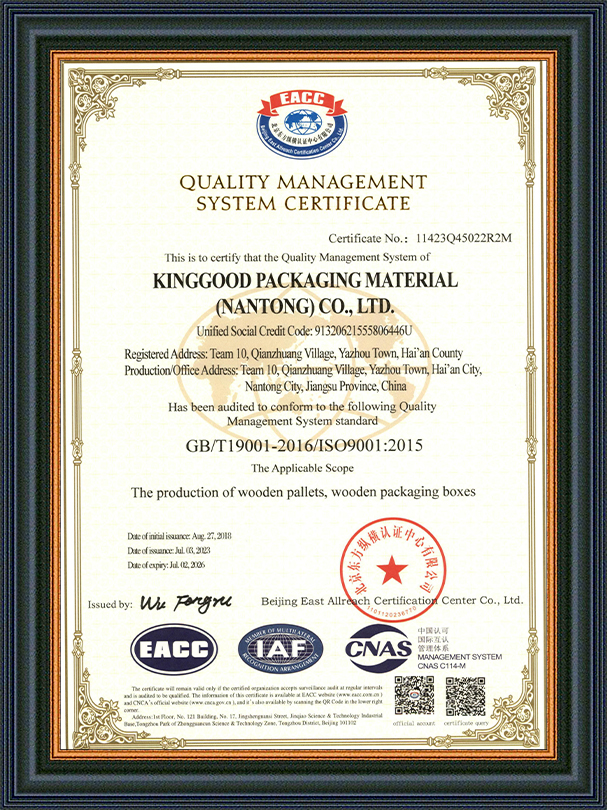
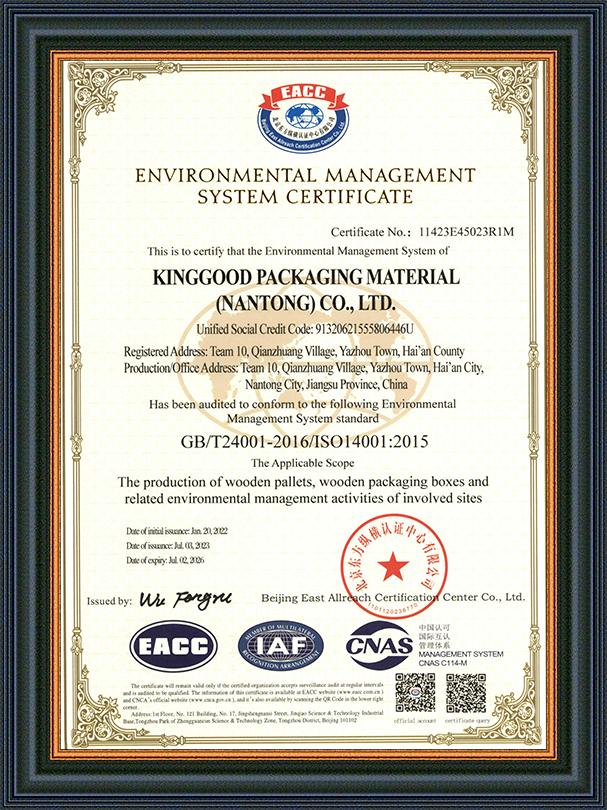
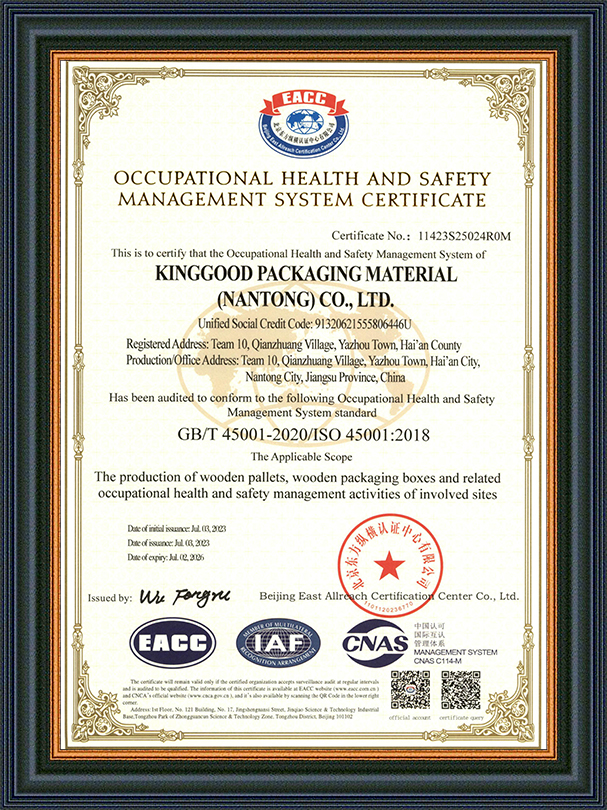

Message Feedback
Latest Articles

Solid Wood Pallet Industry knowledge
Why the New European Standard Solid Wood Pallet Fits European Supply Chains
Shipping into or across Europe runs far more smoothly when cargo sits on a New European Standard Solid Wood Pallet, built to the footprint that European warehouses, racking systems, and freight networks are already designed around. Because so much European logistics infrastructure, from rack beam spacing to trailer loading patterns, is planned around this common pallet size, using a matching footprint removes a major source of friction at every handoff point along the route.
Standardizing on this pallet type delivers several concrete advantages for exporters:
- Direct compatibility with European rack systems and pallet trucks, avoiding repalletizing at the destination warehouse.
- Efficient use of trailer and container space, since the footprint is designed to fit European road transport dimensions with minimal wasted area.
- Solid wood durability that withstands repeated forklift handling across multiple legs of a European distribution route.
- Easier participation in regional pallet exchange practices that rely on a shared, recognizable footprint.
How This Pallet Is Engineered to European Specifications
Standard Footprint and Block Layout
The New European Standard pallet uses a 1200 mm by 800 mm footprint, a size widely adopted across European retail, industrial, and logistics sectors. Beneath the deck, nine wooden support blocks are typically arranged in a three-by-three grid, giving the pallet consistent support points regardless of which side a forklift or pallet truck approaches from.
Chamfered Runners for Easier Entry
The bottom deck boards are commonly beveled, or chamfered, at the entry points to allow pallet truck wheels and forklift forks to slide in smoothly without catching on square edges. This detail speeds up manual handling in busy European distribution centers where pallet trucks are used constantly throughout a shift.
Solid Wood Deck and Block Construction
Deck boards and support blocks are built from solid timber rather than composite material, allowing individual components to be replaced during repair rather than discarding the entire pallet. This construction approach supports the long, repeated reuse cycles that European pallet exchange systems are generally built around.
Comparing Handling Configurations for European Distribution
Within the same footprint, pallets can still be configured differently depending on how often they will be handled and by what equipment.
| Configuration | Entry Access | Best Suited For |
|---|---|---|
| Nine-block, four-way entry | All four sides | High-frequency warehouse and retail handling |
| Two-way stringer | Two opposite sides | Fixed-route trucking with consistent loading direction |
| Reinforced heavy-duty deck | Four sides | Dense industrial goods and repeated rack storage |
Solid wood pallets shipped internationally are generally required to comply with the ISPM 15 phytosanitary standard, which requires heat treatment or fumigation before export. Pallets pre-treated to this standard can pass through customs without additional inspection, helping keep European-bound shipments on schedule.
Frequently Asked Questions About the New European Standard Solid Wood Pallet
Q1: What is the standard footprint of a European pallet?
The most widely used footprint measures 1200 mm by 800 mm, a size designed to fit European racking, trailer loading, and material handling equipment.
Q2: Why does this pallet use nine support blocks instead of stringers?
A nine-block layout allows forklift and pallet truck entry from all four sides, which speeds up handling in busy warehouses compared with a two-way stringer design.
Q3: Do these pallets need special export treatment?
Yes, solid wood pallets used in international trade generally require ISPM 15 heat treatment or fumigation before they can be exported and cleared through customs.
Q4: Can this pallet type be reused across multiple shipping cycles?
Yes. Solid timber deck boards and blocks can typically be inspected and individually repaired, allowing the pallet to be reused across many handling and storage cycles.
Solid Wood Pallets Manufactured to European Specifications
Headquartered in Yazhou Town, Hai'an, Nantong, King Good Packaging Materials (Nantong) Co., Ltd. operates processing facilities across multiple regions, including Taizhou, Fengxian in Shanghai, Wuhan, Dongguan, Kunshan, and Beilun in Ningbo, manufacturing solid wood pallets to the European standard footprint alongside wooden crates, packaging boards, and cushion boards. With strict process control across production, after-sales service, and on-site packaging, the company helps exporters shipping to European markets maintain consistent pallet quality while keeping customs procedures straightforward.


Got Questions? Contact Us Now
-
-
Contact info.
+86-0513-88669885 +86-13813749256 13813749256@163.com Qianzhuang Village, Yazhou Town, Hai'an City, Nantong City, Jiangsu Province, China - About KINGGOOD Packaging Series Industry Solutions OEM Service News Contact
