

 English
 中文简体
中文简体 Español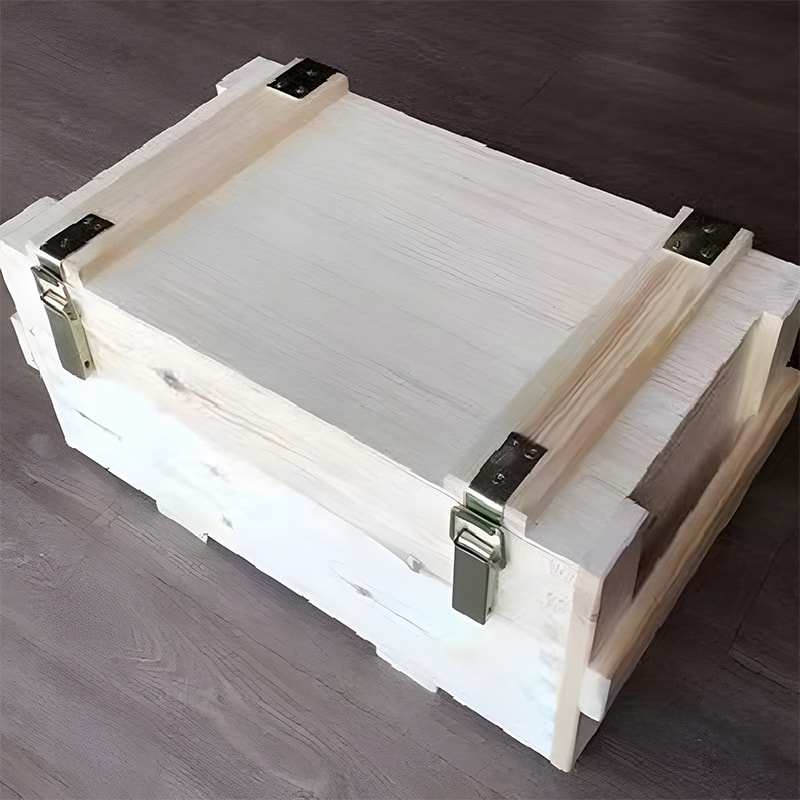
King Good Packaging Materials (NanTong)Co.,Ltd. is a Custom Logistics transportation Heavy Duty Solid Wood Crates Manufacturer and Logistics transportation Heavy Duty Solid Wood Crates Factory, committed to becoming a national OEM manufacturer of wood products packaging, specializing in the design, development and production of wood products. It has processing factories of different scales in Taizhou, Jiangsu Province, Fengxian, Shanghai, Wuhan, Hubei Province, Dongguan, Guangdong Province, Kunshan, Jiangsu Province and Beilun, Ningbo. The company's headquarters is located in Yazhou Town, Haian City, Nantong City. Since the establishment of the factory, it has newly introduced wood processing machinery and supporting equipment, and has technicians with many years of rich experience. It strictly controls each production procedure and ensures quality and quantity with proficient skills. We have formed a complete chain covering production, after-sales service and on-site packaging. Our perfect service has won high praise from many enterprises.
Based on raw materials such as fir, pine, miscellaneous wood, plywood and particleboard, KingGood can customize different products according to development to avoid unnecessary losses during long-distance transportation. Main products: Packaging boards, multi-layer boards, (for export and domestic use) wooden pallets. Wooden crates, pallet boards, front boards, and side board wooden crates (plywood, pallets, and packaging boxes can be exported directly without inspection, saving you a lot of cumbersome procedures) can provide packaging for extra-large mechanical equipment. Our company adheres to the principle of keeping promises, achieving mutual benefit and win-win results, getting along harmoniously, doing things with dedication, and providing excellent service. Ensure the company's continuous and stable development.


Heavy Duty Solid Wood Crates
Home / Packaging Series / Heavy Duty Wood Crates / Heavy Duty Solid Wood Crates / Logistics transportation Heavy Duty Solid Wood Crates
All Products
Logistics transportation Heavy Duty Solid Wood Crates
Logistics transportation Heavy Duty Solid Wood Crates are made from high-density hardwood, primarily wear-resistant and impact-resistant solid wood panels. They are constructed using mortise and tenon joints or bolt reinforcement. Some heavy-duty models feature metal edging and reinforcement ribs on the corners and bottom to further enhance the structure's load-bearing capacity and deformation resistance. The surface can be treated with anti-corrosion and moisture-proofing treatments, such as environmentally friendly wood oil or a waterproof coating, to prevent mold and mildew caused by temperature and humidity fluctuations during transportation. The crates also withstand minor impacts and friction. Flexible cushioning features, such as pearl cotton, bubble wrap, and wooden support blocks, can be added to the crates to precisely secure cargo and prevent it from swaying or shifting during transport. These crates accommodate cargo of varying shapes and weights.
These solid wood crates are specifically designed for logistics and transportation, particularly suitable for carrying heavy, delicate, or fragile cargo, such as large machinery parts, industrial equipment, ceramics, and valuable instruments. They are widely used in long-distance land, sea, and rail transportation, as well as in cross-border logistics. Compared to ordinary cardboard or plastic boxes, they offer greater load-bearing capacity and protection, and can withstand the bumps, crushing, and impacts of complex transportation environments, effectively reducing the risk of cargo damage. Compared to plywood boxes, solid wood boxes offer a more stable natural wood structure and are reusable, making them more economical in the long run. Furthermore, for cross-border transport, they can be fumigated and stamped with a compliance mark according to international quarantine standards to ensure smooth customs clearance, providing reliable protection for the safe global flow of heavy goods.
About KINGGOOD
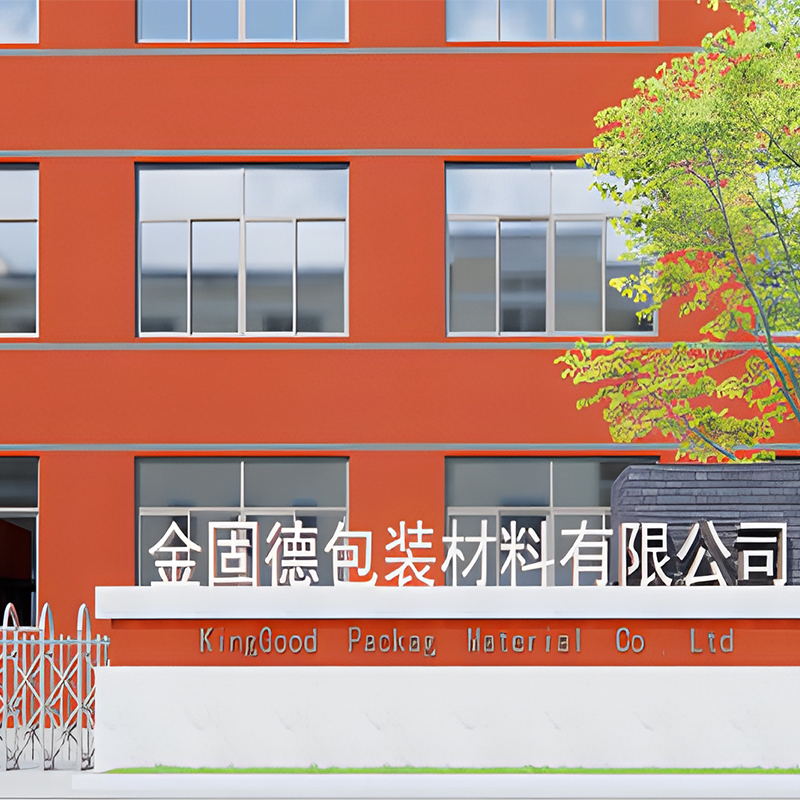
King Good Packaging Materials (NanTong)Co.,Ltd.
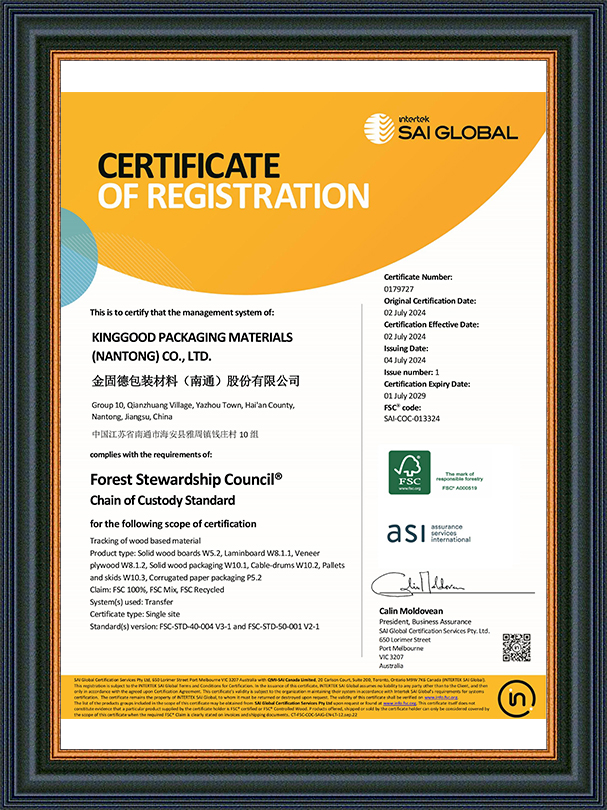
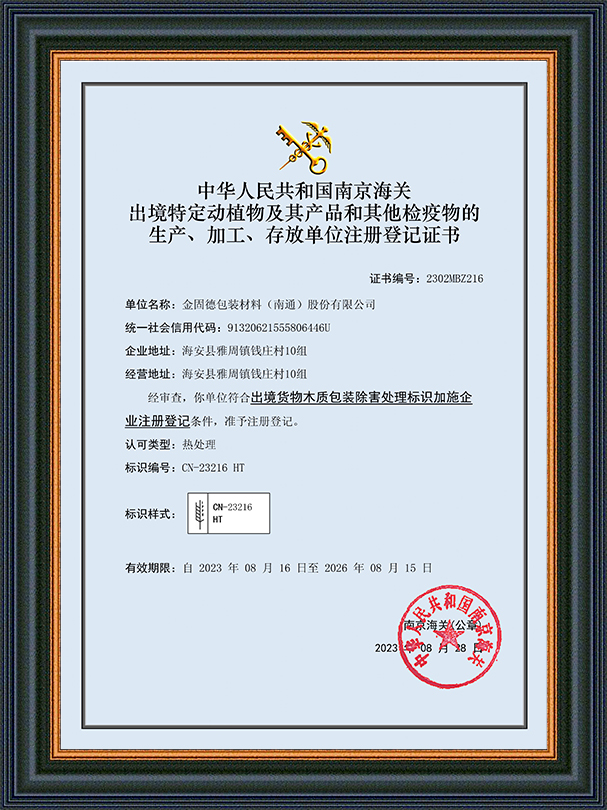
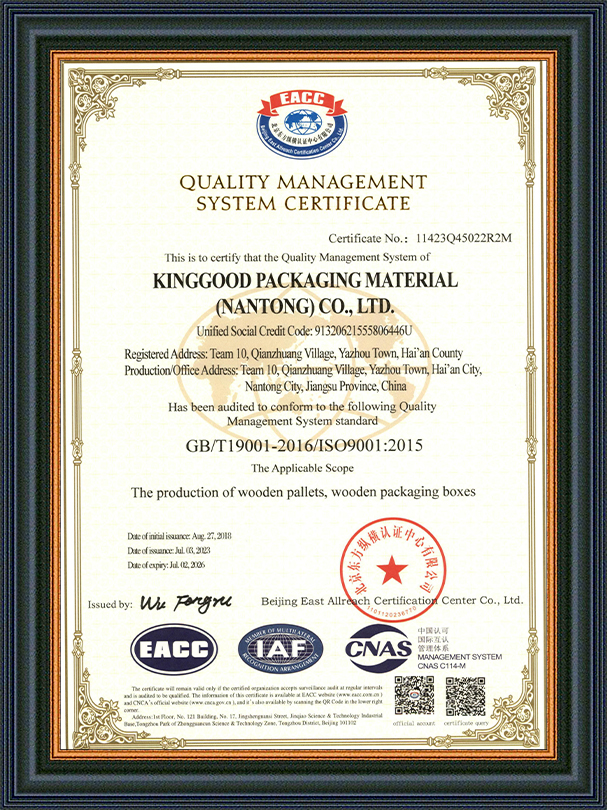
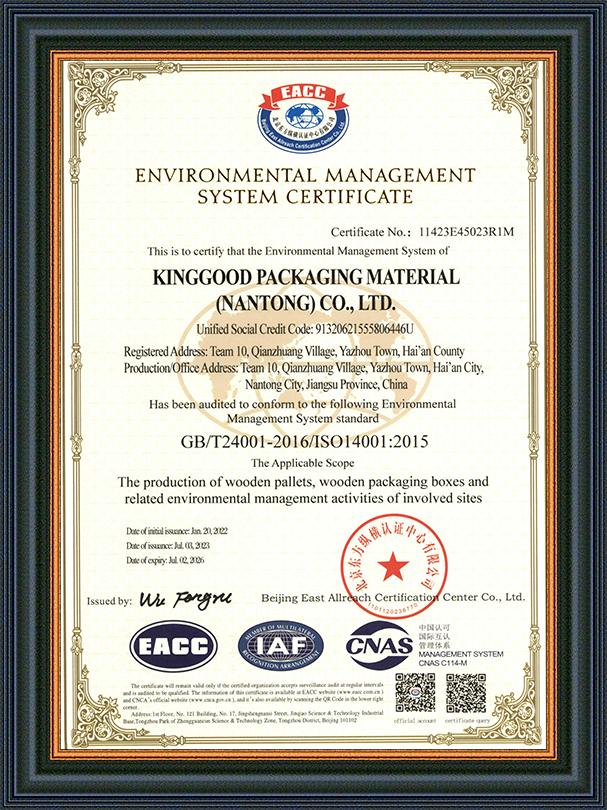
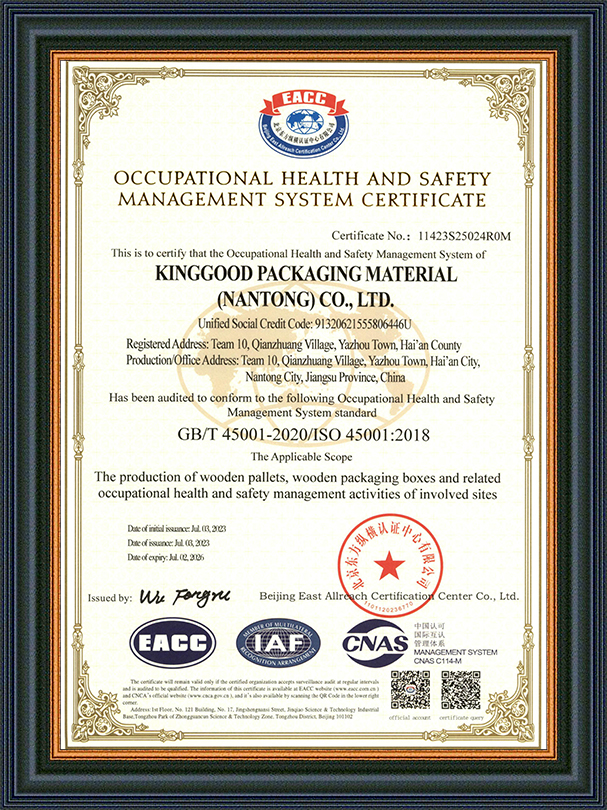
Certificate Of Honor

Message Feedback
Latest Articles

Heavy Duty Solid Wood Crates Industry knowledge
Why Logistics Transportation Depends on Heavy Duty Solid Wood Crates
A shipment rarely travels in a straight line. Between the factory floor and the final destination, cargo typically passes through multiple handling stages, transport modes, and storage points, and each transition adds a new opportunity for damage. Logistics transportation heavy duty solid wood crates are engineered specifically for this multi-stage reality, providing consistent structural protection whether cargo is being lifted by crane at a port, loaded onto a rail flatcar, or transferred to a road trailer for final delivery.
Building crates around the realities of the logistics chain, rather than a single transport leg, delivers clear advantages:
- Consistent protection across every handoff point, from factory loading to final unloading at the destination.
- Reduced cumulative damage risk, since each additional handling stage compounds the stress a crate must withstand.
- Compatibility across sea, rail, and road transport without requiring cargo to be repackaged between legs.
- Stable stacking behavior in warehouse storage, reducing the risk of crushing during transit delays or customs holds.
How These Crates Hold Up Through the Real Logistics Journey
Port and Terminal Handling
At ports and rail terminals, crates are frequently lifted by crane or reach stacker rather than a standard forklift, placing concentrated stress on specific lifting points. Reinforced corner posts and clearly defined lifting zones are what allow a crate to withstand repeated crane handling without the structure loosening or the load shifting inside.
Multi-Modal Transfer Between Sea, Rail, and Road
Each transport mode applies different forces to a crate: sea freight introduces vibration and humidity over long durations, rail transport adds sharp coupling shocks during shunting, and road transport brings sudden braking and cornering loads. A crate built for logistics transportation needs bracing and skid design robust enough to absorb all three without requiring mode-specific modifications.
Warehouse Storage and Stacking
Cargo often sits in warehouse storage during customs clearance or transfer between carriers, sometimes stacked several crates high. A solid wood frame with properly distributed base support prevents the lower crates in a stack from bearing uneven pressure that could cause long-term structural fatigue.
Matching Crate Design to Each Transport Mode
While a well-built crate should handle all transport modes reasonably well, understanding the specific stress each mode introduces helps guide design priorities for a given logistics route.
| Transport Mode | Primary Stress | Design Priority |
|---|---|---|
| Sea freight | Prolonged vibration and humidity | Moisture-resistant panels and secure bracing |
| Rail transport | Sudden coupling and shunting shocks | Reinforced corner joints and skid anchoring |
| Road transport | Braking and cornering loads | Stable base skids and internal load restraint |
Solid wood crates used in international logistics transportation are generally required to comply with the ISPM 15 phytosanitary standard, which requires heat treatment or fumigation before export. Crates pre-treated to this standard can move through customs at each border crossing without additional inspection, keeping multi-leg shipments on schedule.
Frequently Asked Questions About Heavy Duty Crates in Logistics Transportation
Q1: Do crates need different designs for sea, rail, and road transport?
Not necessarily separate designs, but a crate intended for multi-modal logistics should be built to withstand the combined stresses of all three, including vibration, coupling shocks, and braking forces.
Q2: Why are lifting points so important for crates handled at ports?
Cranes and reach stackers apply concentrated force at specific contact points rather than distributing weight evenly like a forklift, so reinforced lifting zones help prevent structural damage during these handling stages.
Q3: Can heavy duty crates be safely stacked during warehouse storage?
Yes, when the base and frame are designed to distribute weight evenly, allowing crates to be stacked without placing uneven pressure on lower units during customs holds or carrier transfers.
Q4: Do these crates require export treatment for multi-country routes?
Yes, solid wood crates used in international logistics generally require ISPM 15 heat treatment or fumigation before export, a requirement that applies at each border the shipment crosses.
Crates Engineered for the Full Logistics Transportation Chain
Headquartered in Yazhou Town, Hai'an, Nantong, King Good Packaging Materials (Nantong) Co., Ltd. operates processing facilities across multiple regions, including Taizhou, Fengxian in Shanghai, Wuhan, Dongguan, Kunshan, and Beilun in Ningbo, producing heavy duty solid wood crates engineered for the full logistics transportation chain, from initial factory loading through final delivery. Backed by technicians with years of hands-on experience and a complete chain covering production, after-sales service, and on-site packaging, the company helps customers reduce potential losses during long-distance transportation across sea, rail, and road routes.


Got Questions? Contact Us Now
-
-
Contact info.
+86-0513-88669885 +86-13813749256 13813749256@163.com Qianzhuang Village, Yazhou Town, Hai'an City, Nantong City, Jiangsu Province, China - About KINGGOOD Packaging Series Industry Solutions OEM Service News Contact
