

 English
 中文简体
中文简体 Español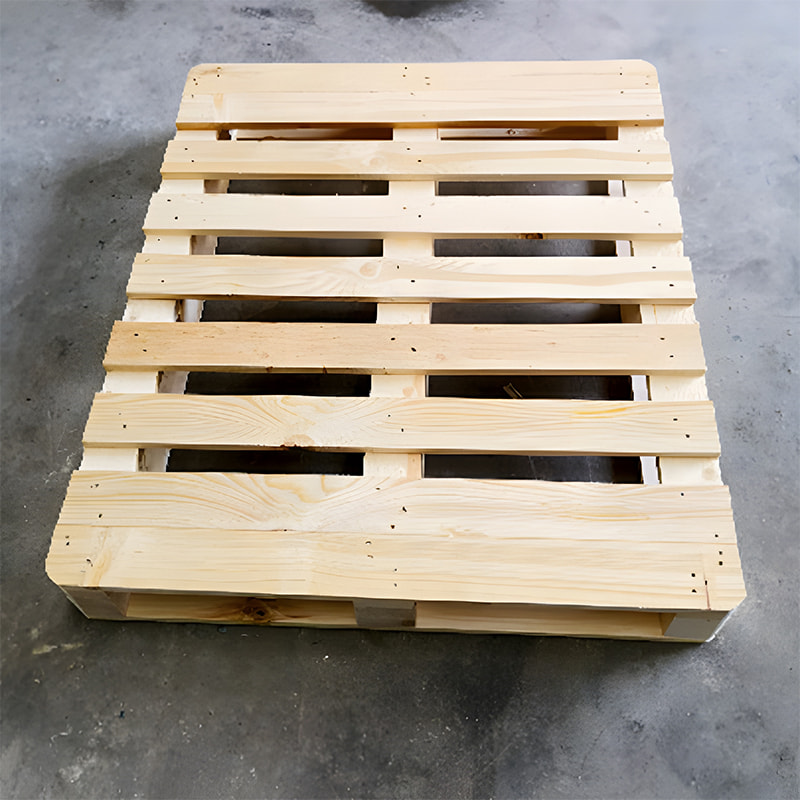
King Good Packaging Materials (NanTong)Co.,Ltd. is a Custom Custom Size Plywood Pallet Manufacturer and Custom Size Plywood Pallet Factory, committed to becoming a national OEM manufacturer of wood products packaging, specializing in the design, development and production of wood products. It has processing factories of different scales in Taizhou, Jiangsu Province, Fengxian, Shanghai, Wuhan, Hubei Province, Dongguan, Guangdong Province, Kunshan, Jiangsu Province and Beilun, Ningbo. The company's headquarters is located in Yazhou Town, Haian City, Nantong City. Since the establishment of the factory, it has newly introduced wood processing machinery and supporting equipment, and has technicians with many years of rich experience. It strictly controls each production procedure and ensures quality and quantity with proficient skills. We have formed a complete chain covering production, after-sales service and on-site packaging. Our perfect service has won high praise from many enterprises.
Based on raw materials such as fir, pine, miscellaneous wood, plywood and particleboard, KingGood can customize different products according to development to avoid unnecessary losses during long-distance transportation. Main products: Packaging boards, multi-layer boards, (for export and domestic use) wooden pallets. Wooden crates, pallet boards, front boards, and side board wooden crates (plywood, pallets, and packaging boxes can be exported directly without inspection, saving you a lot of cumbersome procedures) can provide packaging for extra-large mechanical equipment. Our company adheres to the principle of keeping promises, achieving mutual benefit and win-win results, getting along harmoniously, doing things with dedication, and providing excellent service. Ensure the company's continuous and stable development.


Plywood Pallet
All Products
Custom Size Plywood Pallet
The Custom-Sized Plywood Pallet is made from high-quality, multi-layered hardwood plywood. Leveraging a flexible production process, the pallet's length, width, height, and panel thickness can be adjusted to meet specific customer needs, precisely adapting to varying cargo dimensions and storage and handling scenarios. Whether accommodating specially sized industrial components, shaped goods, or meeting specific warehouse layout requirements, customized designs can achieve a perfect fit. The manufacturing process also utilizes a cross-lamination process to ensure structural stability, and uses environmentally friendly, low-formaldehyde, water-based adhesive for both safety and durability. Single-sided and double-sided construction options are available, depending on load requirements, and metal reinforcements can be added to key locations to ensure stable performance.
This custom pallet offers good adaptability and practicality, meeting the personalized needs of various industries. Whether carrying non-standard-sized production parts in manufacturing, displaying specially packaged goods in retail, or adapting to the space constraints of various transportation vehicles in cross-border trade, it plays an important role. It not only retains the advantages of plywood pallets that are fumigation-free (can be processed according to corresponding standards if exported) and have good weather resistance, but also avoids space waste or transportation risks caused by the mismatch between traditional standard pallets and goods through size customization, effectively improving cargo storage density and handling efficiency, reducing additional costs in the logistics process, and providing exclusive solutions for cargo turnover in different scenarios.
About KINGGOOD
King Good Packaging Materials (NanTong)Co.,Ltd.
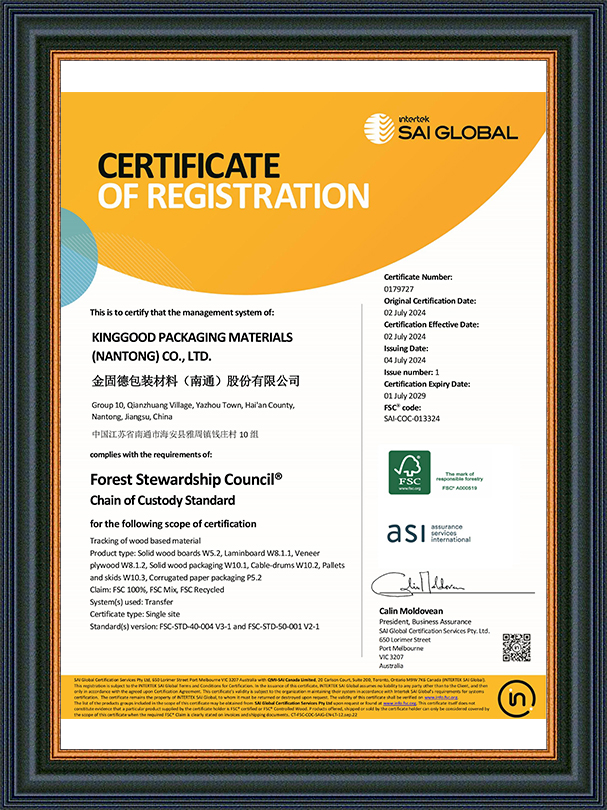
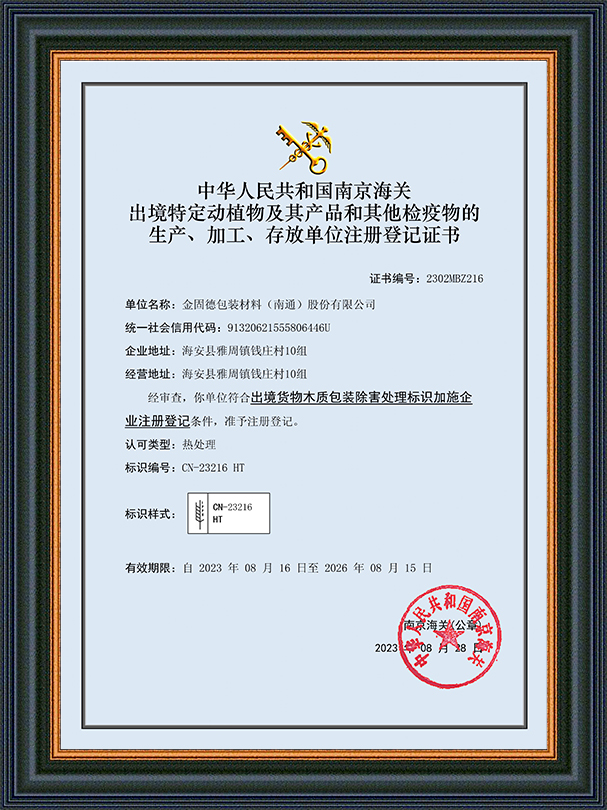
Certificate Of Honor
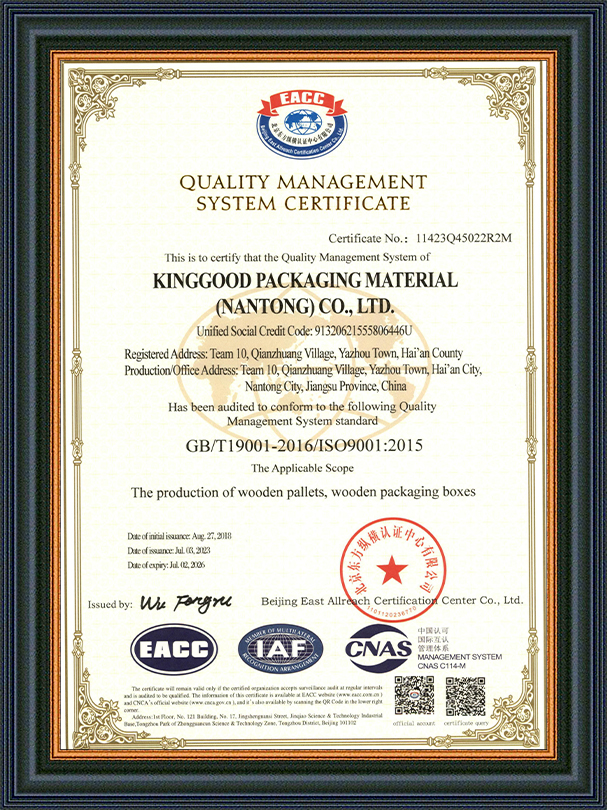
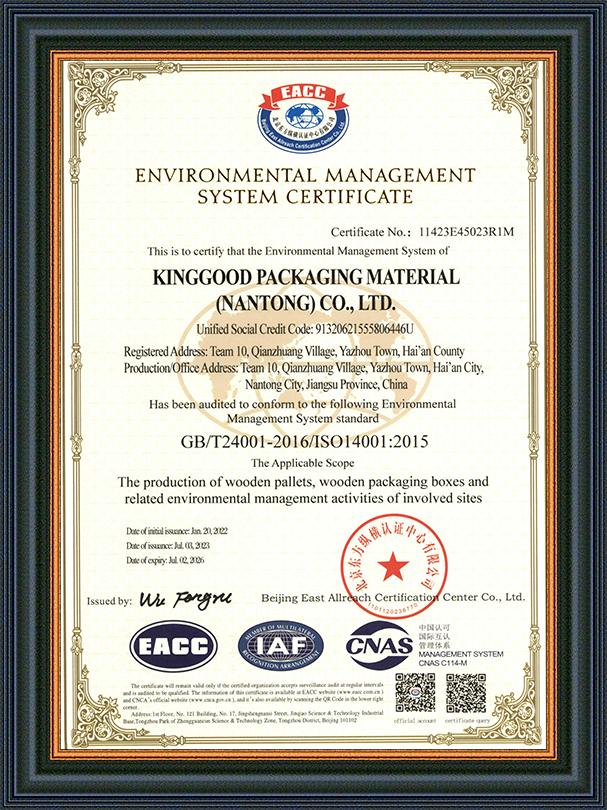
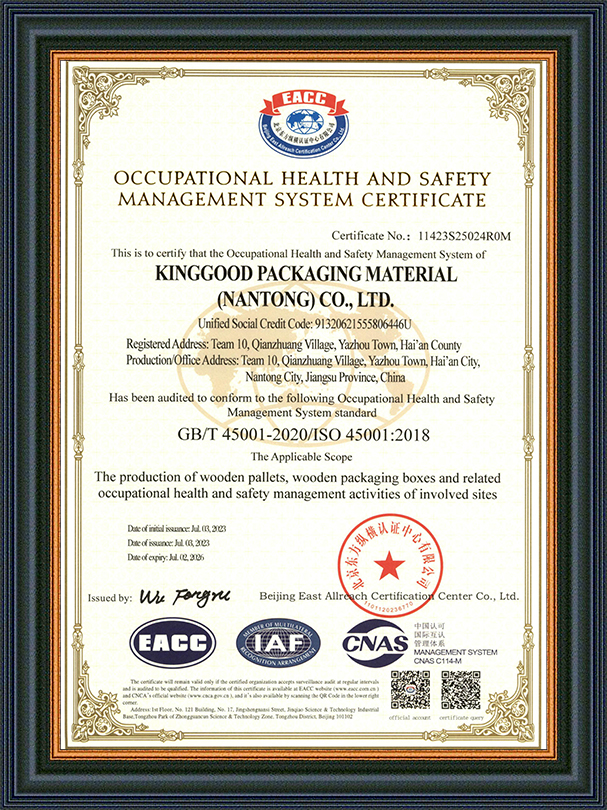

Message Feedback
Latest Articles

Plywood Pallet Industry knowledge
How a Custom Size Plywood Pallet Cuts Waste That Standard Sizes Create
Forcing cargo onto the nearest standard-sized pallet often means paying for material and freight volume the shipment doesn't actually need. A custom size plywood pallet is built to the load's real dimensions instead of rounding up to a generic size, which directly reduces both the plywood used in construction and the wasted container or truck space that comes from shipping an oversized footprint.
This dimension-matched approach creates measurable savings across the shipment lifecycle:
- Less plywood consumed per pallet, since panel size is matched to the cargo rather than padded to the next standard increment.
- Reduced container and truck space waste, allowing more units to be loaded per shipment.
- Lower risk of shifting cargo, since a tightly matched footprint leaves less room for the load to move during transit.
- Better protection for products with fixed or unusual dimensions, such as glass panels, rolled materials, or machined parts.
How the Custom Plywood Pallet Ordering Process Works
Measurement and Load Calculation
The process starts with recording the cargo's exact length, width, and weight, along with any special handling notes such as fragile edges or uneven load points. Accurate measurement at this stage is what prevents costly redesigns later, since deck thickness and stringer placement are both calculated directly from these numbers.
Engineering Drawing and Sample Approval
Once the specification is set, an engineering drawing outlines panel dimensions, stringer spacing, and fastening points. For larger orders, a sample pallet is often produced first so the customer can confirm fit and load stability before full production begins, reducing the risk of a large batch needing rework.
Batch Production and Consistency Checks
During production, dimensional checks are applied across the batch to confirm every pallet matches the approved sample, since inconsistent sizing across a custom order can undermine the exact space-efficiency benefits that made a custom pallet worthwhile in the first place.
Industries That Commonly Rely on Custom Plywood Pallet Sizing
Certain product categories rarely fit standard pallet dimensions cleanly, making custom sizing a practical default rather than an exception.
| Industry | Typical Cargo | Why Custom Sizing Helps |
|---|---|---|
| Glass and panel manufacturing | Large flat panels | Matches panel footprint to prevent overhang |
| Textile and material rolls | Cylindrical rolled goods | Custom cradle supports prevent rolling |
| Automotive components | Molded or machined parts | Non-standard shapes need matched footprints |
| Furniture and joinery | Long or wide finished pieces | Reduces material waste on oversized items |
Frequently Asked Questions About Ordering Custom Plywood Pallets
Q1: Is a custom size plywood pallet more expensive than a standard one?
Unit cost can be slightly higher due to engineering and setup work, but the reduced material waste and improved container space efficiency often offset this over a full production run.
Q2: How long does it take to receive a custom plywood pallet order?
Lead time depends on order volume and whether a sample approval step is included, but factoring in time for drawing review and sample confirmation helps avoid delays on larger orders.
Q3: What information should I provide when requesting a quote?
Exact cargo length, width, and weight, along with any special handling notes such as fragile points or uneven load distribution, allow the supplier to calculate deck thickness and stringer placement accurately.
Q4: How is size consistency maintained across a large custom order?
Dimensional checks applied throughout production, benchmarked against an approved sample pallet, help ensure every unit in the batch matches the original specification.
A Streamlined Process for Dimension-Matched Plywood Pallets
Headquartered in Yazhou Town, Hai'an, Nantong, King Good Packaging Materials (Nantong) Co., Ltd. operates processing facilities across multiple regions, including Taizhou, Fengxian in Shanghai, Wuhan, Dongguan, Kunshan, and Beilun in Ningbo, designing and producing custom size plywood pallets alongside standard wooden pallets and packaging boards. With a complete chain covering production, after-sales service, and on-site packaging, the company works from each customer's exact cargo dimensions and load requirements, helping reduce both material waste and potential losses during long-distance transportation.


Got Questions? Contact Us Now
-
Copyright @ King Good Packaging Materials (NanTong)Co.,Ltd. All Rights Reserved. Custom Custom Size Plywood Pallet Manufacturer Custom Size Plywood Pallet Factory

-
Contact info.
+86-0513-88669885 +86-13813749256 13813749256@163.com Qianzhuang Village, Yazhou Town, Hai'an City, Nantong City, Jiangsu Province, China - About KINGGOOD Packaging Series Industry Solutions OEM Service News Contact