

 English
 中文简体
 Español


Sustainable Packing Materials for Export: Choosing Wood, Plywood or Paper
Content
- 1 Sustainable Packing Materials Begin With the Load, Not the Label
- 2 Four Tests That Decide Whether a Packing Material Is Truly Sustainable
- 3 A Five-Step Sequence for Choosing Sustainable Packing Materials
- 4 The Compliance Number Behind Wood Packaging That Travels Well
- 5 Five Material-Reduction Techniques That Do Not Increase Damage
- 6 Where Sustainable Packing Projects Usually Go Wrong
- 7 Six Habits That Keep a Packing Specification Sustainable Over Time
- 8 Safety and Risk Notes Before You Switch Materials
- 9 Turn the Material Choice Into a Written Specification
Sustainable Packing Materials Begin With the Load, Not the Label
Choose the lightest packing material that still gets the goods there undamaged, and you have done more for the environment than any switch to a fashionable substrate. A crate that splits at a transloading port does not save wood: it doubles the material on the replacement shipment, adds a second freight leg if the goods are already overseas, and often ends with air freight because the customer is now waiting. Sustainability in industrial packing is a specification problem before it is a materials problem.
For heavy, high-value and export goods, that specification usually lands on wood: softwood lumber, plywood and engineered boards. For lighter, one-way shipments, corrugated and honeycomb paper products can do the same job with less mass. The sections below cover how to judge a material, how to sequence the choice, what ISPM 15 and packaging fee rules require, and which material-reduction techniques reduce damage rather than just cost.
Four Tests That Decide Whether a Packing Material Is Truly Sustainable
Ignore the adjectives on the supplier's website and test the material on four points: what it is made from, how much protection it gives per kilogram, what happens at the end of its life, and whether it can be used more than once. A material can win on one axis and fail badly on another. Moulded pulp pallets are recyclable but have little tolerance for humidity; solid wood is renewable but has to clear quarantine rules.
| Material | Input And Origin | End Of Life | Best Fit And Main Constraint |
|---|---|---|---|
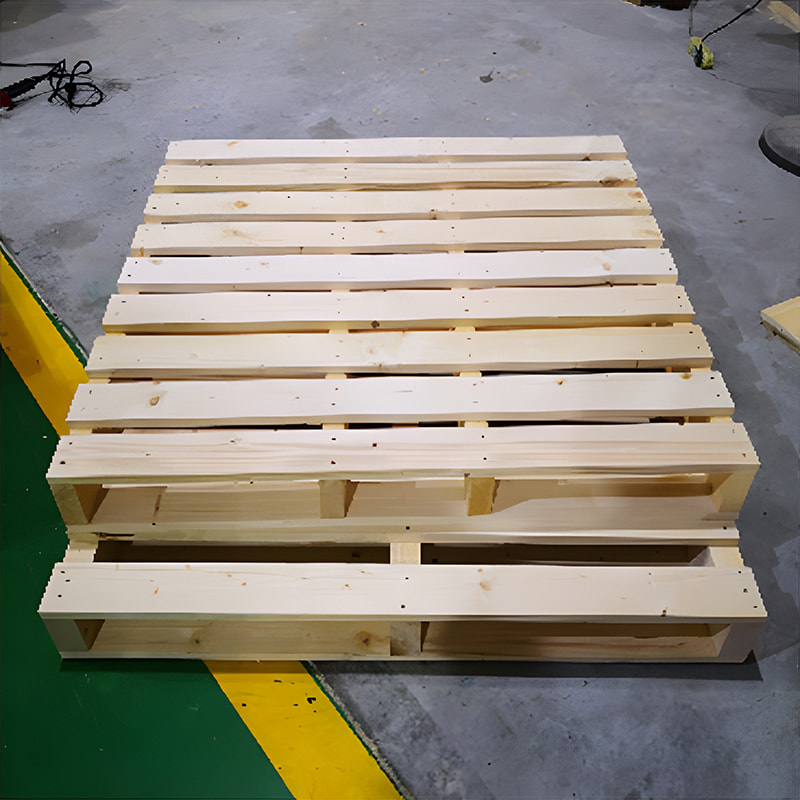
| Solid softwood (fir, pine) | Renewable, plantation grown | Reusable and repairable, later downcycled | Heavy machinery, blocking and export crates; requires ISPM 15 treatment across borders |
| Plywood and engineered panels | Lower-grade logs bonded under heat and pressure | Reusable, then chipped or re-pressed | Rigid crate walls and one-way export boxes; edges and faces need sealing |
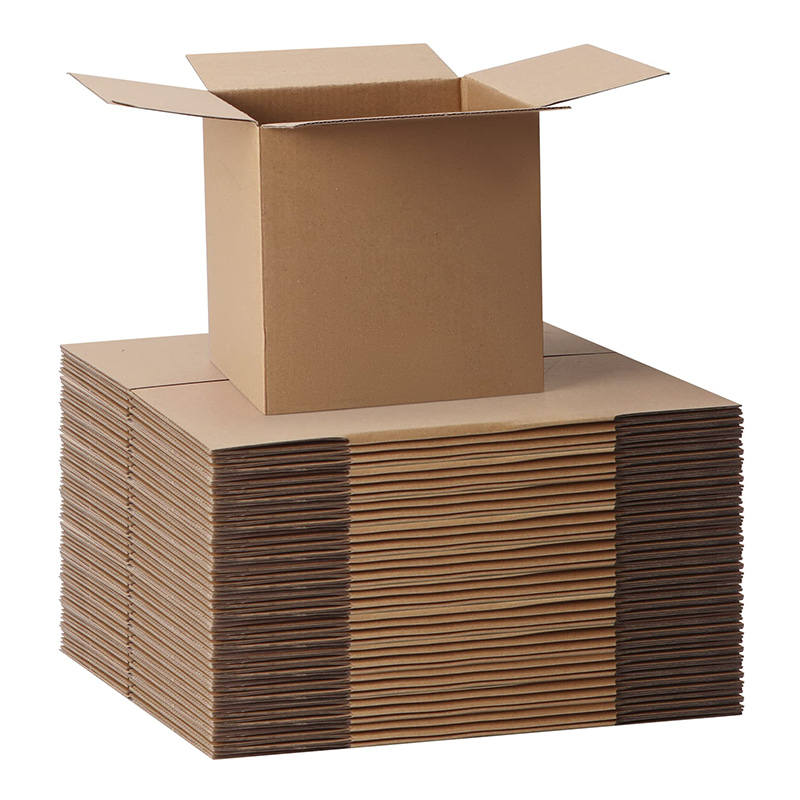
| Corrugated cardboard | High recycled fibre content | Widely recyclable; fibres shorten each cycle | Light to medium goods and inner cartons; loses strength quickly when wet |
| Honeycomb and moulded paper pallets | Recycled paper, no wood content | Recyclable, no fumigation or stamp | One-way air and light pallet loads; sensitive to humidity and point loading |
Table 1: Common industrial sustainable packing materials compared by input, end-of-life pathway, typical application and main constraint.
Two patterns matter more than the individual rows. Mass beats material image: a well-braced plywood case can weigh less than an over-thick solid wood box doing the same job. And reuse beats recycling on every count, because a second trip with the same board avoids a whole production cycle. Where weight drives air freight and the shipment never comes back, removing wood also removes the quarantine paperwork.
 Custom Honeycomb Paper Pallet for Air FreightFor lightweight air-freight or single-use export cargo, this honeycomb paper pallet cuts shipment weight and avoids solid-wood fumigation requirements.View Product →
A Five-Step Sequence for Choosing Sustainable Packing Materials
The order of these steps matters. Most overspecified or underspecified packaging comes from starting with a material instead of starting with the load and the route.
- Weigh and measure the unit, including its centre of gravity and any protruding parts, then add the crate itself to the figure before you choose anything.
- Map the real route: truck, rail, ocean or air, the number of transloads, how long the goods sit in a damp yard, and whether the packing unit is expected to come back.
- Set the protection target — allowable shock, vibration, humidity exposure and the stacking load on the bottom unit in a container or rack.
- Pick the material family that meets that target with the least mass: solid wood where point loads are high, plywood panels where a rigid skin is enough, corrugated or honeycomb paper only where loads and moisture allow.
- Confirm the paperwork before any wood is cut: ISPM 15 status, destination plant quarantine rules, and any recycled-content or fee reporting the buyer asks for.
Getting step two wrong is the most common and the most expensive mistake. A design validated for a direct truck route can arrive crushed after two transloads and a month in a humid container yard, and no amount of recycled content in the board will compensate for that.
The Compliance Number Behind Wood Packaging That Travels Well
56 °C at the core for at least 30 minutes — the ISPM 15 heat-treatment baseline that lets solid wood cross borders.
Solid wood packaging that crosses a national border must be heat treated to that core temperature or fumigated with methyl bromide, and then stamped with the IPPC logo and a country code. A shipment without a valid mark can be quarantined, returned or destroyed at the importer's expense, which is a far larger environmental and financial cost than the treatment itself. There is a common misconception that any wooden case described as fumigation-free is exempt, which is not the case — the rules are explained in this note on why fumigation-free wooden cases still need the IPPC logo.
Processed wood is different. Plywood, veneer, particleboard and similar engineered panels are manufactured under heat and pressure and are treated as pest-free, so they normally do not need the mark. That is often the single largest administrative saving available to an export program, because it removes treatment scheduling, storage separation and stamp verification from the critical path.
Export Plywood Wood Boxes for International Machinery ShippingCustom plywood crates reduce weight and simplify export customs for machinery parts, with thickness options from 6-21 mm by cargo type.View Product →Five Material-Reduction Techniques That Do Not Increase Damage
Right-size the case before you thicken the wall
Internal clearance of a few centimetres on each side adds board area, volume and freight cost on every unit. Cutting a case down to the actual envelope is usually the cheapest weight saving available, and it often improves restraint because the load moves less inside.
Block and brace the load, not the box
Most damage comes from movement, not from wall thickness. Timber blocking, edge boards and front panels that lock the equipment in place let you reduce board thickness without reducing protection.
Add cushioning only where energy concentrates
Buffering boards belong under feet, at corners and around heavy overhangs — not wrapped uniformly around the whole unit. Uniform cushioning adds material and can even make a load less stable.
Design the return leg in from the start
Where crates or boxes travel in a closed loop, a foldable or knock-down panel design reduces the volume shipped back to a fraction of the assembled size, and that saved volume is often the largest single sustainability gain in the project.
Control moisture with barriers, not extra thickness
Desiccant, liners and sealed panel edges address condensation and rain exposure more directly than adding another layer of board, which mostly adds mass and cost.
Foldable Plywood Box for Repeated Round-Trip ShippingCollapsible plywood box folds flat to cut return freight and warehouse space on repeated round-trip routes; not intended for one-way export.View Product →Where Sustainable Packing Projects Usually Go Wrong
The same five errors appear in review meetings again and again, and each one shifts cost rather than removing it.
| Common Mistake | What It Costs You | Better Approach |
|---|---|---|
| Chasing one single "eco" material across the catalogue | Damage claims, replacement freight and two parallel material streams | Match material to load, route and moisture, then optimise weight |
| Switching to paper pallets everywhere | Collapsed stacks in humid warehouses and failed racking loads | Restrict paper pallets to dry, light, one-way loads and keep wood for racking |
| Reusing crates without an inspection rule | Failed crates, hand injuries and rejected insurance claims | Set a trip limit and a written inspection checklist per design |
| Forgetting destination packaging fees | Unexpected extended producer responsibility charges and reporting work | Record weight and recyclability in the packaging specification sheet |
| Ignoring the return leg | Empty containers shipped back at full assembled volume | Use foldable or knock-down designs wherever a loop already exists |
Table 2: Frequent material-selection errors, the cost they create and the practical correction for each.
Six Habits That Keep a Packing Specification Sustainable Over Time
Specifications decay. Routes change, products grow, and the crate that was right two years ago quietly becomes either wasteful or unsafe. These habits keep the document honest.
- Keep one master specification sheet per product family, listing material, thickness, footprint, marking and test result.
- Standardise pallet footprints — 1200 x 800 mm and 1200 x 1000 mm are two of the most widely used international sizes — so loads stack and rack without custom bases.
- Audit every damage claim for a pattern rather than simply paying it out; repeated corner damage usually means a restraint problem, not a board problem.
- Train the packing crew on the assembly sequence. A large share of so-called packaging failures are assembly failures.
- Build one prototype per new product and drop-test it before committing to a full order of crates.
- Reopen the specification whenever the route, load, destination or return arrangement changes.
None of these habits requires new technology. They require that the person who owns the drawing also owns the damage data and the freight bill, because that is where the trade-off becomes visible.
Safety and Risk Notes Before You Switch Materials
Material substitution carries risks that do not appear on a sustainability scorecard, so treat the following as hard limits rather than preferences.
- Paper pallets and honeycomb boards lose capacity as humidity rises. Do not store them in damp yards or unheated containers, and never assume the rated load still holds after moisture uptake.
- Solid wood that crosses a border without a valid IPPC mark can be quarantined, returned or destroyed at the importer's cost. Verify the stamp, not the supplier's assurance.
- Inspect reused crates for protruding nails, cracks and previous repairs. Hand injuries in packing halls are overwhelmingly fastener and splinter related.
- Foldable designs only save volume if the return leg is actually scheduled; otherwise you have added assembly labour for nothing.
- Weight and recyclability increasingly drive packaging fee reporting in Europe and several US states, so a lighter mono-material design can reduce both impact and administrative burden.
Turn the Material Choice Into a Written Specification
Sustainable packing materials are not a category you buy; they are a decision you document, test and review. Decide the protection target first, choose the lightest material that meets it, confirm the compliance path for the destination, and keep the evidence with the drawing.
If you want a second pair of eyes on a specification — material, thickness, pallet footprint or ISPM 15 status — our wooden packaging team in Nantong builds solid wood crates, plywood boxes, pallets and paper pallets, and can review a drawing against the route it will actually travel.



Got Questions? Contact Us Now
-
Copyright @ King Good Packaging Materials (NanTong)Co.,Ltd. All Rights Reserved. Custom Wooden Packaging Solutions Manufacturer OEM Industrial Packaging Solutions Factory

-
Contact info.
+86-0513-88669885 +86-13813749256 13813749256@163.com Qianzhuang Village, Yazhou Town, Hai'an City, Nantong City, Jiangsu Province, China - About KINGGOOD Packaging Series Industry Solutions OEM Service News Contact