

 English
 中文简体
 Español


Packing Boxes Guide: Sizes, Materials and Grades That Protect Every Cargo
Content
- 1 Packing Boxes: Settle the Load, the Route and the Rules Before the Price
- 2 Match the Box Family to the Cargo, Not to the Budget
- 3 Specify a Box in Five Steps
- 4 The Numbers That Decide Whether a Box Fits
- 5 Heavy Cargo: When a Box Becomes a Crate
- 6 Four Problems That Appear on Delivery
- 7 A Pre-Order Checklist for Packing Boxes
- 8 Compliance and Handling Notes Before You Ship
Packing Boxes: Settle the Load, the Route and the Rules Before the Price
Packing boxes are usually chosen in the wrong order. A quote arrives with a unit price, the cheapest board grade wins, and the damage turns up three weeks later at a port where nobody can fix it. The order that works is the opposite: define the load, the route and the rules first, then let those three facts choose the box.
Those facts rarely produce one answer, but they always narrow the field. A 30 kg machined part travelling 400 km by road on a double-stacked pallet, and a 300 kg pump crossing an ocean with two transhipments, can share identical outer dimensions and still need very different packing boxes. One needs a light outer shell with modest cushioning; the other needs a rigid structure, moisture protection and a base a forklift can lift without crushing a corner.
Three decisions carry most of the weight: box family, internal dimensions and compliance marking. Get those right and the rest, from labelling to pallet pattern, is detail work.
Buyers moving mixed cargo often source the box, the pallet and the cushioning separately, then discover the parts do not fit together. Handling them as one system, which is what packaging services are meant to cover, closes that gap before production starts.
Match the Box Family to the Cargo, Not to the Budget
Four families cover the overwhelming majority of industrial packing boxes. They are not interchangeable, because the differences sit in the structure rather than in the finish.
| Box family | Typical cargo | Where the strength comes from | Most common failure |
|---|---|---|---|
| Corrugated cardboard box | Light to medium goods already sitting on a pallet | Fluted board bonded to liners; stacking strength rises with wall count | Collapse under load in humid air; punctures from sharp edges |
| Honeycomb or kraft cardboard box | Flat, layered or medium-weight items needing a rigid panel | A honeycomb core bonded between liners; kraft facing adds tear resistance | Crushing when the load path does not run through the core |
| Plywood wooden box | Equipment, machinery parts, export consignments | Bonded veneer panels that resist splitting and avoid solid-wood treatment rules | Weak internal bracing on heavy, off-centre loads |
| Solid wood crate | Heavy and oversized machinery, long-haul and sea freight | Structural framing, thicker sections and a base designed for lifting | Water ingress; untreated timber that fails destination rules |
Table 1: box families compared by cargo, strength source and typical failure mode. Selection should follow the load path, not the unit price.
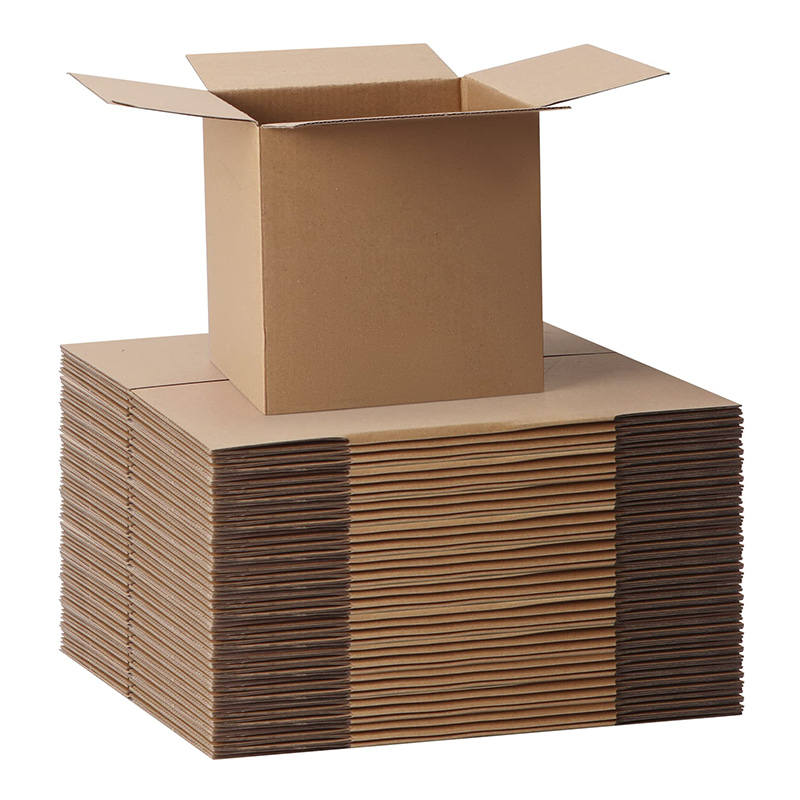
For palletised light and medium cargo, corrugated board remains the practical default: inexpensive to replace, simple to label, and fast to assemble on a packing line.
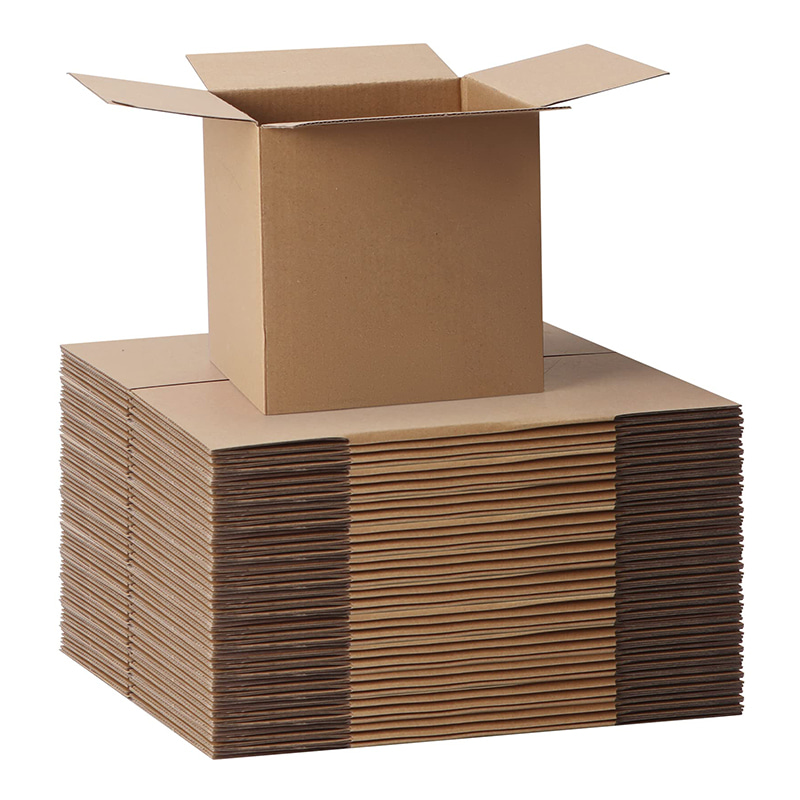 Corrugated Cardboard Boxes for Light and Medium CargoA practical palletised packaging choice for light and medium goods, with cushioning and custom walls for cost-controlled protection.View Product →
Specify a Box in Five Steps
Measure the item and everything attached to it
Shafts, valves, brackets and lifting lugs are what tear liners. Measure the largest envelope, then add the cushioning allowance: commonly 20 mm to 40 mm per side for fragile goods, less for a rigid item already supported by its own base.
Convert to internal dimensions, then derive the outside
Board thickness consumes space. A single-wall corrugated box adds a few millimetres per side; a double-wall or plywood box adds more. Quote internal dimensions to your supplier, or the box will arrive too tight for the cushioning plan.
Match the base to the pallet
The footprint should sit inside the pallet deck with no overhang. Overhang drives impact straight into the box corner, while underhang leaves the edges unsupported and the deck as the only bearing surface.
Choose the grade by stacked load, not item weight
The bottom box in a four-high stack carries everything above it, plus dynamic loads from braking, lifting and ship motion. That figure, not the weight of one unit, sets board grade or panel thickness.
Confirm marking rules before production
Solid wood packaging crossing borders normally needs heat treatment and a recognised stamp, while processed panels follow a different route. Finding this out after the boxes are built is an expensive lesson.
The Numbers That Decide Whether a Box Fits
Footprint is where most packing boxes are lost, and two dimensions govern it: the pallet format and the clearance inside the container or vehicle.
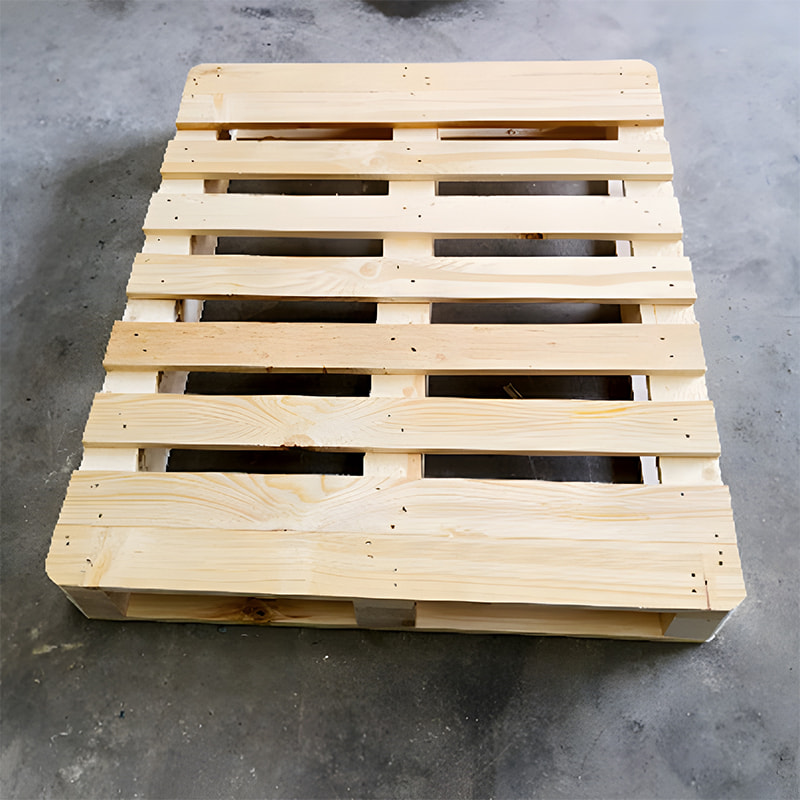
1,200 × 800 mm: the pallet footprint most European export crates are built around.
Regional formats differ. A 1,200 × 1,000 mm pallet is common for heavy industrial loads, while 48 × 40 inches dominates North American warehousing. Choose the pallet first and build the box around it; our note on standard industrial pallet sizes maps the formats that appear most often in shipping documents.
Clearance is the second number. A 20 ft container leaves roughly 2.3 m of internal width, so two 1,200 mm pallets fit side by side with only a narrow gap. Let a box oversail its pallet by 30 mm per side and the pair no longer loads cleanly: corners rub, board crushes, and the last pallet is turned sideways or left on the dock.
Heavy Cargo: When a Box Becomes a Crate
Above a few hundred kilograms, or whenever the centre of gravity sits high or off-centre, packing boxes stop behaving like containers and start behaving like load-bearing structures.
- Base first, box second. The base has to carry the load through skids or bearers aligned with the forklift entry points.
- Brace to the frame, not to the wall. Blocking and bracing should push force from the item into the box structure; foam alone compresses and lets the item move.
- Control moisture. Machinery that leaves a warm plant for a cold container will condense, and a vapour barrier with desiccant protects the surfaces corrosion would otherwise reach.
- Mark lifting points and the centre of gravity. Mishandling is the most common cause of damage later blamed on the box.
- Keep panel grades consistent. A stiff side paired with a flexible side on the same box means the flexible side takes the impact.
For machinery and other dense, oversized loads, heavy-duty wooden crates with a load-bearing base and braced panels hold their shape through repeated lifts and transfers.
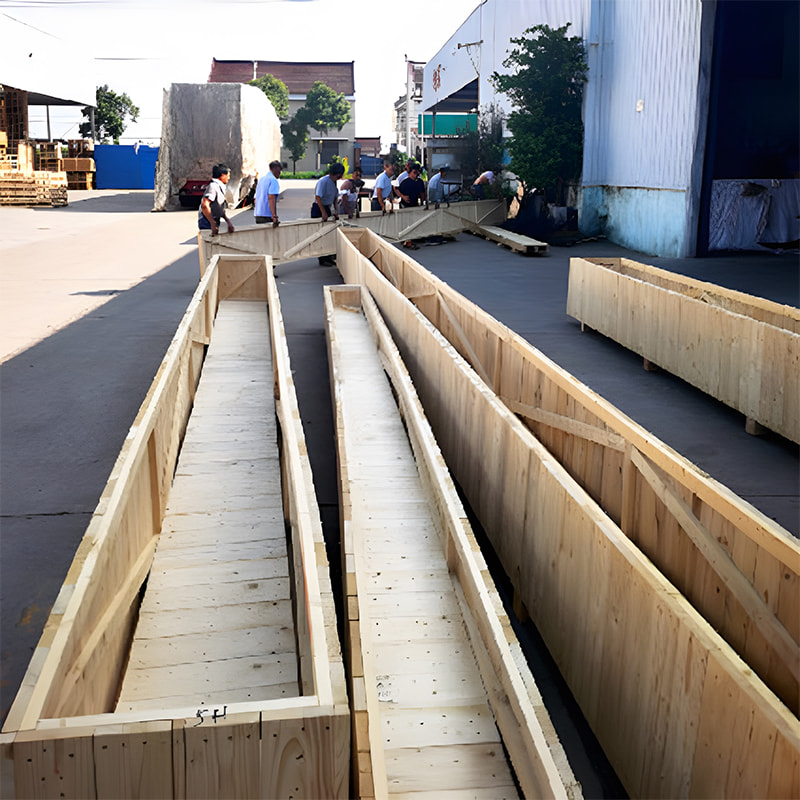 Heavy-Duty Solid Wood Crates for Large EquipmentHigh-density hardwood crate for oversized machinery, with custom sizing and bracing for transport, hoisting, and long-term storage.View Product →
Four Problems That Appear on Delivery
| What goes wrong | How to fix it |
|---|---|
| Boxes measured to the item alone, with no cushioning allowance | Add the cushioning thickness to the internal dimensions before the box is made. |
| Footprint wider than the pallet it stands on | Re-specify so the box sits inside the deck with a small margin, never over it. |
| Board grade picked on unit price rather than load | Calculate the stacked load on the bottom box, then choose the grade from that figure. |
| Solid wood packaging shipped without treatment or stamping | Confirm heat treatment and marking before the first box leaves the workshop. |
Table 2: specification errors that account for most transit damage claims, and the correction for each.
A Pre-Order Checklist for Packing Boxes
Run through these seven items before a quote is signed off. Each one has stopped a production run at some point.
 Foldable Plywood Box for Reusable Shipping CyclesA collapsible plywood crate with hinged panels and latches, suited to repeated round-trip routes; processed panels may face different wood packaging marking rules.View Product →
Compliance and Handling Notes Before You Ship
Wood packaging markings matter more than most buyers expect. Solid wood packaging moving across borders normally has to be heat treated and stamped with the recognised mark, while plywood, particleboard and similar processed panels are treated differently because manufacturing has already removed the pest risk.
Cardboard loses strength when it gets wet. A corrugated box that leaves the plant dry and arrives damp can keep its shape while giving up a large share of its stacking capacity, so palletised cardboard loads should be wrapped and never stored directly on a damp floor.
The bottom box carries the column. Stack height should follow the compression strength of the bottom unit with a margin for time under load, because a box that survives a week is not the same box that survives three months.
Keep the treatment stamp visible. Labels and tape placed over the mark cause avoidable delays at inspection.
None of this calls for exotic packaging. It calls for choosing the box from the load, the route and the rules, and holding those decisions through the quote. Buyers who work that way usually spend less overall, because they stop paying twice for the same shipment.



Got Questions? Contact Us Now
-
Copyright @ King Good Packaging Materials (NanTong)Co.,Ltd. All Rights Reserved. Custom Wooden Packaging Solutions Manufacturer OEM Industrial Packaging Solutions Factory

-
Contact info.
+86-0513-88669885 +86-13813749256 13813749256@163.com Qianzhuang Village, Yazhou Town, Hai'an City, Nantong City, Jiangsu Province, China - About KINGGOOD Packaging Series Industry Solutions OEM Service News Contact