

 English
 中文简体
中文简体 Español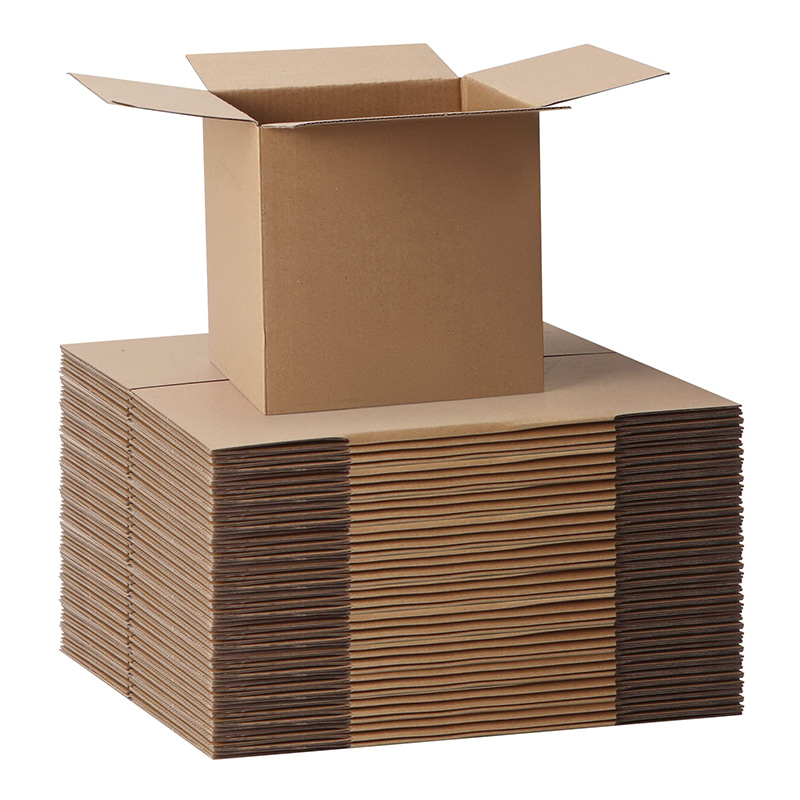
King Good Packaging Materials (NanTong)Co.,Ltd. is a Custom Corrugated Cardboard Boxes Manufacturer and Corrugated Cardboard Boxes Factory, committed to becoming a national OEM manufacturer of wood products packaging, specializing in the design, development and production of wood products. It has processing factories of different scales in Taizhou, Jiangsu Province, Fengxian, Shanghai, Wuhan, Hubei Province, Dongguan, Guangdong Province, Kunshan, Jiangsu Province and Beilun, Ningbo. The company's headquarters is located in Yazhou Town, Haian City, Nantong City. Since the establishment of the factory, it has newly introduced wood processing machinery and supporting equipment, and has technicians with many years of rich experience. It strictly controls each production procedure and ensures quality and quantity with proficient skills. We have formed a complete chain covering production, after-sales service and on-site packaging. Our perfect service has won high praise from many enterprises.
Based on raw materials such as fir, pine, miscellaneous wood, plywood and particleboard, KingGood can customize different products according to development to avoid unnecessary losses during long-distance transportation. Main products: Packaging boards, multi-layer boards, (for export and domestic use) wooden pallets. Wooden crates, pallet boards, front boards, and side board wooden crates (plywood, pallets, and packaging boxes can be exported directly without inspection, saving you a lot of cumbersome procedures) can provide packaging for extra-large mechanical equipment. Our company adheres to the principle of keeping promises, achieving mutual benefit and win-win results, getting along harmoniously, doing things with dedication, and providing excellent service. Ensure the company's continuous and stable development.


Cardboard Boxes
All Products
Corrugated Cardboard Boxes
Corrugated cardboard boxes use corrugated cardboard as their core raw material. They consist of an outer protective face paper, an inner laminated lining, and a central wavy corrugated core layer. They are die-cut, shaped, creased, folded, and precisely bonded. With their impressive cushioning and shock absorption properties and balanced load-bearing capacity, they have become the main packaging choice for fresh fruits and vegetables, small cross-border electronics, household kitchenware, children's toys, and other categories. They are particularly suitable for situations where transportation requires protection from bumps and collisions while controlling packaging costs. Their core competitiveness comes from their unique corrugated structure: the wavy core layer acts like a cushion to disperse external pressure, significantly improving impact resistance compared to ordinary flat cartons. This effectively reduces damage to fragile items such as glassware and digital accessories during transportation. Furthermore, corrugated cardboard itself is lightweight and does not add additional load to express delivery. This not only aligns with the lightweighting trend in the logistics industry, but also helps companies reduce unit shipping costs.
Corrugated cardboard boxes offer reliable customization flexibility in terms of functional design and application adaptation. Different corrugated structures can be selected based on the specific characteristics of the items being packaged. Single-wall (three-ply) corrugation is suitable for packaging lightweight goods such as clothing and stationery, double-wall (five-ply) corrugation can accommodate small home appliances and kitchen appliances, and triple-wall (seven-ply) corrugation is suitable for small industrial parts boxes. Specialized processing options are also available to meet specific application needs. For example, fresh food delivery boxes can be coated with food-grade waterproof film to prevent condensation from soaking the box, multilingual warning labels (such as "Fragile" and "Moisture-Proof") can be printed on small cross-border parcel boxes, and retail packaging can be enhanced with hot stamping and embossing to meet international logistics regulations, enhancing brand presentation. Furthermore, corrugated cardboard boxes can be folded for storage, occupying only one-fifth of the space of their unfolded state when not in use, significantly reducing warehouse storage pressure. Some models also feature reusable snap-on lids that can be opened and closed multiple times without the need for tape, making them particularly suitable for high-reuse scenarios such as e-commerce return and exchange packaging and internal parts turnover within enterprises. In terms of environmental protection, in addition to being recyclable and reusable, many manufacturers also use recycled corrugated paper made from a mixture of straw fibers to reduce wood consumption from the source. This can not only meet the fresh food industry's requirements for packaging hygiene, but also adapt to cross-border e-commerce's compliance standards for environmentally friendly packaging, while also being in line with the retail brand's sustainable development concept.
About KINGGOOD
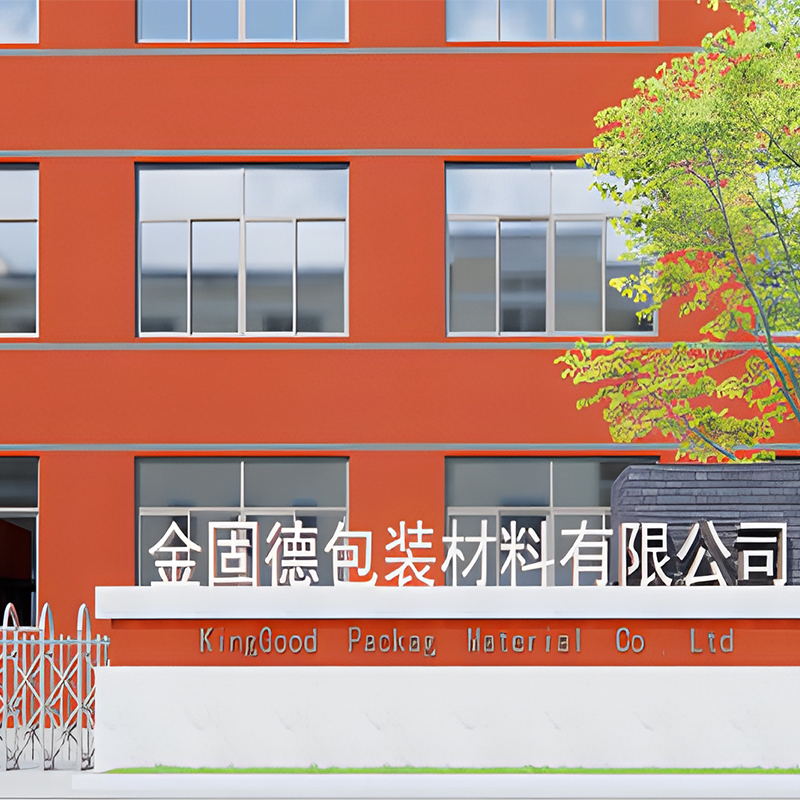
King Good Packaging Materials (NanTong)Co.,Ltd.
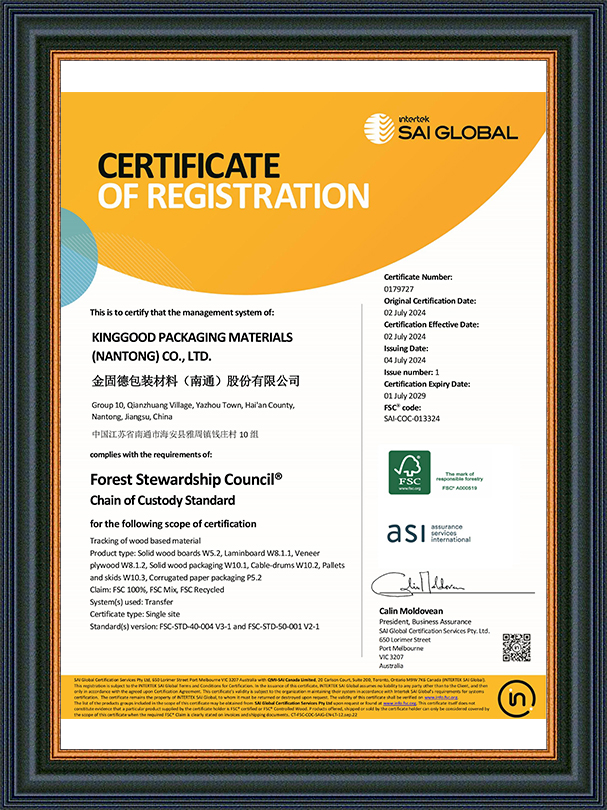
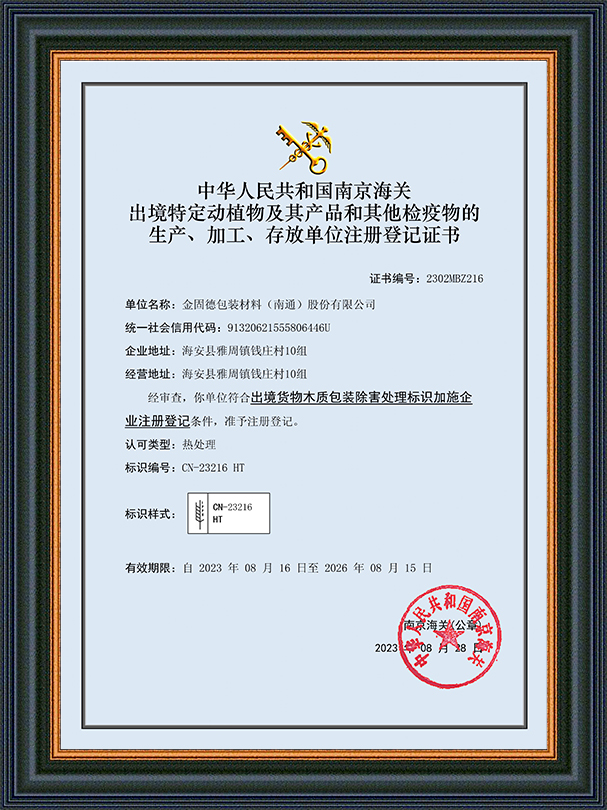
Certificate Of Honor
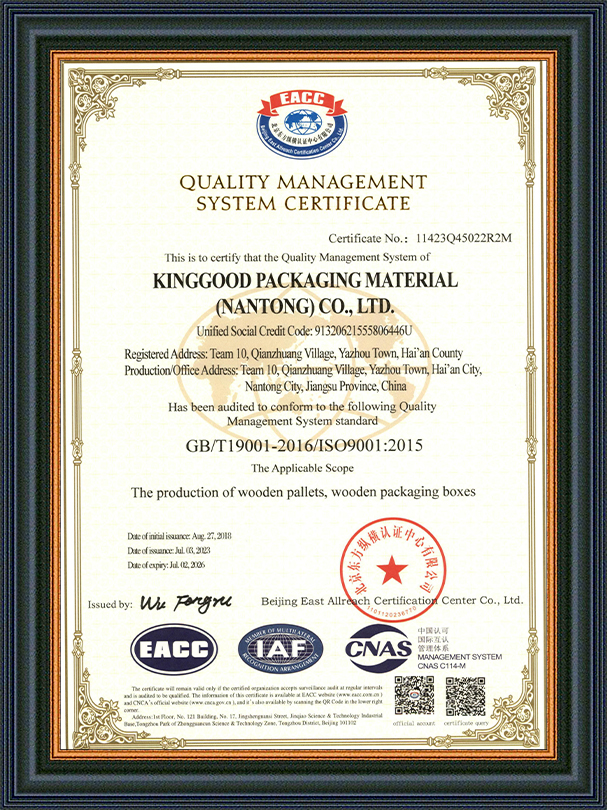
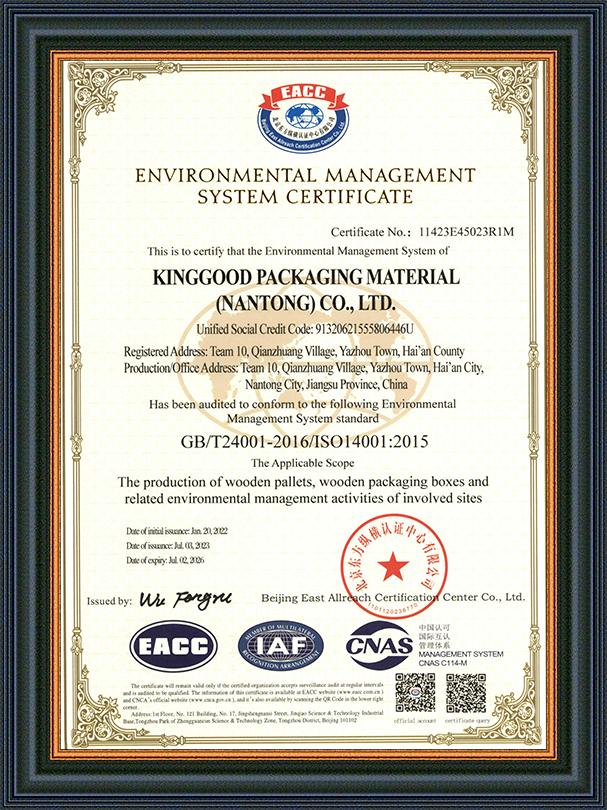
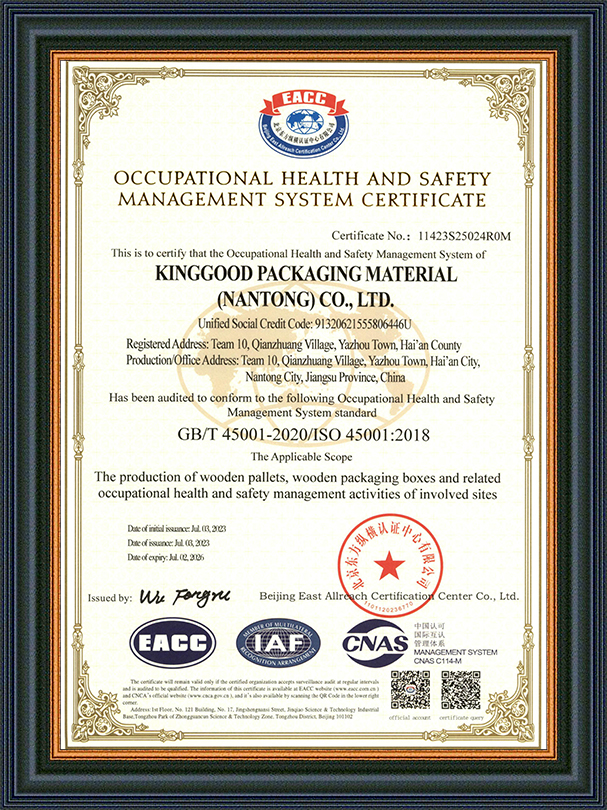

Message Feedback
Latest Articles

Cardboard Boxes Industry knowledge
Why Corrugated Cardboard Boxes Are Engineered for Stacking Strength
Corrugated cardboard boxes are built around a simple engineering goal: carry as much compression load as possible using the least amount of paper material. This efficiency is what makes corrugated board the default choice for shipping cartons across nearly every industry, since it delivers reliable stacking strength in warehouse storage and transit while keeping freight weight and material cost low.
The practical benefits of well-engineered corrugated cardboard boxes include:
- Predictable stacking strength that allows safe warehouse storage several layers high.
- Lightweight construction that keeps shipping costs low relative to the load capacity provided.
- Scalable wall configurations, from single-wall cartons to multi-wall board for heavier or bulkier cargo.
- Full recyclability, supporting lower-waste packaging programs across the supply chain.
How Corrugated Strength Is Measured and Engineered
Edge Crush Testing
Corrugated board strength is commonly rated using an edge crush test, which measures how much force the fluted material can withstand when compressed along its edge. This edge-direction strength is what largely determines how many boxes can be safely stacked on top of one another, since a box's corners and edges bear most of the load in a stacked pallet.
Single-Wall vs. Multi-Wall Construction
Single-wall board, with one fluted layer between two liners, suits lighter cartons and general retail shipping. Double-wall and triple-wall board add additional flute and liner layers, dramatically increasing compression resistance for heavier industrial goods, bulk cargo, or export crates that need to survive rougher handling.
Humidity and Its Effect on Compression Strength
Corrugated board loses a meaningful portion of its compression strength as humidity rises, since moisture softens the paper fibers that give the flutes their rigidity. Accounting for expected storage and transit humidity is an important part of specifying adequate box strength, particularly for long ocean voyages or humid warehouse environments.
Choosing a Wall Construction for Your Cargo
Matching wall construction to cargo weight and handling conditions avoids both under-protection and unnecessary material cost.
| Wall Construction | Relative Strength | Typical Use |
|---|---|---|
| Single-wall | Standard | General retail and light industrial cartons |
| Double-wall | Significantly higher | Heavier industrial goods and export cartons |
| Triple-wall | Maximum | Bulk cargo and heavy-duty shipping crates |
For cargo that exceeds the practical weight or rigidity limits of even multi-wall corrugated board, pairing cartons with a wooden pallet base or an outer wooden crate adds the structural support needed for safe long-distance freight handling.
Frequently Asked Questions About Corrugated Cardboard Boxes
Q1: What does edge crush test rating actually measure?
It measures how much compression force the corrugated material can withstand along its edge, which is the primary indicator of how safely boxes can be stacked in a warehouse or shipping container.
Q2: When should double-wall or triple-wall board be used instead of single-wall?
Heavier industrial goods, bulk cargo, or shipments expected to face rougher handling generally benefit from the added compression resistance of double-wall or triple-wall construction.
Q3: Why does humidity affect box stacking strength?
Moisture softens the paper fibers within the flutes, reducing their rigidity and lowering the box's overall compression resistance, which matters most during long, humid ocean transit.
Q4: When does cargo need a wooden crate instead of a corrugated box?
Once cargo weight or fragility exceeds what even multi-wall corrugated board can reliably support, adding a wooden pallet base or outer crate provides the additional rigidity needed for safe transport.
Complete Packaging Support Beyond Corrugated Cardboard Boxes
Headquartered in Yazhou Town, Hai'an, Nantong, King Good Packaging Materials (Nantong) Co., Ltd. operates processing facilities across multiple regions, including Taizhou, Fengxian in Shanghai, Wuhan, Dongguan, Kunshan, and Beilun in Ningbo, offering corrugated cardboard boxes alongside wooden pallets, wooden crates, and packaging boards for cargo that needs added structural support. With a complete chain covering production, after-sales service, and on-site packaging, the company helps customers combine corrugated and wood-based solutions to reduce potential losses during long-distance transportation.


Got Questions? Contact Us Now
-
Copyright @ King Good Packaging Materials (NanTong)Co.,Ltd. All Rights Reserved. Custom Corrugated Cardboard Boxes Manufacturer Corrugated Cardboard Boxes Factory

-
Contact info.
+86-0513-88669885 +86-13813749256 13813749256@163.com Qianzhuang Village, Yazhou Town, Hai'an City, Nantong City, Jiangsu Province, China - About KINGGOOD Packaging Series Industry Solutions OEM Service News Contact