

 English
 中文简体
 Español


Packaging With Kraft Paper: Grades, Strength, and Smart System Combinations
Content
- 1 Start with the Conclusion: Kraft Paper Packaging Is a System, Not a Sheet
- 2 Match the Kraft Grade to the Job
- 3 Three Numbers That Decide If Kraft Paper Is Strong Enough
- 4 Six Steps to a Reliable Kraft Paper Packaging System
- 5 Four Mistakes That Turn Kraft Packaging Into a Damage Claim
- 6 Before You Ship: A Kraft Packaging Checklist
- 7 What to Remember When the Load Gets Heavy or the Route Gets Humid
Start with the Conclusion: Kraft Paper Packaging Is a System, Not a Sheet
An export machinery shop asked us to cut packaging weight on a 620 kg lathe subassembly shipping from Shanghai to Hamburg. The winning design kept a wooden pallet under the heaviest point loads but rebuilt everything above it with kraft materials: a double-wall kraft corrugated outer box, honeycomb paper fillers between the machine and the crate wall, and kraft paper void fill around machined surfaces. The shipment arrived without a single recorded damage claim.
Kraft paper packaging works when it is designed as a system rather than used as an afterthought. The kraft pulping process leaves fibers stronger than other pulping routes, which gives kraft boxes, void fill, and paper pallets a high strength-to-weight ratio. It fails when the wrong basis weight is chosen, when moisture is ignored, or when boxes are stacked beyond their compression limit.
Our consistent advice to customers: use kraft paper everywhere it can carry the load, then support it with engineered structure where it cannot. For heavy components, that means working with a packaging supplier who builds the whole system — kraft boxes, paper pallets, plywood panels, and solid wood crates — in one design.
Match the Kraft Grade to the Job
Not all kraft paper behaves the same. Natural unbleached kraft is the default for wrapping and corrugated board because the fibers stay long and flexible. Sack kraft is a porous grade with high elasticity, engineered for bags that survive repeated drops. Coated unbleached kraft (CUK) adds a smooth printable surface, while solid bleached kraft (SBS) gives a white premium appearance for retail packaging. Choosing the wrong grade usually means paying for properties you do not need — or skipping properties you do.
| Grade | Basis Weight | Primary Role | Why It Wins |
|---|---|---|---|
| Natural kraft (unbleached) | 30–120 gsm | Wrapping, linerboard, void fill | High tear and burst strength, recyclable |
| Sack kraft | 70–130 gsm | Bags for cement, feed, chemicals | High elasticity; resists drop impact |
| Coated unbleached kraft (CUK) | 150–400 gsm | Printed retail boxes, food packaging | Smooth print surface, retains fiber strength |
| Solid bleached kraft (SBS) | 200–350 gsm | Cosmetic and pharmaceutical cartons | White appearance, consistent stiffness |
Table 1 — Kraft grades commonly used in transport and retail packaging; ranges reflect typical supply.
For export and industrial packaging, natural kraft grades dominate because they combine low cost with predictable performance. They become the corrugated walls of a kraft cardboard shipping box and the facing material of paper pallets. When a customer asks us to specify the box itself, we look first at weight, stacking height, and moisture exposure on the planned route — not at the color of the board.
 Kraft Cardboard BoxesKraft cardboard boxes are made from high-strength kraft cardboard through a die-cutting, folding, and gluing process. Their core advantages of being environmentally fr...View Product →
Three Numbers That Decide If Kraft Paper Is Strong Enough
Basis weight tells you weight, not performance. Two 100 gsm papers can behave completely differently because fiber source, refining, and pressing vary. The three values that matter in packaging design are basis weight (gsm), Elmendorf tear (mN), and Mullen burst (kPa). Tear resistance predicts how well a sheet survives punctures from machined edges; burst strength predicts how much internal pressure the paper takes before splitting.
For corrugated boxes, the Edge Crush Test (ECT) of the combined board is the decisive number, measured in kN/m. A medium-duty single-wall box typically sits around 5–7 kN/m; heavy double-wall boards reach 12 kN/m and above. That is why a tall stack of lightweight kraft boxes collapses while a properly specified double-wall box holds the same load for weeks.
Porosity is the hidden variable. Sack kraft is deliberately porous so cement and flour bags can breathe during filling. That same porosity works against you in a humid container, especially when kraft sits alongside wood — another material that exchanges moisture with the air. The practical rule: install a vapor barrier between kraft packaging and moisture-sensitive equipment.
Six Steps to a Reliable Kraft Paper Packaging System
Designing a kraft packaging system follows the same logic whether you are shipping a hand tool or a control cabinet. Work through these steps in order, and you will avoid most of the problems that turn packaging into a damage claim.
Profile the cargo
Record weight, dimensions, fragility, surface hardness, and how high the package will sit in the container. This profile determines every later choice.
Select the base
For clean, dry shipments, a corrugated paper pallet replaces a wooden pallet at lower weight and better moisture behavior for the product itself. For wet, heavy, or very long routes, choose treated solid wood.
Choose the box strength
Single-wall kraft boxes suit goods under 20 kg. Double-wall handles 30–70 kg items. When stacking exceeds six boxes high or the load is irregular, move up to plywood or solid wood cases.
Plan internal containment
Use kraft void fill, crumpled paper, and honeycomb panels to stop movement in every axis. A package that shifts inside its own box fails before the truck hits a pothole.
Seal and identify
Use pressure-sensitive kraft tape rather than plastic tape, place labels flat on the side, and mark batch and date. Small details affect both customs checks and insurance claims.
Validate before production
Run a compression test and a tilt-and-drop test on one fully sealed unit. Record results so repeat orders can be compared against a stable benchmark.
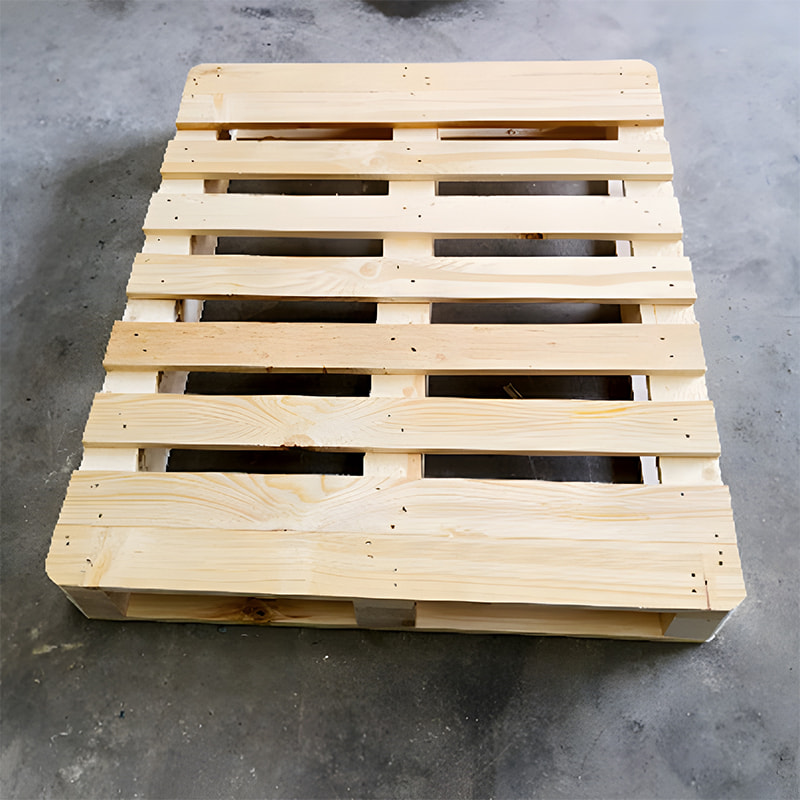
 Corrugated Paper Pallet Supplierinformation to be updatedView Product →
Four Mistakes That Turn Kraft Packaging Into a Damage Claim
Most transport damage involving kraft packaging comes from four repeatable errors. Each is avoidable when the packaging is specified with clear numbers and tested before the container closes.
| Common Mistake | Better Approach |
|---|---|
| Choosing the lightest kraft box to save cost | Specify the ECT rating and compare it against the real claim risk |
| Ignoring moisture in the container | Add a vapor barrier or desiccant before applying kraft void fill |
| Loading beyond the rated stacking height | Limit stacks to six boxes and use plywood or solid wood for the bottom layer |
| Treating paper and wooden pallets as identical | Confirm dynamic and static load ratings plus entry direction before finalizing the design |
Table 2 — Typical kraft packaging failures and the corrections that prevent them.
These errors show up in the same forms everywhere: crushed bottom boxes, scuffed machine surfaces, and rejected loads. Each one is avoidable if the kraft system is designed with the same rigor as the product inside.
Before You Ship: A Kraft Packaging Checklist
Keep this checklist where the packers can see it. Each item addresses a variable that is easy to overlook when the production line is moving fast.
Pallet base rated for the load — wood for wet or heavy exports, a honeycomb paper pallet for clean, dry, lower-weight freight.
Box grade matched to compression — double-wall for anything over 30 kg; honeycomb panels for flat, fragile surfaces.
Void fill calculated, not guessed — every gap that allows product movement gets filled.
Vapor protection applied when the product is metal, electronics, or anything with a painted surface.
Batch, plant, and date marked on the box exterior for traceability during customs and final inspection.
One fully sealed unit tested on the same day as the production run, with results recorded for the next order.
Honeycomb Paper Pallet Supplierinformation to be updatedView Product →What to Remember When the Load Gets Heavy or the Route Gets Humid
Kraft paper is hygroscopic. A 40-foot container can exceed 80% relative humidity during the voyage, and kraft will absorb that moisture and soften. For metal parts, precision equipment, and electronics, add a polyethylene vapor barrier inside the kraft layer rather than trusting the paper alone.
Kraft rolls are combustible. Warehouses storing loose kraft must keep it away from sparks and hot surfaces, and fire exits at packing stations need to stay clear at all times.
Sustained compression is the real enemy. Even a well-made double-wall kraft box deforms slowly when stacked under weight for days. When the top of the stack sits higher than two metres, move the bottom layer to a plywood crate or solid wood box.
Kraft paper and engineered wood are partners. The hybrid package — a kraft box on a wooden pallet, honeycomb fillers inside a wooden crate — usually beats a pure paper or pure wood solution. For guidance on dimensioning the wooden parts of that system, see our notes on wooden packaging design and improvement.




Got Questions? Contact Us Now
-
Copyright @ King Good Packaging Materials (NanTong)Co.,Ltd. All Rights Reserved. Custom Wooden Packaging Solutions Manufacturer OEM Industrial Packaging Solutions Factory

-
Contact info.
+86-0513-88669885 +86-13813749256 13813749256@163.com Qianzhuang Village, Yazhou Town, Hai'an City, Nantong City, Jiangsu Province, China - About KINGGOOD Packaging Series Industry Solutions OEM Service News Contact