

 English
 中文简体
 Español


Benefits of Biodegradable Packaging: Lower Costs, Compliance and Cargo Protection
Export crates, pallets and cartons rarely finish their lives in the country where they were made. A machine builder in Jiangsu loads a wooden case into a container, a distributor in Rotterdam unpacks it, and somebody in between has to decide what happens to roughly 400 kg of wood, board and strapping. That decision is where the real benefits of biodegradable packaging are won or lost.
Here is the conclusion first. Biodegradable packaging pays off when the material can genuinely return to the soil or to a fibre recycling stream at the point of unpacking, and when it still protects the goods on the way there. The measurable gains are lower disposal and landfill charges for the receiving site, fewer packaging waste compliance problems, simpler sorting because the unit is built from one or two materials, and a materials story that holds up when a customer or an inspector asks about it.
Those gains are not automatic. Paper and wood lose strength in humid air, they follow different export rules from plastics, and a biodegradable label means nothing if the destination has no way to process the material. Treat the category as an engineering choice rather than a slogan and the numbers usually work.
Content
- 1 What Biodegradable Packaging Means in Industrial Buying
- 2 Where the Benefits of Biodegradable Packaging Show Up
- 3 Comparing Biodegradable Packaging Materials for Shipping
- 4 How to Switch to Biodegradable Packaging Step by Step
- 5 Common Mistakes With Biodegradable Packaging
- 6 Practical Checks Before You Switch
- 7 Storage, Handling and Export Notes
What Biodegradable Packaging Means in Industrial Buying
Biodegradable packaging is not a material family; it is a disposal outcome. The same corrugated board that breaks down inside a commercial composting facility in about twelve weeks can sit almost unchanged in a dry warehouse for years, and can sit in an oxygen-starved landfill for decades. That gap between the label and the landfill is the first thing a buyer should understand.
Two standards define the claim in practice. EN 13432 sets the European requirements for packaging recoverable through composting and biodegradation, covering disintegration, biodegradation and ecotoxicity. ASTM D6400 does the equivalent job in the United States. Both are written around industrial composting conditions — sustained heat, controlled moisture and active microbial populations — not around a warehouse floor, a ditch or a sealed landfill cell.
Why wood and paper fit industrial shipping
Most heavy industrial packaging is already biodegradable by nature. Solid wood and plywood are cellulose. Corrugated board, honeycomb board and moulded pulp are cellulose fibres pressed into shapes. Under the right conditions these materials return to the soil, and where a fibre collection stream exists they can be recycled instead.
Processed wood also carries a practical advantage that has nothing to do with sustainability. Plywood, particle board and similar engineered panels are generally exempt from ISPM 15 because they are manufactured under heat and pressure. Untreated solid wood is not: most importing countries require heat treatment or fumigation plus the IPPC mark on solid wood packaging used in international trade. That distinction changes lead times, cost and paperwork, and it is regularly missed by first-time exporters.
Where the Benefits of Biodegradable Packaging Show Up
Packaging waste is usually billed to whoever receives the goods, not to whoever ships them — so a material choice made far away lands on someone else's invoice.
A receiving warehouse that pays by the tonne for general waste sees the packaging decision again every month. Fibre-based packaging that can be flattened, baled and sold or composted reduces that line item. Mixed-material packaging that has to go to landfill does the opposite, and it does it quietly, because the disposal cost sits in a different budget from the purchase price.
Environmental gains that can be measured
Fibre and timber packaging draws on renewable plantation stock rather than petrochemical feedstock, and it diverts tonnage away from landfill. Composting and fibre recycling return material to a productive loop instead of creating a long-term storage problem. None of that requires exotic materials — it requires keeping the unit separable at the point of unpacking.
Operational and commercial gains
On the floor, single-material packaging is faster to handle. Cartons flatten without tools, wooden pallets can be repaired rather than scrapped, and a receiving team does not need specialised sorting equipment to separate the parts. That speed matters when a container is being unpacked against a docking schedule.
Commercially, packaging waste rules have moved from guidance to enforcement in several major markets, and retailer sustainability scorecards now ask suppliers to declare material composition and end-of-life route. Choosing a biodegradable specification early avoids a retrofit later. Where a shipment mixes lightweight and heavy items, a custom packaging solution that pairs moulded pulp cushioning with plywood crating often produces the largest disposal saving, because the whole unit can be taken apart by hand and routed to two streams.
Comparing Biodegradable Packaging Materials for Shipping
Load capacity and end-of-life behaviour pull in opposite directions, so the comparison has to be made per shipping unit rather than per material.
| Material | Biodegradation behaviour | Typical load | Export note |
|---|---|---|---|
| Corrugated board | Breaks down quickly with moisture and microbial activity; widely recyclable | Light to medium, up to about 30 kg per box | No plant-health treatment required |
| Honeycomb board | Fibre structure, degradable in soil and compost | Medium loads and protective cushioning | Same as corrugated board |
| Moulded pulp pallet | Biodegradable under industrial composting conditions | Light loads and one-way export | No fumigation or heat treatment |
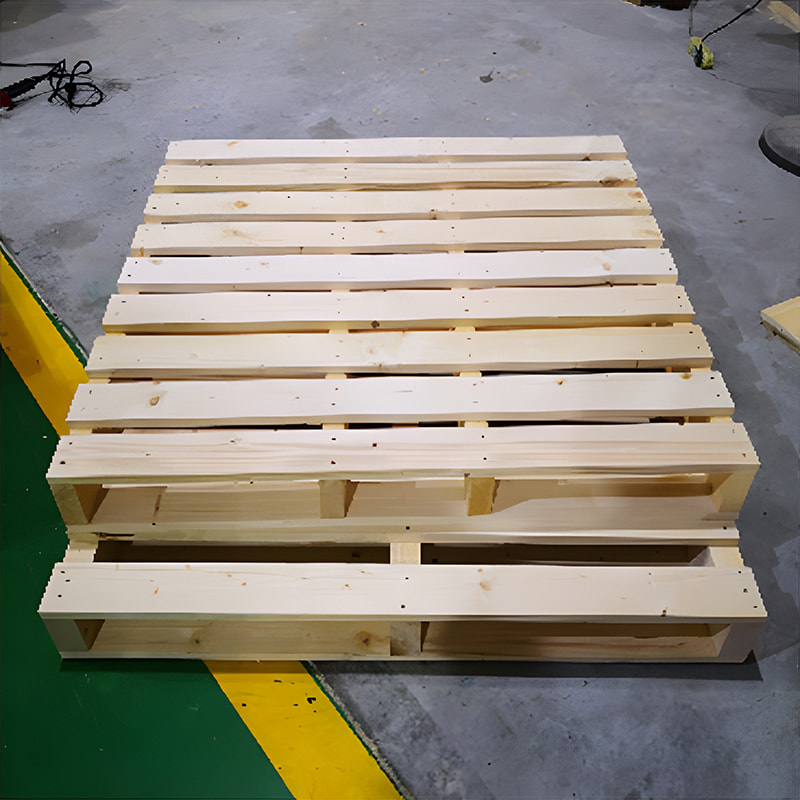
| Plywood pallet and crate | Cellulose-based; degradable while untreated | Heavy and bulky equipment | Engineered wood, usually exempt from ISPM 15 |
| Solid wood pallet and crate | Untreated timber degrades; chemical treatment slows it | Very high, for machinery and oversize cargo | Heat treatment or fumigation plus IPPC mark |
Comparison is indicative. Actual load limits depend on board grade, timber species, the span between bearers and the stacking pattern in the container.
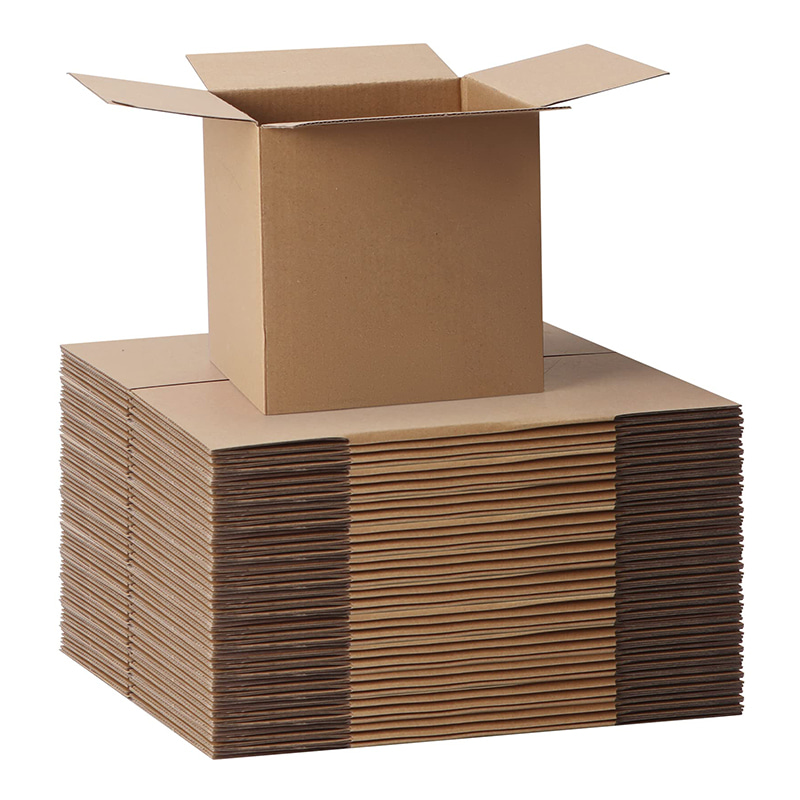 Corrugated Cardboard BoxesCorrugated cardboard boxes use corrugated cardboard as their core raw material. They consist of an outer protective face paper, an inner laminated lining, and a centra...View Product →
How to Switch to Biodegradable Packaging Step by Step
- 1
Audit what you actually ship
List the packaging bill for every SKU: board grade, pallet type, cushioning, tape, labels and strapping. Mixed materials are the main destroyer of a recyclability claim, and they are usually invisible on the purchase order.
- 2
Match the material to the load
An 800 kg machine base needs plywood or solid wood. A 12 kg electronic unit is fine in corrugated board with honeycomb cushioning. A structured review of wooden packaging design and improvement usually turns up two or three changes that cut both material volume and disposal weight.
- 3
Confirm destination rules
Check the plant-health requirements of the importing market and the disposal routes available there. Most countries regulate solid wood packaging; engineered wood is normally exempt. Some markets also regulate packaging waste separately from the goods inside it.
- 4
Pilot one line before switching over
Ship a single pallet and a single crate under the new specification, then track damage rates, changes in stacking strength and the receiving site's real disposal cost. Full conversion should wait until that data is in hand.
- 5
Write it into the specification
Name the material, grade, moisture limits and intended disposal route in the purchasing document. A biodegradable specification with no stated end-of-life route is only a wish.
Common Mistakes With Biodegradable Packaging
| Common practice | What actually happens | Better approach |
|---|---|---|
| Treating "biodegradable" as meaning fast breakdown anywhere | Oxygen-starved landfill degrades it very slowly, so the stored tonnage barely changes | Match the material to the handling route the receiver really has |
| Replacing a solid wood pallet under 1,200 kg of equipment with a paper pallet | Deck boards crush, the load shifts mid-transit and the claim exceeds the saving | Keep paper for lighter loads, or add reinforcing bearers |
| Skipping the export treatment record for wooden packaging | Consignments are held, returned or re-treated at the border | Confirm whether solid wood or engineered wood rules apply before booking freight |
| Storing cartons in a high-humidity warehouse for months | Stacking strength drops and boxes fail before they ever reach the container | Control warehouse humidity and rotate stock quickly |
| Mixing a compostable outer box with non-compostable liners | The whole packaging unit loses its compostable claim | Keep box, liner, tape and label materials aligned |
Most failures trace back to a mismatch between the material chosen and the handling route available at the receiving end.
Practical Checks Before You Switch
- Confirm the receiver has composting or organic waste collection. Without it, a biodegradable material still ends up in landfill and most of the benefit disappears.
- Test stacking strength at the humidity the warehouse actually runs at, not at lab conditions. Fibre packaging loses compression resistance quickly above 70% relative humidity.
- Keep every component consistent. Tape, labels, liners and strapping all have to match, or the claim for the whole unit fails.
- Compare total landed cost per pallet position rather than unit price. Bio-based materials often cost more per piece and less per tonne of waste.
- Verify the plant-health status of any wooden component. Solid wood needs heat treatment or fumigation plus the IPPC mark; processed wood normally does not.
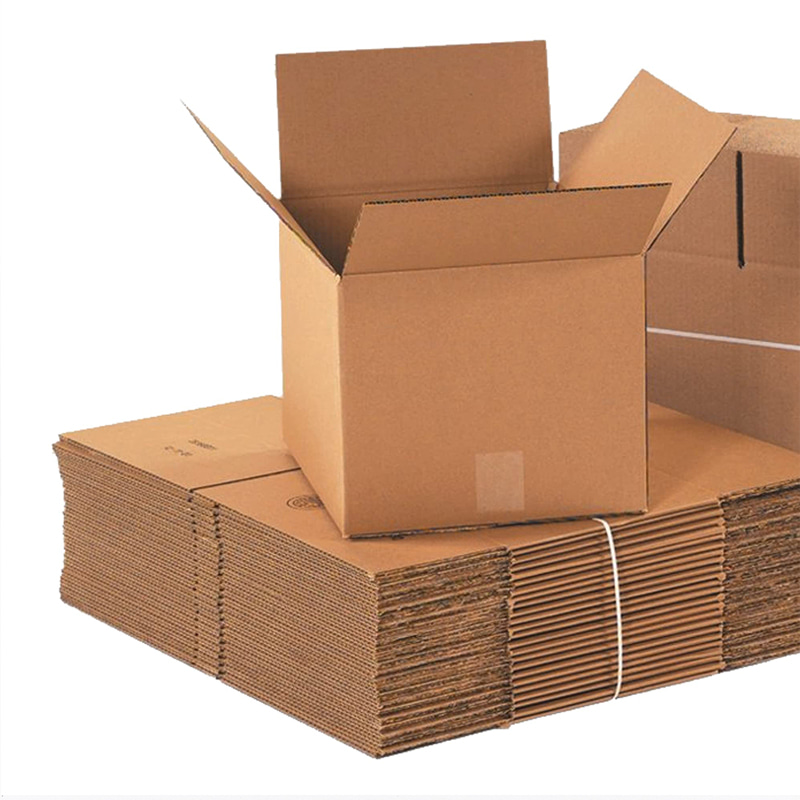 Paper Pallet ManufacturerPaper Pallets are a highly compliant storage and transportation tool for export. Their core advantage lies in eliminating the fumigation or heat treatment processes of...View Product →
Storage, Handling and Export Notes
Paper and wood are hygroscopic. They take on moisture from the air and lose compressive strength as they do. A corrugated box that tests at 8 kN in a controlled laboratory can fall well below that after a week in a humid warehouse, so storage conditions belong in the packaging specification, not only in the shipping instruction.
On export, keep two files separate: the environmental claim and the plant-health status. A plywood crate can be exempt from ISPM 15 and still attract questions about its disposal route. An untreated solid wood pallet can be fully biodegradable and still be refused entry without the IPPC mark.
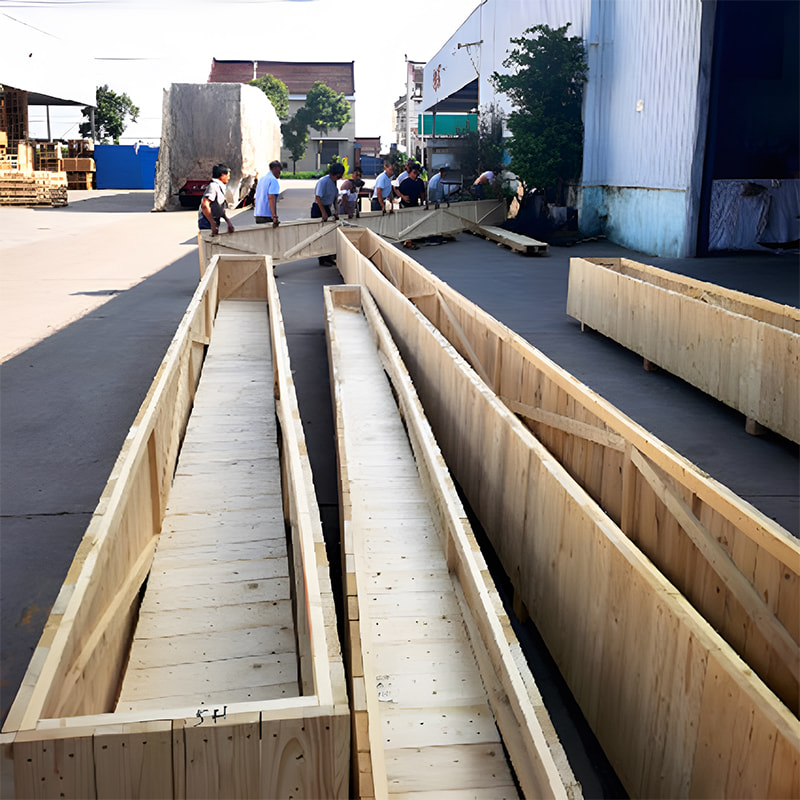
Knock-down and foldable designs solve a practical problem here. Returning empty wooden boxes means paying freight on a volume that is almost entirely air, and storing empty crates consumes floor space most warehouses cannot spare. A collapsible plywood box flattens for the return leg and takes up a fraction of the volume until it is needed again.
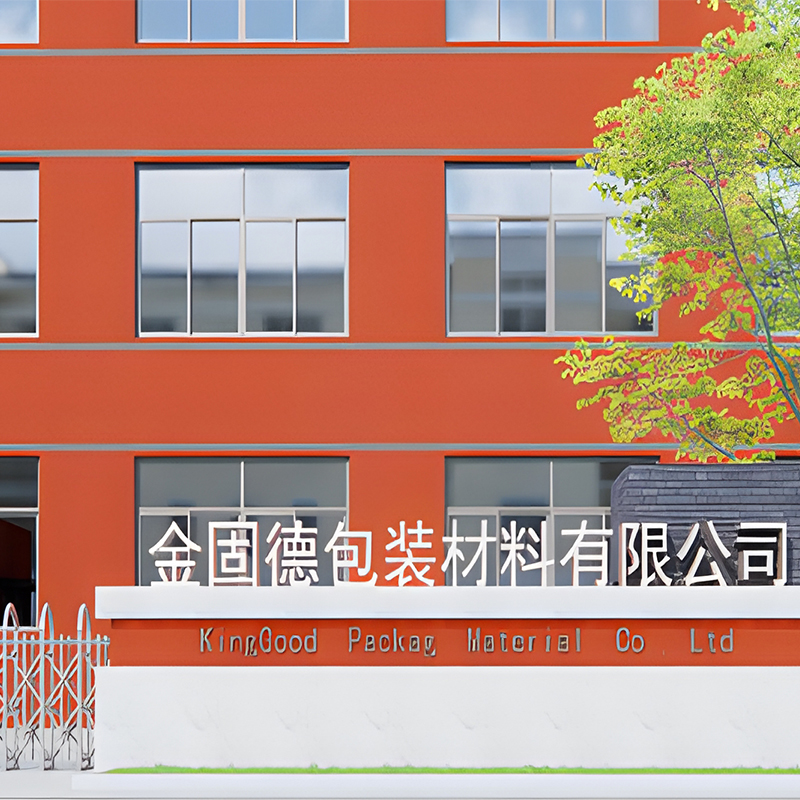 Foldable Plywood Box Manufacturerinformation to be updatedView Product →
The benefits of biodegradable packaging are real, but they are conditional. They appear when the material matches the load, when the destination has a route to handle it, and when the paperwork supports both the environmental claim and the plant-health requirement. Choose paper and wood where they fit the job, verify what happens at the far end of the journey, and only then commit a production line to a new specification.


Got Questions? Contact Us Now
-
Copyright @ King Good Packaging Materials (NanTong)Co.,Ltd. All Rights Reserved. Custom Wooden Packaging Solutions Manufacturer OEM Industrial Packaging Solutions Factory

-
Contact info.
+86-0513-88669885 +86-13813749256 13813749256@163.com Qianzhuang Village, Yazhou Town, Hai'an City, Nantong City, Jiangsu Province, China - About KINGGOOD Packaging Series Industry Solutions OEM Service News Contact