

 English
 中文简体
中文简体 Español

Small Box Dimensions for UPS: Sizes, Limits, and How to Choose the Right One
Few shipping habits save money as directly as choosing a smaller box. UPS bills every parcel on the greater of its actual weight or its dimensional weight, and for lightweight products the dimensional weight usually wins. A 3 lb product in a 16 x 12 x 8 in carton bills at 12 lb; the same product in a 12 x 9 x 6 in carton bills at 5 lb. Seven pounds of difference, from box choice alone.
This guide nails down the small box dimensions that matter most for UPS shipping, explains how carriers measure a sealed parcel, and shows the packing and data habits that keep you in the lowest possible rate tier. You will leave with a clear rule: measure the sealed box, size down where safety allows, and check dimensional weight before you print the label.
Content
- 1 Small Box Dimensions for UPS: The Sizes Worth Knowing
- 2 How to Measure a UPS Small Box the Way the Carrier Does
- 3 Dimensional Weight: The Formula That Turns 3 lb Into 12 lb
- 4 How to Pack a Small Box Without Growing Its Dimensions
- 5 Small Box Mistakes vs What Works Instead
- 6 A 60-Second Box Checklist Before You Print the Label
- 7 When Standard Small Boxes Stop Being the Right Answer
Small Box Dimensions for UPS: The Sizes Worth Knowing
The small box category splits into two groups: carrier-supplied Express packaging for documents and flat goods, and the corrugated cartons that dominate e-commerce fulfillment. The inch dimensions below cover the most commonly referenced small box sizes in UPS shipping.
| Small box style | Outer dimensions (in) | Typical contents | Why it matters |
|---|---|---|---|
| UPS Express Box (Small) | 13 x 11 x 2 | Documents, books, flat parts | Slim profile keeps dimensional weight minimal |
| UPS Express Tube | 38 x 6 x 6 | Rolled prints, posters | Girth applies to every parcel, even slim tubes |
| Small cube carton | 4 x 4 x 4 | Jewelry, fasteners, small parts | Lowest volume tier; dim weight rarely applies |
| Small flat carton | 8 x 6 x 2 | T-shirts, cables, small accessories | Common lightweight retail option |
| Standard small carton | 12 x 9 x 6 | Books, tools, small electronics | The typical e-commerce small box |
| Carrier retail cube box | 6 x 6 x 6 | Gifts, small kitchenware | Compact cube, easy to overpack |
Carrier packaging programs change periodically; these figures come from carrier documentation and standard industry box sizes, so confirm current specifications before ordering supplies.
How to Measure a UPS Small Box the Way the Carrier Does
UPS reads a closed parcel from the outside, along its three outer edges, and rounds each dimension up to the nearest whole inch. Re-rating disputes almost always trace back to open boxes, loose tape, or guessed numbers. The same discipline shows up on the freight side, where measuring large wooden cases accurately prevents export delays.
Seal the box exactly as it will travel. Tape all flaps, add the label, and close any inserts before measuring.
Find the longest side. That measurement becomes the length in the dimensional weight formula.
Measure the width on the second-longest side, at a right angle to the length.
Measure the height from the bottom to the top of the sealed box; this is the third dimension.
Round every side up to the next whole inch. A box that measures 11.2 x 8.6 x 4.1 in is billed using 12 x 9 x 5 in.
Record L x W x H and the actual scale weight before printing the label; these two numbers feed the dimensional weight calculation.
Dimensional Weight: The Formula That Turns 3 lb Into 12 lb
UPS calculates dimensional weight in inches by dividing Length x Width x Height by 139, then rounding up to the nearest pound. The billable weight is always the higher of that result and the scale weight.
A 16 x 12 x 8 in box computes to 12 lb. The same product in a 12 x 9 x 6 in box computes to 5 lb.
Shrink one dimension by two inches and you can drop two or three rate tiers. That is why small box dimensions are a pricing decision, not a logistics afterthought.
How to Pack a Small Box Without Growing Its Dimensions
A carton grows while being packed. The measurements that matter belong to the sealed, taped, and labeled box, and contents often push walls outward by half an inch or more. Use these habits to keep the outside dimensions honest.
Fit contents with about one inch of clearance on each side, then fill voids with paper, air pillows, or honeycomb pads. Movement during transit is the main reason box walls bulge outward.
Reuse cartons only when walls, corners, and flaps are intact. A crushed corner changes exterior volume, weakens stacking strength, and invites damage claims.
A proper shipping carton holds its geometry because the corrugated flute and board weight are matched to the load. For general small parcels, a single-wall corrugated cardboard box in the right size is the standard, cost-effective choice.
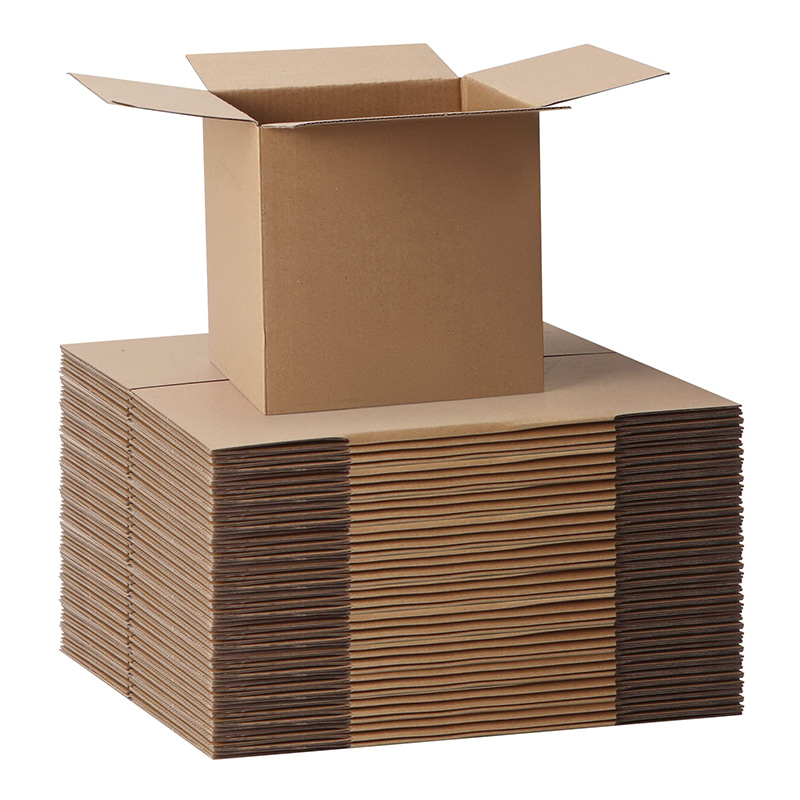 Corrugated Cardboard Boxes for Cost-Effective Small Parcel ShippingThese single-wall corrugated boxes balance cushioning and load-bearing capacity, making them a standard choice for protecting fragile items like glassware and electronics during transit while keeping packing costs low.View Product →
Tape every flap seam with 2 in (5 cm) pressure-sensitive tape, keep the label on the largest flat face, and if the carton looks misshapen after closing, measure it again before labeling.
Small Box Mistakes vs What Works Instead
Most rate surprises come from a handful of recurring habits. The comparison below pairs each mistake with a measurable fix.
| Common mistake | What works instead |
|---|---|
| "A slightly bigger box is safer." | Pick the smallest carton that fits with about 1 in clearance; lower volume lowers the billing weight. |
| "Any carton around the office will do." | Use shipping-grade corrugated boxes; retail-only cartons crush and lead to damage claims. |
| "I can estimate dimensions from memory." | Measure the sealed box each time; a one-inch rounding error can raise the tier. |
| "Girth limits only apply to large freight." | UPS applies length plus girth to every parcel; check 2W + 2H + L even for slim tubes. |
| "The carrier will re-rate it if I am off." | Re-rating creates surprise charges; verify dimensional weight before the label prints. |
Estimating dimensions is the single most common reason small parcels jump to a higher UPS rate tier.
A 60-Second Box Checklist Before You Print the Label
When Standard Small Boxes Stop Being the Right Answer
Standard cartons suit routine parcels. Three situations justify custom packaging: fragile products with a high value-to-weight ratio, items with shapes that force excessive air volume, and repeat shipments where trimming an inch or two from one side drops the dimensional weight into a lower tier.
In those cases, the fix is not a bigger standard box but a carton engineered to the product. A manufacturer can match wall strength to the load and supply kraft cartons that keep lightweight retail goods presentable, compact, and easy to label.
 Kraft Cardboard Boxes for Eco-Friendly Lightweight PackagingMade from high-strength kraft material, these boxes offer tear and puncture resistance for clothing, food, and small accessories. Their recyclable, natural appearance supports green logistics and reduces environmental impact.View Product →
For fragile or heavy small items, honeycomb board delivers high compression strength per unit of thickness, protecting the contents without adding the bulk of extra foam cushioning.
 Honeycomb Cardboard Boxes for Heavy and Fragile CargoFeaturing a honeycomb core that distributes stress evenly, these boxes provide excellent compression strength and anti-bending properties, ideal for appliances, auto parts, and instruments requiring stackable, long-distance protection.View Product →
If you ship the same small items week after week, asking a packaging supplier to review your sizes is a fast, low-cost experiment; a custom carton frequently pays for itself within a few shipments.
Small box dimensions decide UPS rates more than most shippers expect. Measure the sealed carton, choose the smallest sound box, and recalculate dimensional weight before labeling; then the invoice matches the estimate.

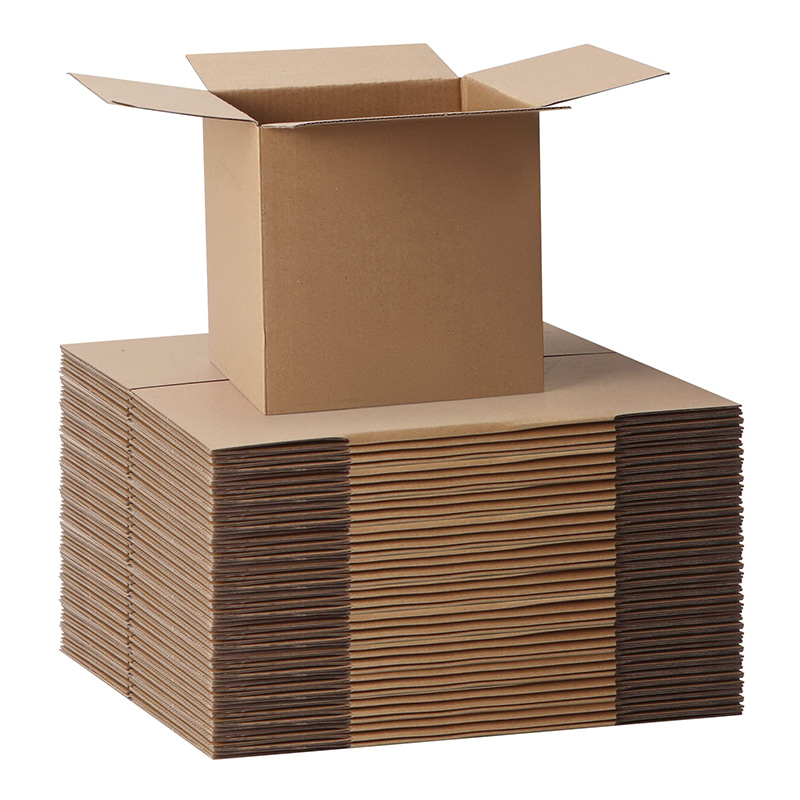

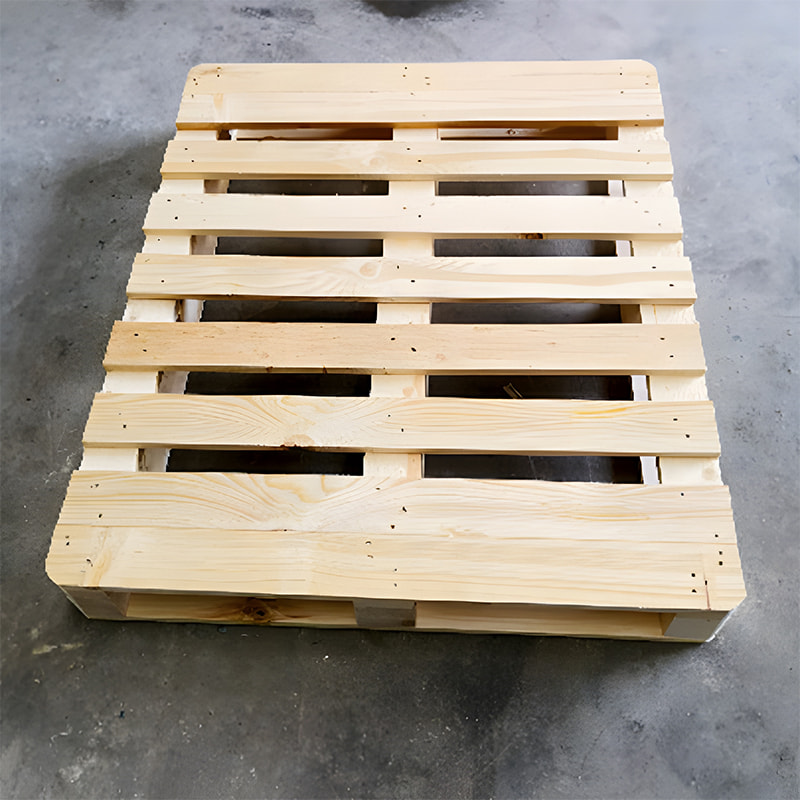


Got Questions? Contact Us Now
-
Copyright @ King Good Packaging Materials (NanTong)Co.,Ltd. All Rights Reserved. Custom Wooden Packaging Solutions Manufacturer OEM Industrial Packaging Solutions Factory

-
Contact info.
+86-0513-88669885 +86-13813749256 13813749256@163.com Qianzhuang Village, Yazhou Town, Hai'an City, Nantong City, Jiangsu Province, China - About KINGGOOD Packaging Series Industry Solutions OEM Service News Contact